Water Testing for Natural Swimming Pools: Essential UK Guide
Learn how to test and monitor water quality in your natural swimming pool. From pH and phosphates to biological indicators, keep your pool safe and crystal clear.

Jon Edwards
Natural Pool Specialist
- Test pH, phosphates, and nitrates weekly during swimming season.
- Biological indicators like water clarity and plant health are equally important.
- Professional lab testing annually gives a complete water quality picture.
Why Water Testing Matters
Natural swimming pools maintain water quality through biological processes rather than chemicals. Regular testing helps you understand how your pool's ecosystem is performing and catch issues before they become problems like cloudy water.
Unlike chlorinated pools where you're measuring chemical dosage, natural pool testing monitors the health of a living system. Think of it as a health check for your pool's ecosystem.
Essential Parameters to Test
pH Level
- Target range: 6.5-8.5 (natural pools are more tolerant than chlorinated pools)
- Ideal: 7.0-7.5
- Test frequency: Weekly during swimming season
- Why it matters: Extreme pH affects plant health and can indicate underlying problems
Most natural pools naturally stabilise around pH 7.0-7.5 thanks to the buffering effect of aquatic plants and biological processes. Significant drift usually signals an external issue.
Phosphate (PO₄)
- Target: Below 0.01 mg/L
- Test frequency: Fortnightly
- Why it matters: Phosphate is the primary driver of algae blooms
High phosphates are the number one cause of water quality issues. See our phosphate control guide for detailed management strategies. Common sources include:
- Garden fertiliser runoff
- Leaf litter decomposition
- Tap water top-ups (some UK water supplies contain phosphates)
- Incorrect planting substrate
Nitrate (NO₃) and Nitrite (NO₂)
- Nitrate target: Below 25 mg/L
- Nitrite target: Below 0.1 mg/L (ideally undetectable)
- Test frequency: Monthly
- Why it matters: Part of the nitrogen cycle that keeps water healthy
Elevated nitrite indicates the biological filter isn't fully mature. This is normal in new pools (first 6-12 months) but should resolve as bacterial colonies establish in the regeneration zone.
Dissolved Oxygen
- Target: Above 6 mg/L
- Test frequency: Monthly (more often in hot weather)
- Why it matters: Essential for beneficial bacteria and aquatic life
Low oxygen levels cause anaerobic conditions that produce foul smells and harm the biological filter. Oxygenating plants and water movement are your primary tools for maintaining oxygen levels.
Water Clarity (Secchi Depth)
- Target: Visible to at least 2m depth
- Test frequency: Weekly (visual check)
- Why it matters: The simplest indicator of overall water quality
If you can see the bottom of the pool clearly, your ecosystem is working well. Reduced clarity is often the first sign of an imbalance.
Testing Methods
Home Test Kits
Affordable and practical for routine monitoring:
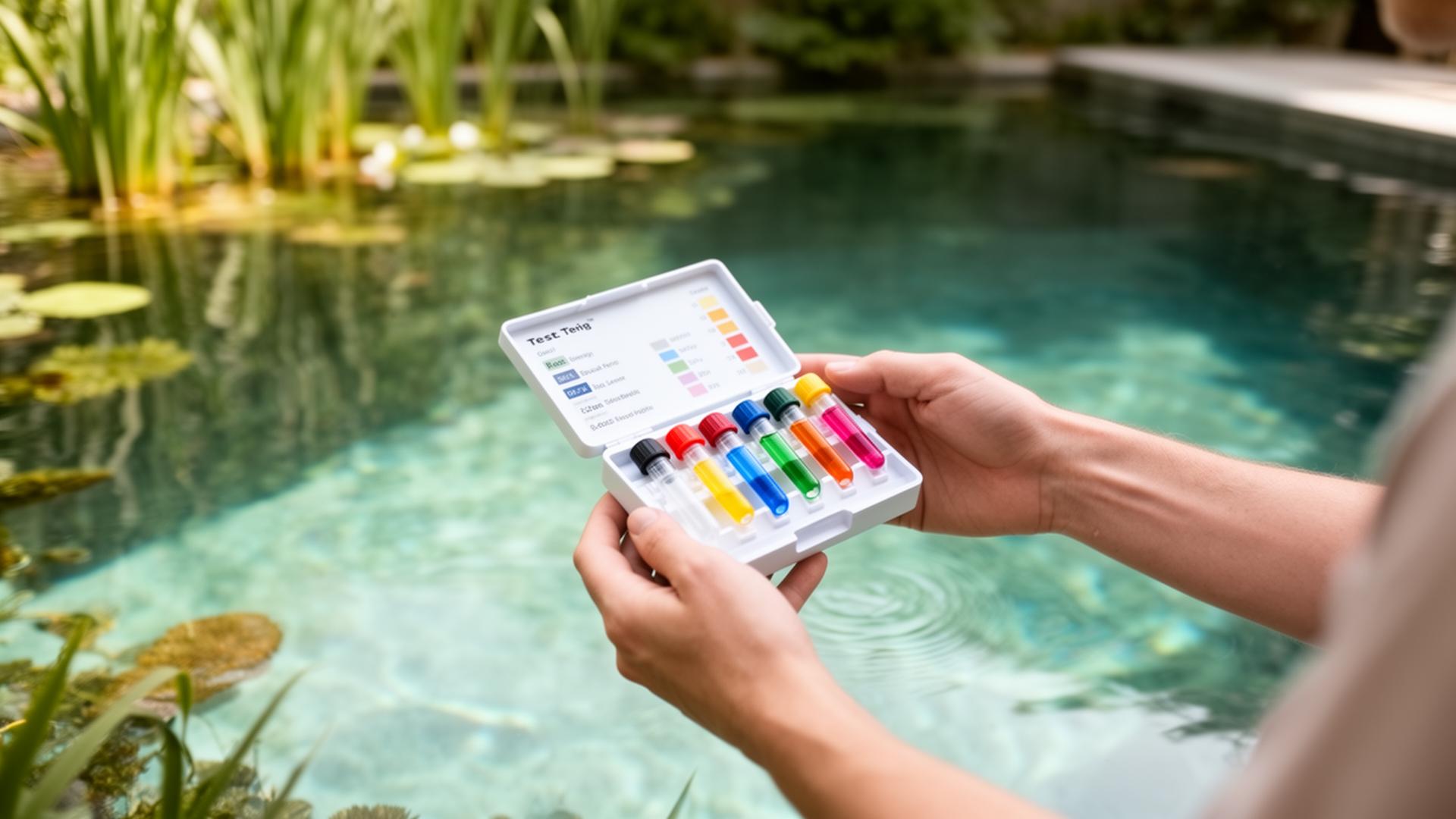
- Liquid reagent kits: (£30-£60): Most accurate home option. Drop reagents into water sample and compare colours.
- Test strips: (£10-£25): Quick but less precise. Fine for weekly pH checks.
- Digital meters: (£50-£200): Instant pH and temperature readings. Invest in a good one for convenience.
Professional Laboratory Testing
Annual professional testing provides comprehensive analysis:
- Full microbiological panel (E. coli, enterococci, coliforms)
- Heavy metals screening
- Complete nutrient profile
- Costs £100-£250 per test
- Some pool builders include annual testing in maintenance packages
We recommend professional lab testing at least once per year, ideally at the start of swimming season (May/June). This gives you a baseline and confirms your pool meets safety standards.
Seasonal Testing Schedule
Spring (March-April)
- Full test panel after winter dormancy
- Check pH, phosphates, and nitrates
- Assess plant health and regeneration zone condition
- Commission professional lab test
Summer (May-September)
- Weekly: pH and visual clarity
- Fortnightly: Phosphates
- Monthly: Nitrates, dissolved oxygen
- After heavy rainfall: Full home test (runoff can introduce contaminants)
Autumn (October-November)
- Reduce to fortnightly testing
- Monitor leaf fall impact on phosphate levels
- Final professional test before winter
Winter (December-February)
- Monthly visual check only
- No chemical testing needed (pool is dormant)
- Focus on winter maintenance tasks
Interpreting Results
Everything Normal
pH 7.0-7.5, phosphates < 0.01, clear water, healthy plants. Your ecosystem is thriving—keep doing what you're doing.
Rising Phosphates
Action steps:
1. Check for fertiliser runoff entering the pool
2. Remove decaying organic matter
3. Increase plant density in the regeneration zone
4. Consider a phosphate binder as a short-term measure
Cloudy Water
See our detailed cloudy water troubleshooting guide, but common causes include:
- New pool still establishing (allow 6-12 weeks)
- Disturbed substrate releasing fine particles
- Algae bloom from excess nutrients
- Insufficient circulation
pH Drift
- Rising pH: Often caused by concrete or lime-based materials leaching. Check construction materials.
- Falling pH: Can indicate excess organic decomposition. Increase leaf removal and check plant health.
Recording and Tracking Results
Keep a simple log of your test results:
- Date, time, and weather conditions
- All parameter readings
- Any actions taken
- Notes on water appearance and plant health
Over time, you'll build a picture of your pool's seasonal patterns and be able to spot trends before they become problems. Many pool owners use a simple spreadsheet or notebook.
When to Seek Help
Contact your pool designer or a maintenance professional if:
- Phosphates remain above 0.05 mg/L despite intervention
- Water clarity doesn't improve within 4 weeks
- Professional lab results show elevated bacteria levels
- You notice persistent odours from the water
- pH consistently outside 6.0-9.0 range
Frequently Asked Questions
How often should you test natural pool water?
During swimming season (May-September), test pH and visual clarity weekly, phosphates fortnightly, and nitrates monthly. Arrange professional laboratory testing at least once per year, ideally at the start of summer. In winter, monthly visual checks are sufficient.
What should the pH be in a natural swimming pool?
Natural pools are more tolerant than chlorinated pools, with an acceptable range of 6.5-8.5. The ideal range is 7.0-7.5. Most well-established natural pools naturally stabilise in this range thanks to the buffering effect of aquatic plants and biological processes.
Is natural pool water safe to swim in?
Yes, properly maintained natural pool water is safe for swimming. Regular testing for pH, phosphates, and annual professional microbiological screening ensures water quality meets safety standards. The biological filtration system in a well-designed natural pool produces water quality comparable to natural bathing waters.
See a Natural Pool in Your Garden
Upload a photo of your garden and our AI will render a natural swimming pool into your space. Free, instant, and no obligation.
Related Articles
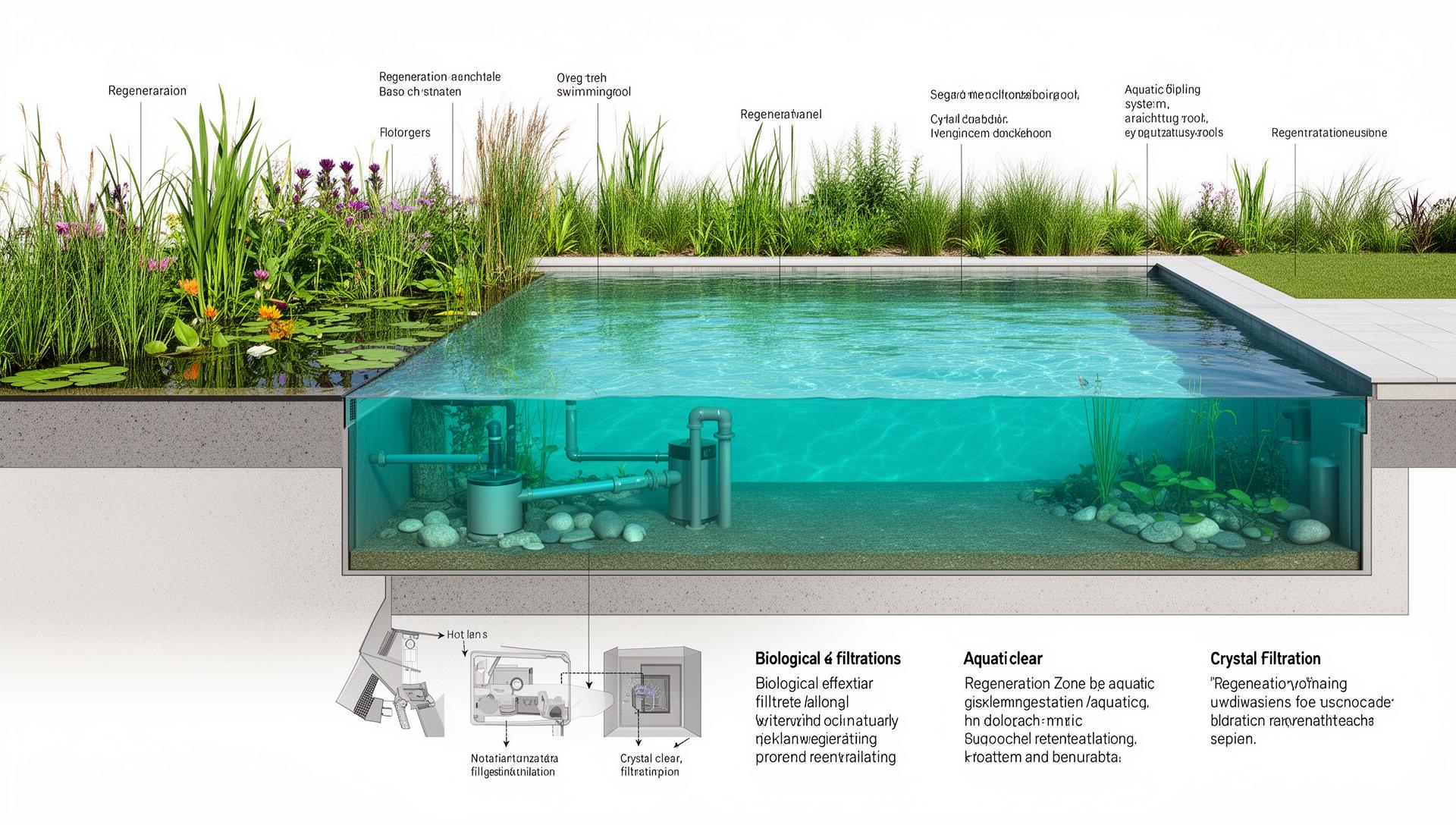
How Natural Swimming Pools Stay Clean Without Chemicals
Learn the science behind natural swimming pools and swimming ponds. Discover how aquatic plants and beneficial bacteria keep your water crystal clear—no chlorine needed.
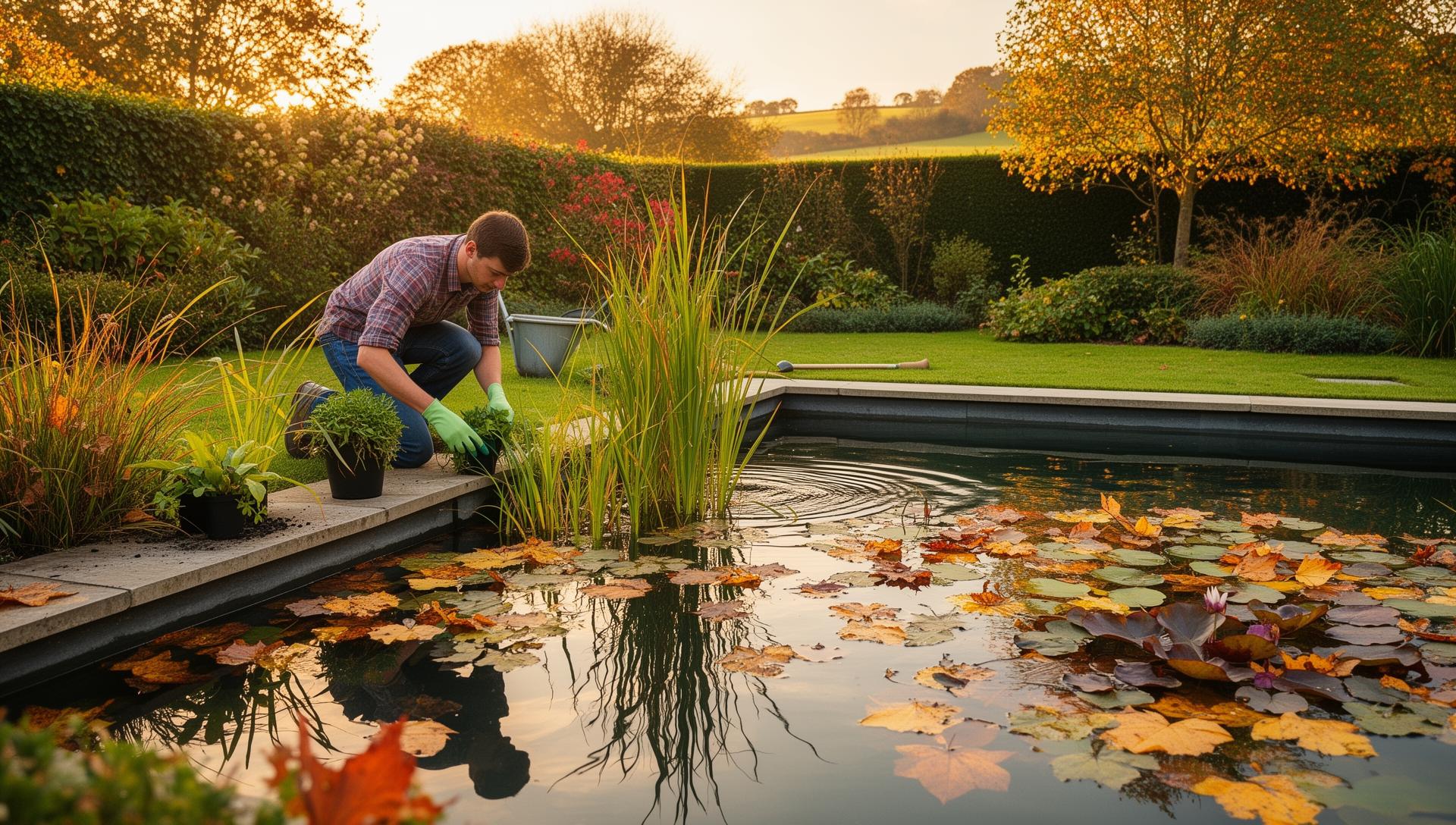
Natural Swimming Pool Maintenance: Complete UK Year-Round Guide
Everything you need to know about maintaining a natural swimming pool or swimming pond through all four UK seasons. Simple tasks for lasting beauty.
Is Swimming in a Natural Pool Safe? Water Quality and Safety Guide
Everything you need to know about natural swimming pool safety and water quality. Understand bacteria, testing, and why chemical-free pools are safe for your family.