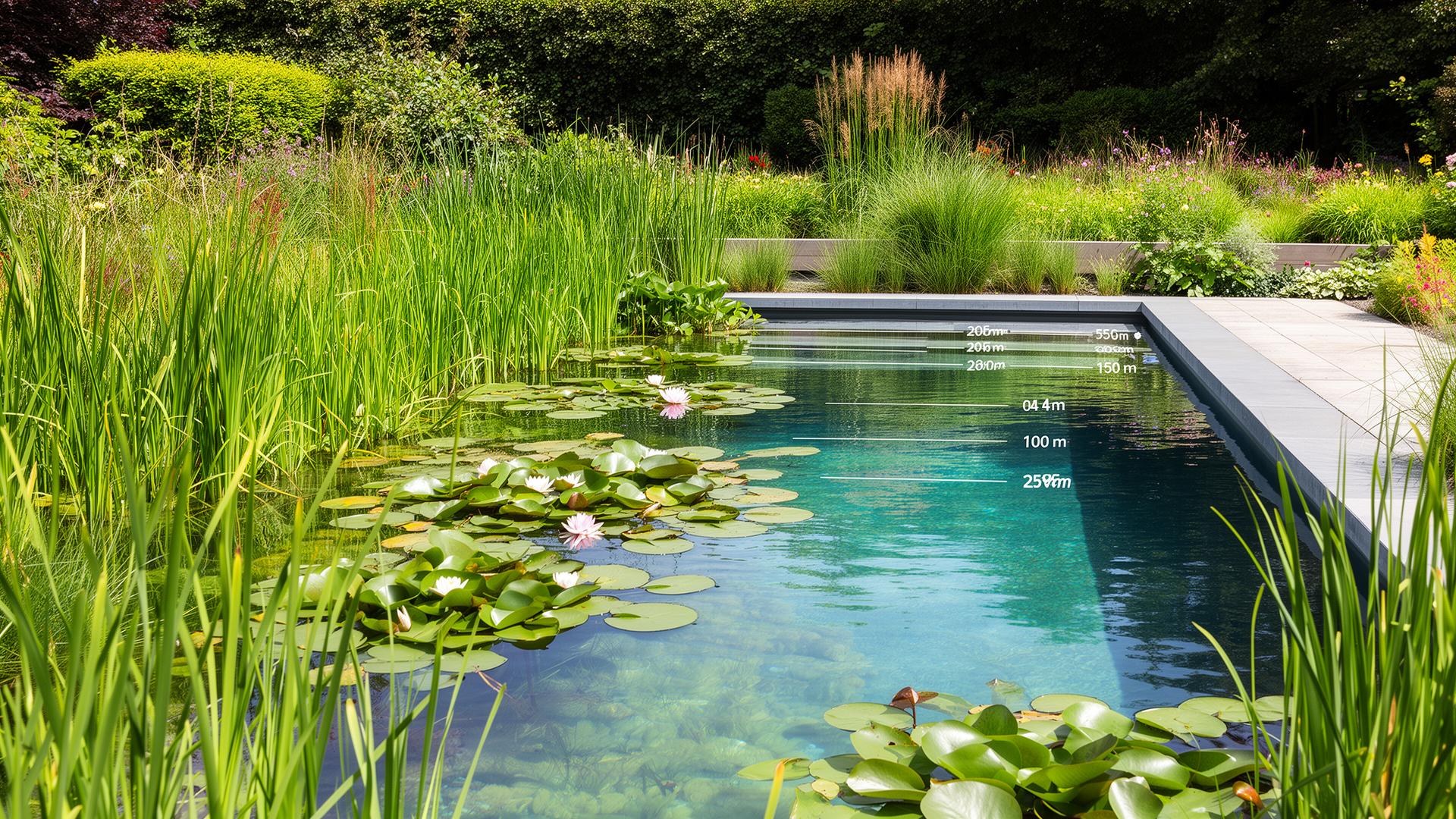
How Big Should Your Natural Pool Regeneration Zone Be? UK Guide
Calculate the perfect regeneration zone size for your natural swimming pool. Learn the ratios, factors, and UK-specific considerations for optimal water quality.

Jon Edwards
Founder & Lead Designer
- Regeneration zones typically need 30-50% of total pool area for clear water.
- Sizing shifts based on sunlight, usage intensity, and depth profile.
- Balanced layouts keep swim space usable without sacrificing filtration.
The Heart of Your Natural Swimming Pool
The regeneration zone is where the magic happens—it's central to how natural pools stay clean. This planted area filters and purifies your swimming water naturally. Getting the size right is crucial for crystal-clear results. Use our plant selector tool to choose the right species for each zone.
The Golden Ratio: 30-50% Rule
For UK natural swimming pools, your regeneration zone should be 30-50% of your total water surface area.
What This Means in Practice
| Total Pool Area | Regeneration Zone | Swimming Zone |
|---|---|---|
| 50m² | 15-25m² | 25-35m² |
| 75m² | 23-38m² | 37-52m² |
| 100m² | 30-50m² | 50-70m² |
| 150m² | 45-75m² | 75-105m² |
Why the Range?
The exact ratio depends on several UK-specific factors we'll explore below.
Factors That Affect Zone Size
1. Bather Load
How many people will swim regularly?
- Light use: (1-2 people, occasional): 30-35%
- Moderate use: (family of 4, regular): 35-40%
- Heavy use: (frequent entertaining, daily swims): 45-50%
More swimmers = more nutrients = larger regeneration needed.
2. Sun Exposure
UK gardens vary dramatically in sunlight:
- Full sun: (6+ hours direct): 35-40% recommended
- Partial shade: (3-6 hours): 30-35% often sufficient
- Heavy shade: (under 3 hours): 40-45% compensates for slower plant growth
Sunlight promotes algae; robust planting combats this.
3. Surrounding Vegetation
Trees and gardens near your pool affect nutrient load:
- Open lawn: Standard ratios apply
- Mature trees: +5-10% for leaf fall management
- Adjacent flower beds: Consider fertiliser runoff, add 5%
4. Soil Type
UK soil varies regionally and affects water chemistry:
- Clay soils: Can leach minerals, consider +5%
- Sandy soils: Standard ratios apply
- Chalky soils: May need pH management, add buffer
5. Water Source
Where will you fill your pool?
- Mains water: Standard ratios, though tap water may contain phosphates
- Borehole: Test first, mineral content varies
- Rainwater harvesting: Excellent, standard ratios
Regeneration Zone Depth Matters Too
Ideal Depth Profile
- Entry edge: 10-20cm (marginal plants)
- Middle zone: 30-50cm (main filtration)
- Deep section: 60-80cm (submerged oxygenators)
Volume Calculation
It's not just surface area—total water volume in the regeneration zone affects filtration capacity.
A 30m² regeneration zone at:
- 30cm average depth = 9,000 litres
- 50cm average depth = 15,000 litres
Deeper zones provide more biological capacity. See our filtration systems guide for circulation requirements.
Space-Saving Strategies for Smaller UK Gardens
Not everyone has room for generous regeneration zones. These approaches help:
Vertical Planting
- Stack marginal plants on shelves
- Use wall-mounted planting pockets
- Maximise edge perimeter
Enhanced Circulation
- Stronger pumps move water faster through plants
- More passes = more filtration from less area
- Allows 30% ratio in constrained spaces
[Supplementary Filtration](/blog/filtration-systems-pump-vs-gravity)
- Add a planted gravel filter (separate from main zone)
- UV clarifiers as backup
- Biofilter chambers if space is very limited
Optimised Plant Selection
Choose high-performing species like Water Mint and Hornwort. See our oxygenating plants guide for submerged species. Understanding your substrate and materials also affects planting success:
- Dense planting (5+ plants per m²)
- Quick-establishing varieties
Common UK Regeneration Zone Mistakes
Many mistakes come from inexperienced contractors—find builders who understand regeneration zones properly.
Too Small (Under 25%)
- Leads to green water in summer
- Insufficient nutrient absorption
- Requires chemical intervention (defeats the purpose)
- More maintenance headaches
Too Large (Over 60%)
- Reduces swimming area unnecessarily
- Higher construction costs
- More plant maintenance
- Diminishing returns on filtration
Poor Plant Placement
- Oxygenators need deeper water
- Marginals at edges only
- Avoid blocking water flow
Inadequate Circulation
- Dead zones develop
- Uneven filtration
- Localised algae growth
Regeneration Zone Shapes
Integrated (Surrounding Pool)
The regeneration zone wraps around the swimming area. For design inspiration, see our ideas gallery:
- Pros: Natural appearance, even filtration, wildlife corridors
- Cons: Larger footprint, more excavation
- Best for: Generous gardens, naturalistic designs
Adjacent (Separate Zone)
A distinct planted area connected to the swimming zone:
- Pros: Clear swimming boundaries, efficient space use
- Cons: More visible infrastructure, defined edges
- Best for: Contemporary designs, limited space
Multi-Zone (Tiered System)
Several smaller regeneration areas at different levels:
- Pros: Works with slopes, maximises capacity
- Cons: More complex construction
- Best for: Sloped UK gardens, gravity-fed systems
Calculating Your Requirements
Quick Estimate Method
1. Decide your minimum swimming zone (typically 25-40m²)
2. Multiply by 0.4 to get regeneration zone
3. Add 20% if heavy shade or high use
4. Total = swimming + regeneration + margins
Example Calculation
- Desired swimming zone: 35m²
- Regeneration (×0.4): 14m²
- Heavy shade adjustment (+20%): 16.8m²
- Margins and edges (+10%): 18.5m²
- Total pool area needed: ~55m²
Let AI Calculate for You
Our feasibility tool analyses your specific garden photo to recommend:
- Optimal regeneration zone size for your space
- Best configuration for your garden shape
- Adjustments for your location and conditions
Upload a photo to see exactly how much space each zone needs in your garden.
Frequently Asked Questions
How big should a natural pool regeneration zone be?
Your regeneration zone should be 30-50% of the total water surface area. For example, a 100m² pool needs 30-50m² of planted regeneration zone. The exact ratio depends on bather load, sun exposure, and surrounding vegetation.
What happens if the regeneration zone is too small?
An undersized regeneration zone (under 25%) leads to green water in summer, insufficient nutrient absorption, potential need for chemical intervention, and ongoing maintenance headaches.
How deep should a natural pool regeneration zone be?
Regeneration zones should have varied depths: 10-20cm at edges for marginal plants, 30-50cm in the middle for main filtration, and 60-80cm in deeper sections for submerged oxygenators.
Can you have a natural pool in a small garden?
Yes, with space-saving strategies: vertical planting, enhanced circulation, supplementary filtration, and optimised plant selection. Minimum viable pool size is around 50m² total, with stronger pumps allowing a 30% regeneration ratio.
See a Natural Pool in Your Garden
Upload a photo of your garden and our AI will render a natural swimming pool into your space. Free, instant, and no obligation.
Related Articles
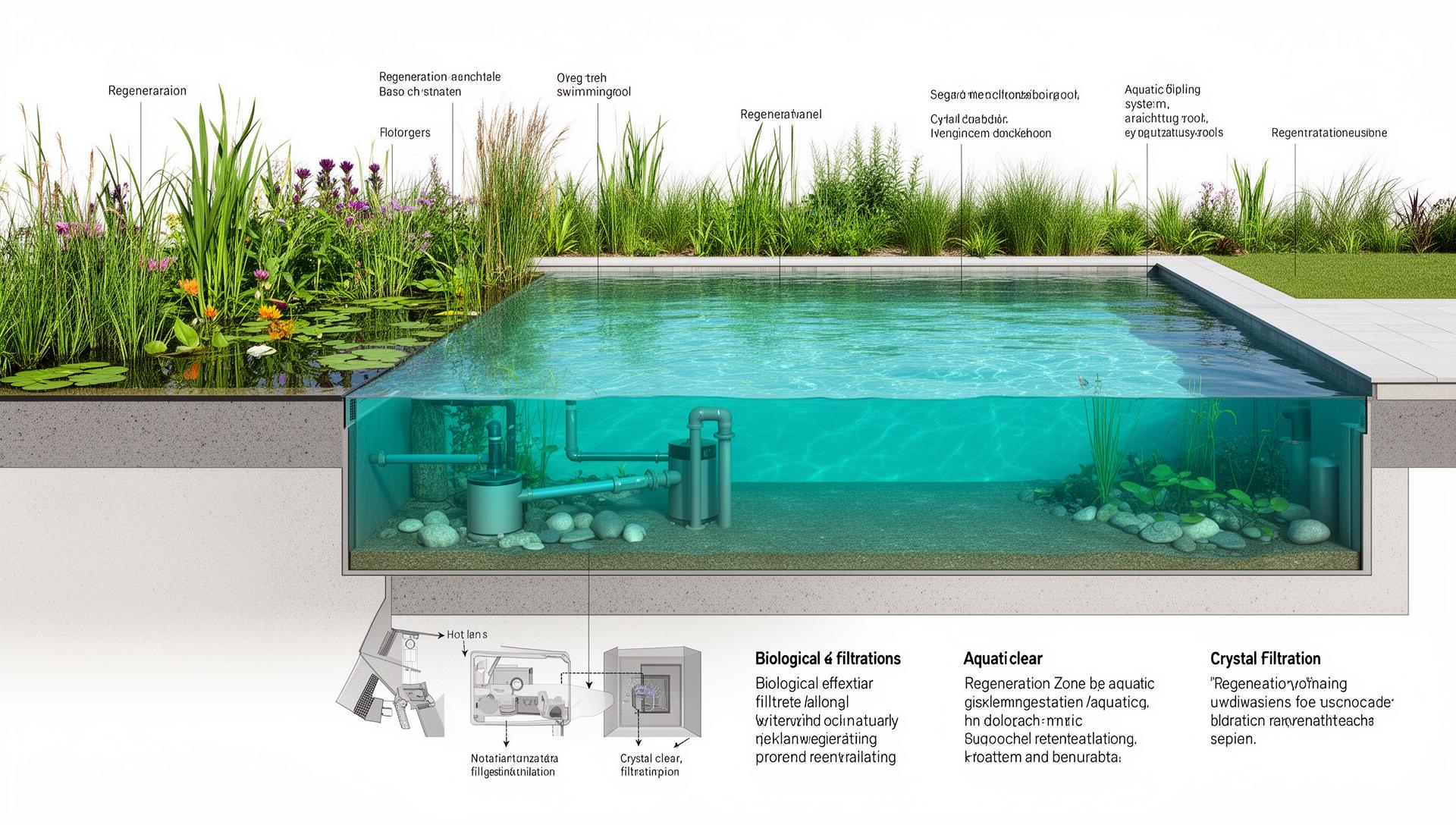
How Natural Swimming Pools Stay Clean Without Chemicals
Learn the science behind natural swimming pools and swimming ponds. Discover how aquatic plants and beneficial bacteria keep your water crystal clear—no chlorine needed.
Best Plants for Natural Swimming Pools and Swimming Ponds UK
Discover the essential plants that keep natural swimming pools and swimming ponds clean and beautiful. Our complete guide to UK-native species for every pool zone.
Natural Swimming Pool Design Ideas: Stunning Layouts for UK Gardens
Explore inspiring natural swimming pool design ideas for UK gardens. From contemporary minimalist to rustic cottage styles, find the perfect design for your outdoor space.