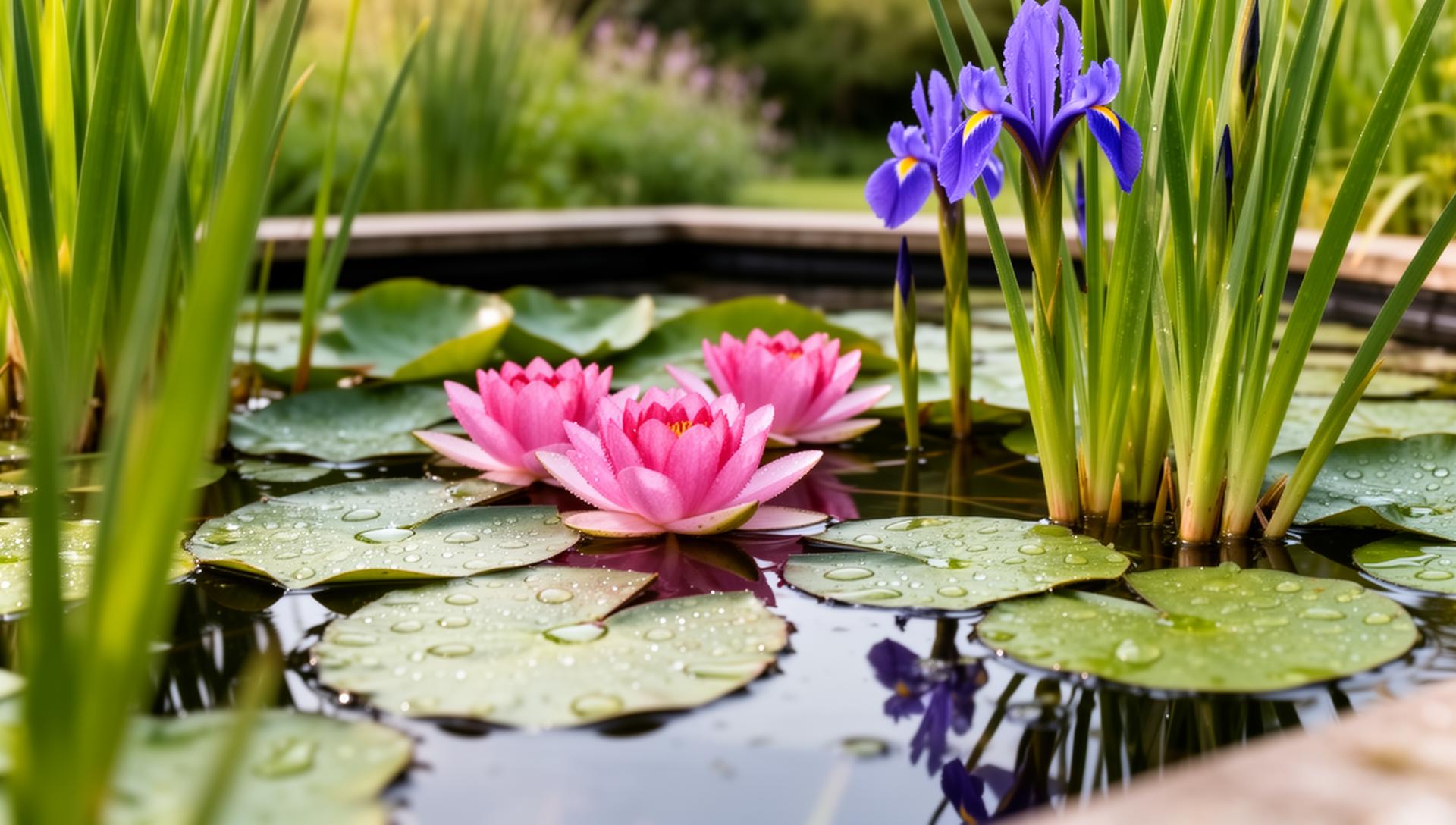
Best Plants for Natural Swimming Pools and Swimming Ponds UK
Discover the essential plants that keep natural swimming pools and swimming ponds clean and beautiful. Our complete guide to UK-native species for every pool zone.

Jon Edwards
Founder & Lead Designer
- Successful pools use a mix of oxygenators, marginals, and deep-water plants.
- UK-native species provide the best filtration and resilience.
- Planting density and placement directly affect water clarity.
The Living Heart of Your Natural Swimming Pool
Plants aren't just decoration in a natural swimming pool—they're the filtration system. Choosing the right species ensures crystal-clear water and year-round beauty for both formal natural pools and informal swimming ponds. Understanding the true cost breakdown helps you budget appropriately for plants—typically 5-10% of your total investment. Use our plant selector tool to browse UK-suitable species filtered by zone and light requirements.
Understanding Plant Zones
Plants work in tandem with the regeneration zone to keep water crystal clear. Natural swimming pools have distinct zones, each requiring different plants:
Zone 1: Deep Water (60cm+)
Submerged oxygenators that work invisibly beneath the surface.
Zone 2: Shallow Margins (0-40cm)
Emergent plants with roots in water, foliage above.
Zone 3: Bog Zone (Moist Soil)
Moisture-loving plants that filter water before it reaches the pool.
Essential Oxygenating Plants
These underwater champions do the heavy lifting in your natural swimming pool and are essential to the nitrogen cycle that processes waste naturally. For a complete guide to submerged plant species, see our detailed oxygenating plants guide:
Hornwort (Ceratophyllum demersum)
- Benefit: Exceptional nutrient absorption
- Depth: Free-floating or anchored
- Growth: Fast, may need trimming
- UK Native: Yes
Spiked Water-milfoil (Myriophyllum spicatum)
- Benefit: Dense foliage filters particles
- Depth: 30-100cm
- Growth: Moderate
- UK Native: Yes
Water Starwort (Callitriche stagnalis)
- Benefit: Year-round oxygen production
- Depth: 10-50cm
- Growth: Moderate
- UK Native: Yes
Beautiful Marginal Plants
These create the visual magic while filtering water in your natural swimming pool:
Yellow Flag Iris (Iris pseudacorus)
- Benefit: Strong nutrient uptake
- Height: 100-150cm
- Flowers: Bright yellow, May-July
- Zone: 0-25cm water depth
Purple Loosestrife (Lythrum salicaria)
- Benefit: Excellent filtration
- Height: 100-150cm
- Flowers: Purple spikes, June-September
- Zone: Moist to 10cm water
Marsh Marigold (Caltha palustris)
- Benefit: Early season filtering
- Height: 30-50cm
- Flowers: Golden yellow, March-May
- Zone: 0-15cm water depth
Water Forget-me-not (Myosotis scorpioides)
- Benefit: Excellent ground cover
- Height: 15-30cm
- Flowers: Blue, May-September
- Zone: 0-10cm water depth
Floating Plants
Surface plants that shade water and reduce algae:
Frogbit (Hydrocharis morsus-ranae)
- Benefit: Shades water, reducing algae
- Size: 3-5cm leaves
- Flowers: Small white, July-August
- UK Native: Yes
Water Soldier (Stratiotes aloides)
- Benefit: Excellent nutrient removal
- Size: 15-40cm rosettes
- Behaviour: Rises in summer, sinks in winter
- UK Native: Yes (rare)
Bog Garden Plants
The final filtration stage before water returns to your natural swimming pool:
Meadowsweet (Filipendula ulmaria)
- Benefit: Deep root filtration
- Height: 100-150cm
- Flowers: Creamy white, June-September
- Fragrance: Sweet, honey-like
Water Mint (Mentha aquatica)
- Benefit: Vigorous filtration
- Height: 30-60cm
- Flowers: Lilac, July-September
- Bonus: Aromatic foliage
Hemp Agrimony (Eupatorium cannabinum)
- Benefit: Butterfly magnet, good filtration
- Height: 100-150cm
- Flowers: Pink, July-September
- Wildlife: Excellent
Planting Guide for Natural Swimming Pools
When to Plant
For month-by-month timing, see our seasonal plant care calendar. When planning your pool, your designer will create a bespoke planting plan.
- Best: April-June
- Acceptable: March-September
- Avoid: Winter months — though the pool remains swimmable for cold water enthusiasts
Planting Density
- Oxygenators: 5-10 bunches per m²
- Marginals: 3-5 plants per m²
- Floating: 20-30% surface coverage maximum
Establishment Period
Allow 2-3 years for full establishment. Your natural swimming pool will improve each season as plants mature.
Plants to Avoid
Some species cause problems in natural swimming pools and swimming ponds:
Invasive Species
- Parrot's Feather: Extremely invasive
- Floating Pennywort: Illegal to plant
- New Zealand Pygmyweed: Chokes waterways
Problem Plants
- Duckweed: Spreads uncontrollably
- Reedmace (Typha): Too vigorous for most pools
- Water Hyacinth: Not winter-hardy in UK
Lume's Planting Plans
Every Lume natural swimming pool includes a bespoke planting plan featuring:
- Species suited to your location
- Quantities calculated for your pool size
- Seasonal interest throughout the year
- Wildlife-friendly native species
- Maintenance guidance
Use our plant selector tool to explore UK-native species and get quantity recommendations for your pool size.
See Plants in Your Pool
Understanding how natural pools stay clean helps you appreciate why plant selection matters. For ongoing care, see our maintenance guide.
Our AI visualisation shows how plants will look in your specific garden. Upload a photo to see your natural swimming pool brought to life.
Frequently Asked Questions
What are the best plants for a natural swimming pool?
Essential plants include oxygenators (Hornwort, Water-milfoil), marginals (Yellow Flag Iris, Marsh Marigold, Water Forget-me-not), and bog plants (Meadowsweet, Water Mint). UK-native species work best and provide year-round filtration.
How many plants do you need for a natural pool?
Plant density should be 5-10 bunches of oxygenators per m², 3-5 marginal plants per m², and floating plants covering no more than 20-30% of the regeneration zone surface.
When is the best time to plant a natural pool?
April to June is optimal for planting natural pools. March to September is acceptable. Avoid planting during winter months as plants won't establish well and may die.
Which plants should you avoid in natural swimming pools?
Avoid invasive species like Parrot's Feather, Floating Pennywort (illegal), and New Zealand Pygmyweed. Also avoid Duckweed (spreads uncontrollably), Reedmace (too vigorous), and Water Hyacinth (not UK winter-hardy).
See a Natural Pool in Your Garden
Upload a photo of your garden and our AI will render a natural swimming pool into your space. Free, instant, and no obligation.
Related Articles
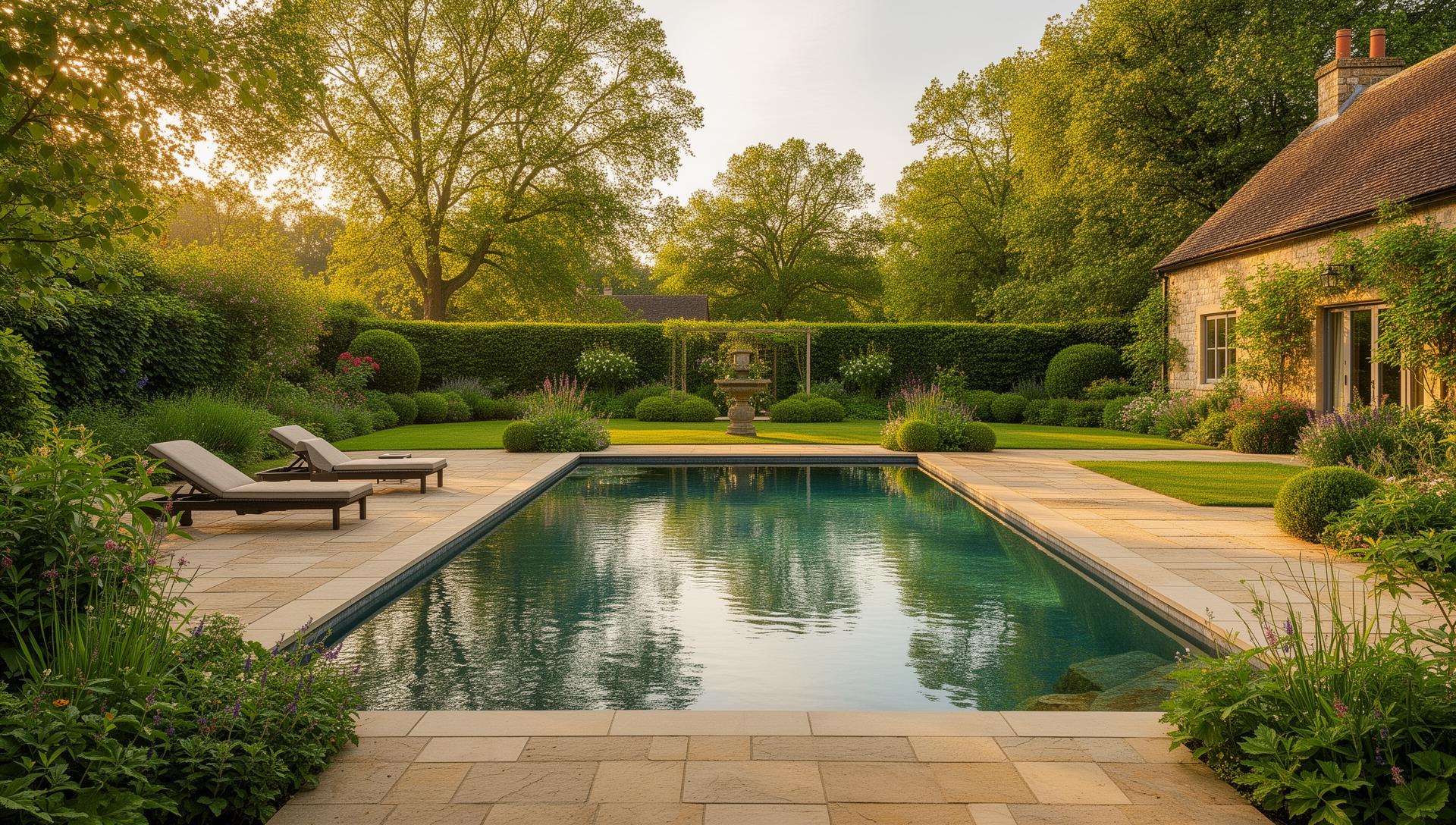
Natural Swimming Pool Cost UK: Complete 2026 Guide
Discover the true cost of a natural swimming pool in the UK. From swimming pond cost factors to installation, we break down every expense for your project.
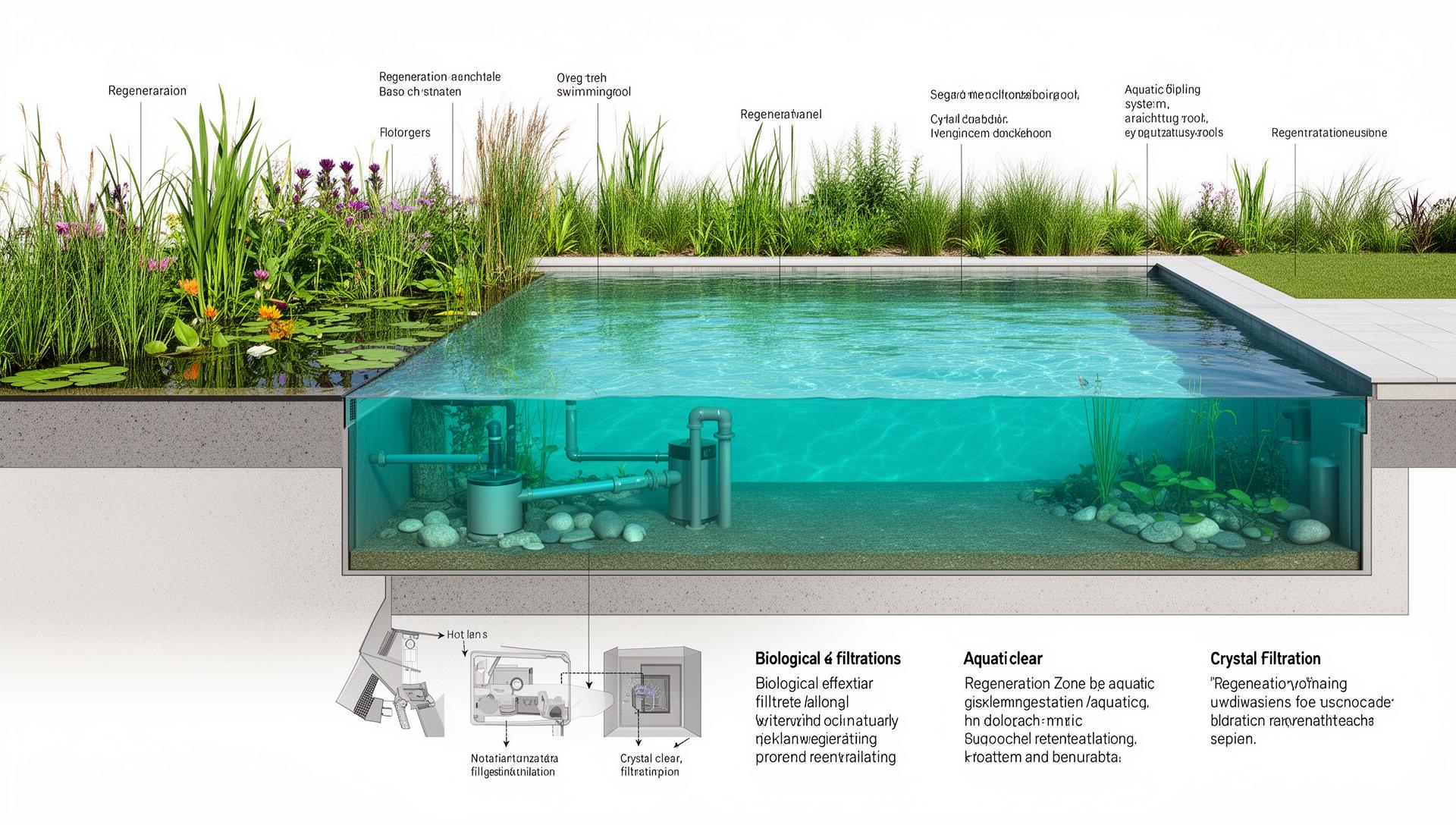
How Natural Swimming Pools Stay Clean Without Chemicals
Learn the science behind natural swimming pools and swimming ponds. Discover how aquatic plants and beneficial bacteria keep your water crystal clear—no chlorine needed.
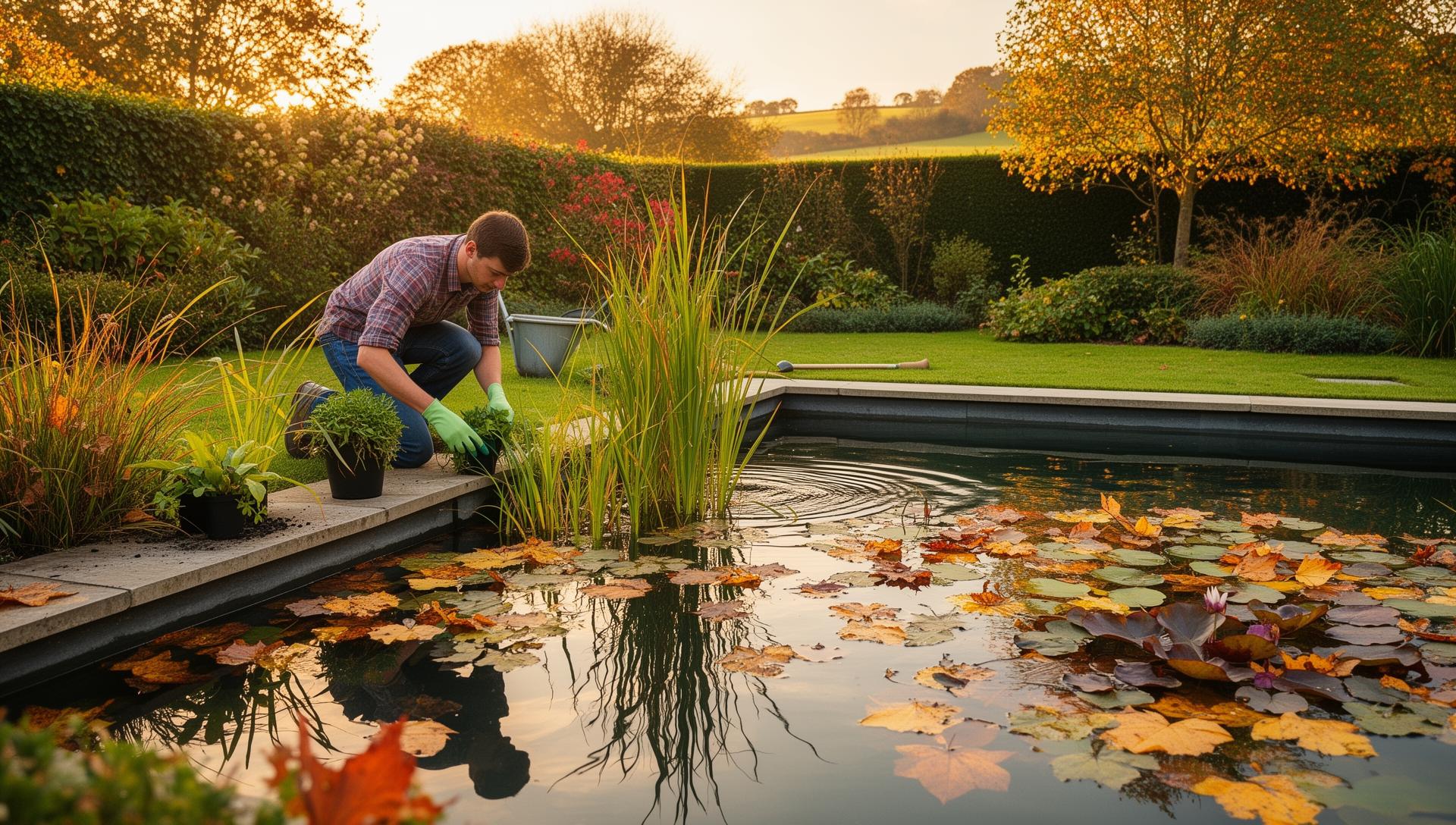
Natural Swimming Pool Maintenance: Complete UK Year-Round Guide
Everything you need to know about maintaining a natural swimming pool or swimming pond through all four UK seasons. Simple tasks for lasting beauty.