How Natural Swimming Pools Stay Clean Without Chemicals
Learn the science behind natural swimming pools and swimming ponds. Discover how aquatic plants and beneficial bacteria keep your water crystal clear—no chlorine needed.

Jon Edwards
Founder & Lead Designer
- Natural pools use a two-zone system: swimming zone plus planted regeneration zone.
- Plants, bacteria, and oxygenation remove nutrients to keep water clear.
- Correct ratios and circulation design are essential for reliable filtration.
The Magic of Biological Filtration
Natural swimming pools harness the same processes that keep lakes and rivers clean. Instead of harsh chemicals, they use living systems to purify water naturally. Whether you call it a natural pool, natural swimming pool, or swimming pond, the science is the same.
The Two-Zone System
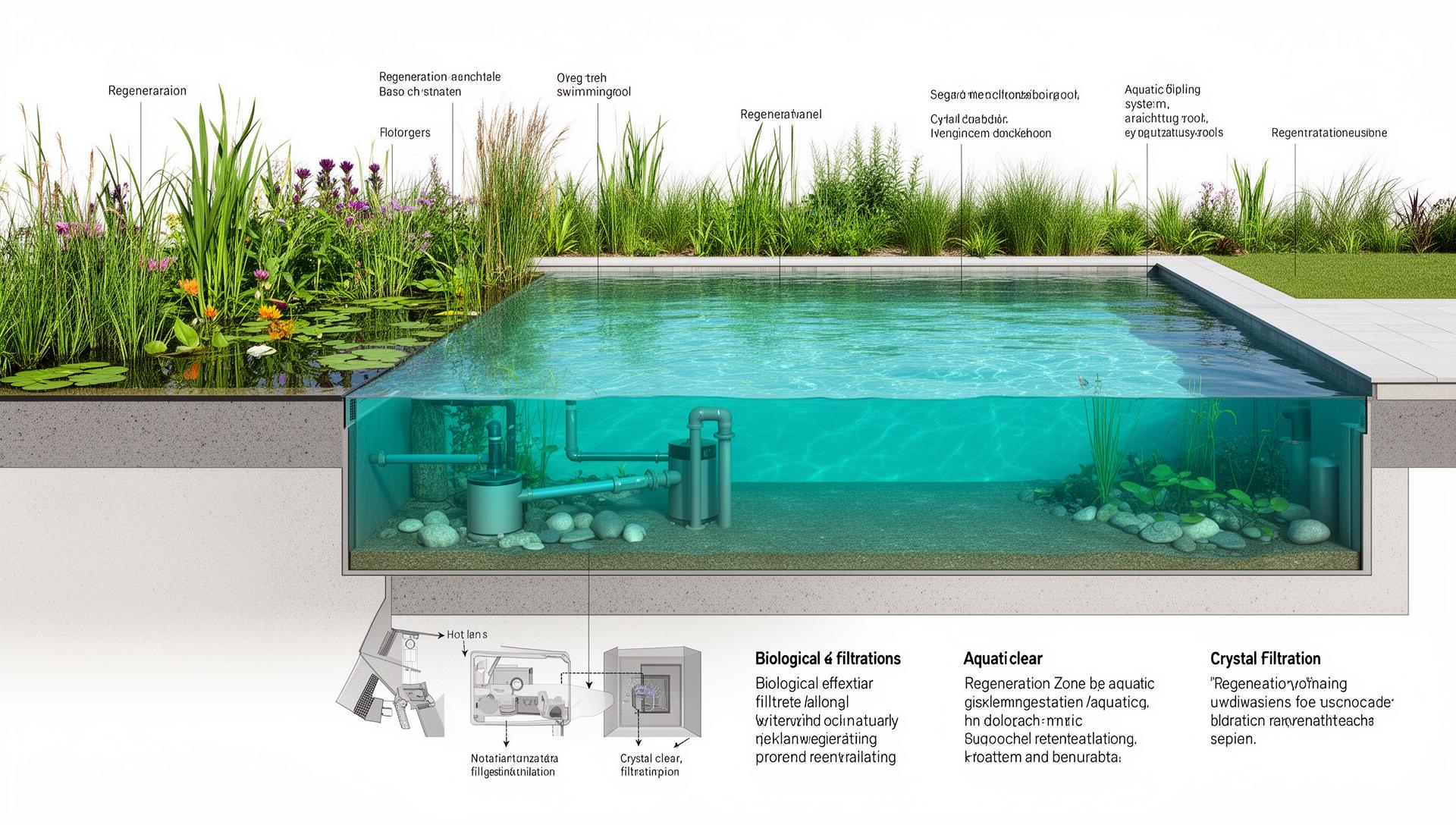
Every natural swimming pool consists of two connected areas:
The Swimming Zone
This is your clear, deep water area for swimming. It contains:
- No plants (for unobstructed swimming)
- Smooth, comfortable surfaces
- Crystal-clear water
- Depths of 1.5-2.5 metres
The Regeneration Zone
This shallow, planted area does the hard work. Learn more in our complete regeneration zone guide:
- Aquatic plants absorb nutrients
- Beneficial bacteria break down organic matter
- Gravel beds provide biological filtration
- Natural oxygenation occurs
How Purification Works
Step 1: Water Circulation
A low-energy pump moves water continuously between zones. This ensures all water passes through the regeneration area regularly.
Step 2: Nutrient Absorption
Aquatic plants are nature's filters. Their roots absorb nutrients that algae need—a process explained in detail in our phosphate control guide. Their roots absorb:
- Nitrogen compounds
- Phosphates
- Organic debris
- Excess minerals
Without these nutrients, algae cannot thrive.
Step 3: Bacterial Action
Beneficial bacteria colonise every surface in the regeneration zone. Learn more about this process in our complete nitrogen cycle guide. They break down:
- Leaf matter
- Skin cells
- Sunscreen residue
- Other organic material
Step 4: Natural Oxygenation
Plants release oxygen into the water during photosynthesis. This oxygen:
- Keeps water fresh
- Supports beneficial bacteria
- Creates a healthy ecosystem
Why It Works So Well
This system has evolved over millions of years. Natural swimming pools simply concentrate these processes into a manageable space.
Self-Regulating
The ecosystem naturally balances itself. More nutrients = more plant growth = more filtration capacity.
Seasonal Adaptation
Plants and bacteria adapt to changing conditions throughout the year, maintaining water quality in all seasons.
No Chemical Side Effects
The health benefits of natural pools stem largely from eliminating chemical exposure:
- No red eyes or dry skin
- No bleached swimwear
- No harmful runoff
- Safe for all ages
The Role of Design
Proper design is crucial for success:
- Correct ratios: Regeneration zone should be 30-50% of total area
- Plant selection: Native UK species work best
- Flow patterns: Water must circulate evenly
- Sun exposure: Balanced light for plant health
Crystal Clear Results
Well-designed natural swimming pools achieve water clarity that rivals any chlorinated pool. The secret is getting the biology right from the start—and how design affects filtration performance is one of the key considerations when planning your pool.
For ongoing care, see our year-round maintenance guide, and learn about water testing to monitor your pool's health.
Our AI feasibility tool analyses your garden to ensure optimal conditions for natural purification.
Frequently Asked Questions
How do natural pools stay clean without chemicals?
Natural pools use biological filtration through a regeneration zone filled with aquatic plants and beneficial bacteria. Plants absorb nutrients that would feed algae, while bacteria break down organic matter. This creates crystal-clear water without any chemical treatment.
Do natural pools get algae?
Well-designed natural pools rarely have algae problems. The regeneration zone removes nutrients that algae need to grow. Some beneficial algae is normal and healthy. Problems only occur if the system is undersized or improperly maintained.
How often does water circulate in a natural pool?
Water should circulate through the regeneration zone at least once every 24 hours, with 12-hour circulation recommended. During peak summer, 8-hour cycles may be beneficial. Low-energy pumps run continuously to maintain this circulation.
Is the water in natural pools safe to drink?
While natural pool water meets bathing water quality standards and is safe to swim in, it's not designed for drinking. The water is filtered naturally but not sterilised. Accidental swallowing during swimming is perfectly safe.
See a Natural Pool in Your Garden
Upload a photo of your garden and our AI will render a natural swimming pool into your space. Free, instant, and no obligation.
Related Articles
Natural Swimming Pool Maintenance: Complete UK Year-Round Guide
Everything you need to know about maintaining a natural swimming pool or swimming pond through all four UK seasons. Simple tasks for lasting beauty.
Best Plants for Natural Swimming Pools and Swimming Ponds UK
Discover the essential plants that keep natural swimming pools and swimming ponds clean and beautiful. Our complete guide to UK-native species for every pool zone.
Natural Swimming Pool Design Ideas: Stunning Layouts for UK Gardens
Explore inspiring natural swimming pool design ideas for UK gardens. From contemporary minimalist to rustic cottage styles, find the perfect design for your outdoor space.