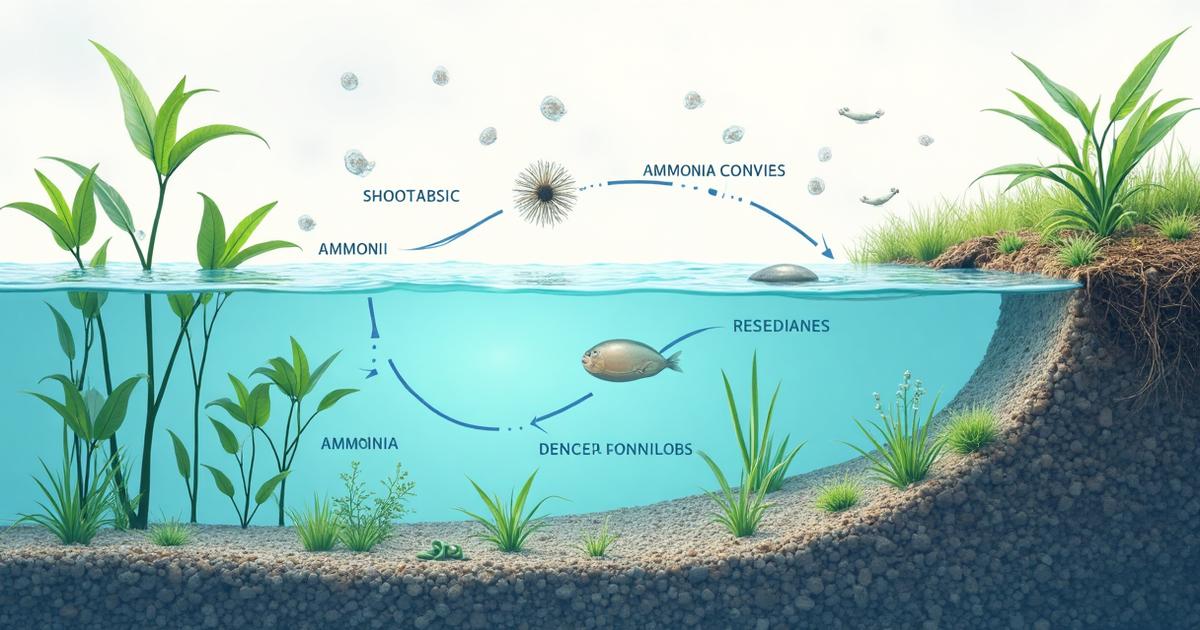
Understanding Your Natural Pool's Nitrogen Cycle: The Science of Clean Water
Discover how the nitrogen cycle keeps your natural swimming pool healthy. From ammonia to nitrate, learn the science behind biological filtration and crystal-clear water.

Jon Edwards
Founder & Lead Designer
- Beneficial bacteria convert waste into harmless compounds in the nitrogen cycle.
- Healthy biofilms and oxygen levels keep the cycle stable.
- Balanced planting and circulation prevent ammonia or nitrite spikes.
The Invisible Process That Powers Your Pool
Every natural swimming pool depends on an invisible biochemical process happening 24 hours a day. The nitrogen cycle—the same process that keeps lakes and rivers healthy—converts harmful waste products into plant food, creating the crystal-clear water you swim in. Understanding this cycle helps you work with your pool's ecosystem rather than against it.
Why Nitrogen Matters
Nitrogen enters your pool constantly:
- Swimmers: Sweat, skin cells, body oils, urine traces
- Wildlife: Bird droppings, insect remains, amphibian waste
- Organic matter: Leaves, pollen, dead plant material
- Rainwater: Atmospheric nitrogen and dissolved compounds
Without processing, this nitrogen would accumulate as toxic ammonia. Fortunately, your pool's biological community handles it automatically—if properly established and maintained.
The Four Stages of the Nitrogen Cycle
Stage 1: Waste Production (Ammonification)
Organic waste entering your pool decomposes:
Sources → Ammonia (NH₃)
- Dead leaves break down
- Swimmer residue decomposes
- Wildlife waste dissolves
- Dead algae and plant matter decay
What You See: Nothing visible—ammonia is colourless and dissolves immediately.
The Problem: Ammonia is toxic to aquatic life and creates unpleasant odours. In a chlorinated pool, this would require chemical treatment. In a natural pool, bacteria handle it.
Stage 2: First Bacterial Conversion (Nitrification Part 1)
Ammonia (NH₃) → Nitrite (NO₂⁻)
Nitrosomonas bacteria colonise your regeneration zone surfaces—gravel, plant roots, biofilm surfaces. These bacteria consume ammonia and produce nitrite as a byproduct.
Where It Happens:
- Gravel beds in regeneration zone
- Root surfaces of all plants
- Submerged surfaces (liner, rocks)
- Biofilter media if installed
Timeframe: Nitrosomonas bacteria establish within 2-4 weeks of filling a new pool.
The Problem: Nitrite is still toxic—actually more dangerous than ammonia to fish (though you shouldn't have fish). The cycle must continue.
Stage 3: Second Bacterial Conversion (Nitrification Part 2)
Nitrite (NO₂⁻) → Nitrate (NO₃⁻)
Nitrobacter and Nitrospira bacteria take over, converting nitrite to nitrate:
Where It Happens:
- Same surfaces as Stage 2
- Often the same biofilm communities
- Requires oxygenated water
Timeframe: Nitrobacter establishes 1-2 weeks after Nitrosomonas—expect 4-6 weeks total for complete cycle establishment in new pools.
The Result: Nitrate is relatively harmless to swimmers and wildlife. But the cycle isn't complete…
Stage 4: Plant Uptake (Assimilation)
Nitrate (NO₃⁻) → Plant Biomass
Your aquatic plants, especially oxygenating plants, absorb nitrates through their roots and leaves:
What Happens:
- Plants use nitrate to build proteins and grow
- Nitrogen becomes locked in plant tissue
- When you trim plants, you permanently remove nitrogen from the system
Key Insight: This is why the regeneration zone matters so much. Without sufficient plants, nitrates accumulate, feeding algae instead. The plants must be proportionate to the nitrogen load.
The Complete Cycle Visualised
Waste → Ammonia → Nitrite → Nitrate → Plant Growth → Trimmed/Removed
| Stage | Status | Processed By |
|---|---|---|
| Ammonia | Toxic | Bacteria 1 (Nitrosomonas) |
| Nitrite | Toxic | Bacteria 2 (Nitrobacter) |
| Nitrate | Safe | Plants absorb it |
| Plant Biomass | Locked away | You remove it by trimming |
The beauty is that you never handle any chemicals. The bacteria and plants do everything. You just:
- Maintain proper regeneration zone sizing
- Keep water circulating
- Trim plants regularly (removing nitrogen permanently)
- Let biology do the work
Establishing the Cycle in New Pools
The Critical First 8 Weeks
New natural pools need patience. Here's what's happening:
Week 1-2:
- Water is essentially sterile
- Ammonia may build up
- No bacteria established yet
- Water may smell slightly
Week 3-4:
- Nitrosomonas bacteria multiplying
- Ammonia levels start dropping
- Nitrite appears and rises
- Plants beginning to root
Week 5-6:
- Nitrobacter establishing
- Nitrite levels falling
- Nitrate appearing
- Water clarifying
Week 7-8:
- Full cycle operational
- All nitrogen converted to nitrate
- Plants actively absorbing
- Water crystal clear
Why Patience Matters
Don't panic during establishment:
- Green or cloudy water is normal initially
- Slight odours may occur (temporary)
- Algae blooms are common—they'll pass
Don't interfere:
- Avoid chemical treatments (kills beneficial bacteria)
- Don't drain and refill (resets the cycle)
- Don't add fish (adds more nitrogen, no benefit)
- Do maintain circulation
Helping Establishment
You can accelerate the cycle:
- Seeding: Add gravel or filter media from an established natural pool
- Commercial bacteria: Some products contain nitrifying bacteria
- Plants from established pools: Bring existing bacterial colonies
However, natural establishment works fine—it just requires patience.
Signs Your Nitrogen Cycle Is Working
Positive Indicators
✅ Crystal clear water after 6-8 weeks
✅ No ammonia smell from the water
✅ Healthy plant growth throughout the season
✅ Minimal algae despite nutrients present
✅ Active invertebrate life (water fleas, larvae, etc.) — see our wildlife guide for the species you'll attract
✅ No fish kills (if you have fish—though we don't recommend them)
Warning Signs of Cycle Problems
⚠️ Persistent cloudiness after 8+ weeks
⚠️ Ammonia smell (sharp, acrid)
⚠️ Struggling plants despite good conditions
⚠️ Persistent algae that doesn't respond to trimming
⚠️ Dead or dying invertebrates
When the Cycle Breaks Down
Several situations can disrupt your nitrogen cycle:
Bacterial Die-Off
Causes:
- Chlorinated tap water added in large quantities
- Antibacterial chemicals entering the pool
- Sudden temperature changes
- Oxygen depletion
Symptoms:
- Ammonia spike
- Cloudy water
- Unpleasant odours
Solution:
- Stop adding chemicals
- Increase circulation/aeration
- Be patient—bacteria recover in 2-4 weeks
Overloaded System
Causes:
- Too many swimmers for pool size
- Heavy organic debris (autumn leaves)
- Undersized regeneration zone
- Nutrient runoff from garden
Symptoms:
- Algae blooms despite established plants
- Green water
- Plant stress (yellowing)
Solution:
- Remove excess debris
- Reduce nutrient inputs
- Consider enlarging regeneration zone
- Increase plant density
Insufficient Plants
Causes:
- Underplanted regeneration zone
- Plant die-off
- Too much shade
Symptoms:
- Nitrate accumulation
- Algae dominates over plants
- Never quite clears
Solution:
- Add more oxygenating plants
- Increase marginal planting
- Ensure adequate light
Testing Your Nitrogen Cycle
Home Test Kits
Standard aquarium test kits work for natural pools:
- Ammonia: Should be 0 ppm (or undetectable)
- Nitrite: Should be 0 ppm
- Nitrate: Some level is normal (under 25 ppm ideal)
When to Test
- New pools: Weekly for first 8 weeks
- Established pools: Monthly, or if problems appear
- After events: Following heavy use, storms, or issues
Interpreting Results
| Reading | Meaning | Action |
|---|---|---|
| Ammonia 0, Nitrite 0, Nitrate low | Healthy cycle | Continue normal maintenance |
| Ammonia present | Early stage or cycle crash | Wait or investigate cause |
| Nitrite present | Mid-cycle or partial crash | Wait, don't add more waste |
| High nitrate | Plants not keeping up | Add plants, trim regularly |
How Design Supports the Cycle
Proper natural pool design ensures the cycle works:
Regeneration Zone Sizing
- 30-50% of total area for biological filtration
- Larger zones = more bacterial capacity
- Never skimp on regeneration area
Circulation
- All water through regeneration zone every 12-24 hours
- Ensures contact with bacteria and plants
- Prevents dead zones
Plant Selection
- Mix of oxygenating, marginal, and floating plants
- Different species cover different niches
- Year-round coverage with evergreen species
Depth Variation
- Shallow areas for marginals (0-30cm)
- Mid-depth for oxygenators (30-60cm)
- Deep areas for water lilies (60-120cm)
- Creates diverse bacterial habitats
The Nitrogen Cycle and Swimming
Is it safe to swim while all this is happening?
Absolutely yes. The nitrogen cycle makes swimming safe by:
- Converting toxic ammonia to harmless compounds
- Preventing bacterial pathogen growth
- Keeping water balanced and healthy
The bacteria processing nitrogen are not harmful to humans. They're the same species found in all natural water bodies. Swimming actually adds nitrogen (from your body), which the cycle then processes—a self-sustaining system.
Key Takeaways
1. The cycle is automatic once established—no intervention needed
2. Patience in new pools allows bacteria to establish (6-8 weeks)
3. Plants are essential for removing nitrogen permanently
4. Circulation keeps it working by moving water through biological zones
5. Test if concerned but don't obsess over numbers
6. Don't add chemicals that kill beneficial bacteria
Even in winter, the cycle continues at a slower pace — winter swimming doesn't harm the process.
Your natural pool is a living system. Understanding the nitrogen cycle helps you appreciate why proper design and patience create pools that stay clean for decades without chemical intervention. Proper design ensures the cycle works from day one. When planning your natural pool, adequate regeneration zone sizing is crucial. Once established, follow proper seasonal care routines to keep the cycle balanced. Understanding this biology also helps you appreciate the natural pool investment and why well-designed systems are so cost-effective long-term.
Frequently Asked Questions
How long does it take for the nitrogen cycle to establish in a new natural pool?
Expect 6-8 weeks for full establishment. Ammonia-converting bacteria establish in weeks 2-4, nitrite-converting bacteria in weeks 4-6. Crystal-clear water typically appears by week 8. During this time, some cloudiness or algae is normal.
Can I speed up the nitrogen cycle in my natural pool?
Yes. Add gravel or filter media from an established natural pool to introduce existing bacterial colonies. Commercial nitrifying bacteria products can help. Plants from established pools also bring beneficial bacteria on their roots.
Why does my new natural pool smell of ammonia?
This indicates the nitrogen cycle hasn't fully established. Ammonia is produced from decomposing organic matter before bacteria convert it. This is normal in weeks 1-4. If it persists beyond 6-8 weeks, check circulation and regeneration zone sizing.
Do I need to add bacteria supplements to my natural pool?
Usually not. Nitrifying bacteria naturally colonise from the environment within 4-8 weeks. Supplements can speed establishment but aren't essential. More important is providing adequate surfaces (gravel, plant roots) for bacteria to colonise.
What kills beneficial bacteria in natural pools?
Chlorinated tap water (add slowly or dechlorinate), antibacterial chemicals, sudden temperature changes, and oxygen depletion. Never add pool chemicals, algaecides, or household cleaners. If bacteria die off, expect 2-4 weeks for recovery.
See a Natural Pool in Your Garden
Upload a photo of your garden and our AI will render a natural swimming pool into your space. Free, instant, and no obligation.
Related Articles
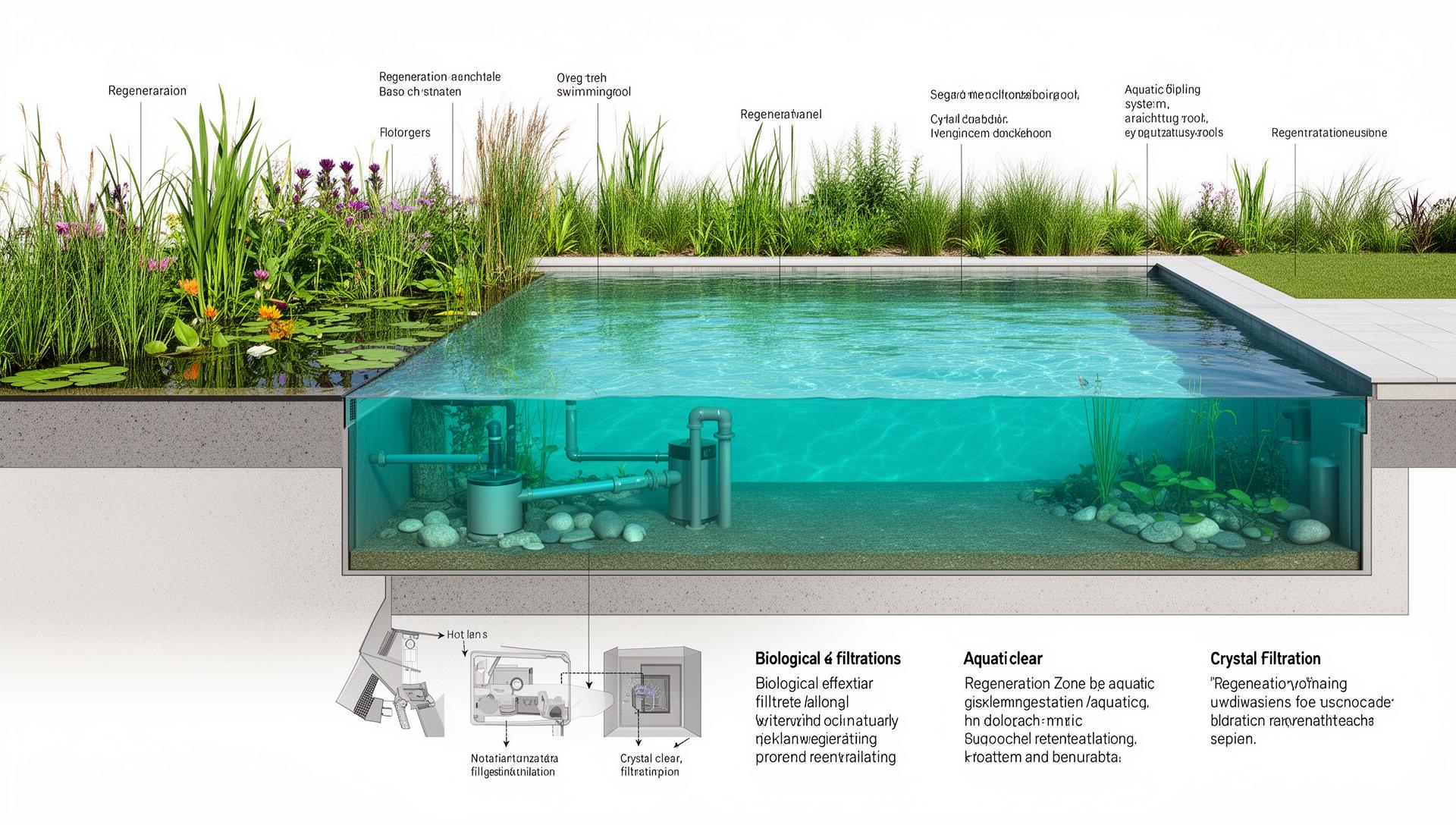
How Natural Swimming Pools Stay Clean Without Chemicals
Learn the science behind natural swimming pools and swimming ponds. Discover how aquatic plants and beneficial bacteria keep your water crystal clear—no chlorine needed.
Natural Swimming Pool Maintenance: Complete UK Year-Round Guide
Everything you need to know about maintaining a natural swimming pool or swimming pond through all four UK seasons. Simple tasks for lasting beauty.
Natural Swimming Pool Planning Permission UK: Complete Guide
Navigate UK planning regulations for natural swimming pools and swimming ponds. Learn when permission is required and how to ensure smooth approval.