Phosphate Control in Natural Swimming Pools: Preventing Algae at the Source
Learn why phosphate is the key to algae control in natural pools. Discover sources, testing methods, and proven strategies to keep phosphates low and water crystal clear.

Jon Edwards
Founder & Lead Designer
- Phosphates feed algae; controlling sources prevents blooms.
- Plant uptake and good filtration reduce nutrient buildup.
- Testing pinpoints problems before water clarity drops.
Why Phosphate Is Your Real Enemy
Most natural pool owners blame algae problems on "too much sun" or "not enough plants." While these factors matter, the real culprit is often invisible: phosphate. Understanding and controlling phosphate is the single most effective way to prevent algae in your natural swimming pool—and most people overlook it entirely.
The Phosphate-Algae Connection
Algae needs three things to grow:
1. Light (which you can't eliminate outdoors)
2. Nitrogen (processed by your nitrogen cycle)
3. Phosphorus (usually the limiting factor)
In most natural pools, nitrogen is abundant from swimmers and organic matter, and sunlight is unavoidable. But phosphorus (phosphate) is often in short supply—which is good, because if you control phosphate, you control algae.
This is called limiting nutrient control. Your plants and biological system handle nitrogen beautifully. But if phosphate sneaks in from outside sources, algae suddenly has everything it needs for explosive growth.
Where Phosphate Comes From
Garden Fertilisers (The #1 Source)
Lawn and garden fertilisers are the most common phosphate source:
The Problem:
- NPK fertilisers contain phosphorus (the P in NPK)
- Rain washes fertiliser into pools
- Even fertiliser applied 10+ metres away can reach pool water
- Spring lawn care coincides with algae season
The Solution:
- Use phosphate-free lawn fertilisers near pools
- Create buffer zones with unfertilised ground
- Install French drains to redirect runoff
- Time applications for dry periods
Tap Water
UK tap water contains varying phosphate levels:
The Problem:
- Some water companies add phosphate to prevent pipe corrosion
- Levels vary from 0.5 to 2.0 mg/L
- Topping up your pool adds phosphate every time
- Summer evaporation means more top-ups
The Solution:
- Test your tap water for phosphate
- Use rainwater for top-ups when possible
- Install rainwater harvesting systems
- Add water slowly to reduce temperature shock
Leaf Litter and Organic Debris
Decaying organic matter releases phosphate:
The Problem:
- Autumn leaves are phosphate-rich
- Decaying plant material releases nutrients
- Pollen in spring adds phosphorus
- Dead insects and wildlife contribute
The Solution:
- Install leaf netting in autumn
- Skim surface debris daily
- Remove dead plant material promptly
- Follow seasonal maintenance schedules
Soil Erosion
Surrounding soil entering the pool:
The Problem:
- Garden soil contains phosphorus
- Rain splashes soil into pool
- Bare earth near edges erodes
- Construction works disturb soil
The Solution:
- Edge pools with gravel or stone
- Plant ground cover near pool edges
- Avoid bare soil within 2 metres
- Consider raised pool edges
Bird Droppings
Wildlife contributions:
The Problem:
- Bird droppings are phosphate-rich
- Ducks are particularly problematic
- Even occasional visits add up
The Solution:
- Install deterrents (reflective tape, fake predators)
- Design steep swimming zone edges
- Remove droppings promptly
- See our wildlife management guide
Swimmer Contamination
Human contributions:
The Problem:
- Sunscreen contains phosphates
- Shampoo/soap residue
- Body oils and sweat
- Urine (we won't pretend it doesn't happen)
The Solution:
- Require pre-swim shower
- Choose phosphate-free sunscreens
- Encourage toilet use before swimming
- Size regeneration zone for swimmer numbers
Testing Phosphate Levels
Target Levels
| Phosphate Level | Water Quality |
|---|---|
| 0-0.03 mg/L | Excellent—algae unlikely |
| 0.03-0.1 mg/L | Good—occasional algae possible |
| 0.1-0.5 mg/L | Moderate—algae risk increasing |
| 0.5+ mg/L | High—algae blooms likely |
For reference, UK tap water often measures 0.5-2.0 mg/L—already in the "high" range.
Testing Methods
Liquid Test Kits:
- Most accurate for low levels
- Requires careful colour matching
- Test monthly during swimming season
- More frequently if issues arise
Test Strips:
- Convenient but less precise
- Good for quick checks
- Use as screening, not definitive
Laboratory Testing:
- Most accurate option
- Useful for baseline readings
- Consider annual professional testing
When to Test
- Baseline: When pool is first filled
- Monthly: During swimming season
- After events: Heavy rain, fertiliser application nearby
- Problem times: Any algae outbreak
How Plants Remove Phosphate
Your regeneration zone plants are your primary phosphate removal system:
The Uptake Process
Plants absorb phosphate through:
- Root systems (main pathway)
- Leaf surfaces (submerged plants)
- Associated bacterial biofilms
Key Insight: When you trim and remove plants, you permanently remove phosphate from the system. This is why regular plant maintenance matters—you're literally exporting nutrients.
Best Phosphate-Uptake Plants
Heavy Feeders (prioritise these):
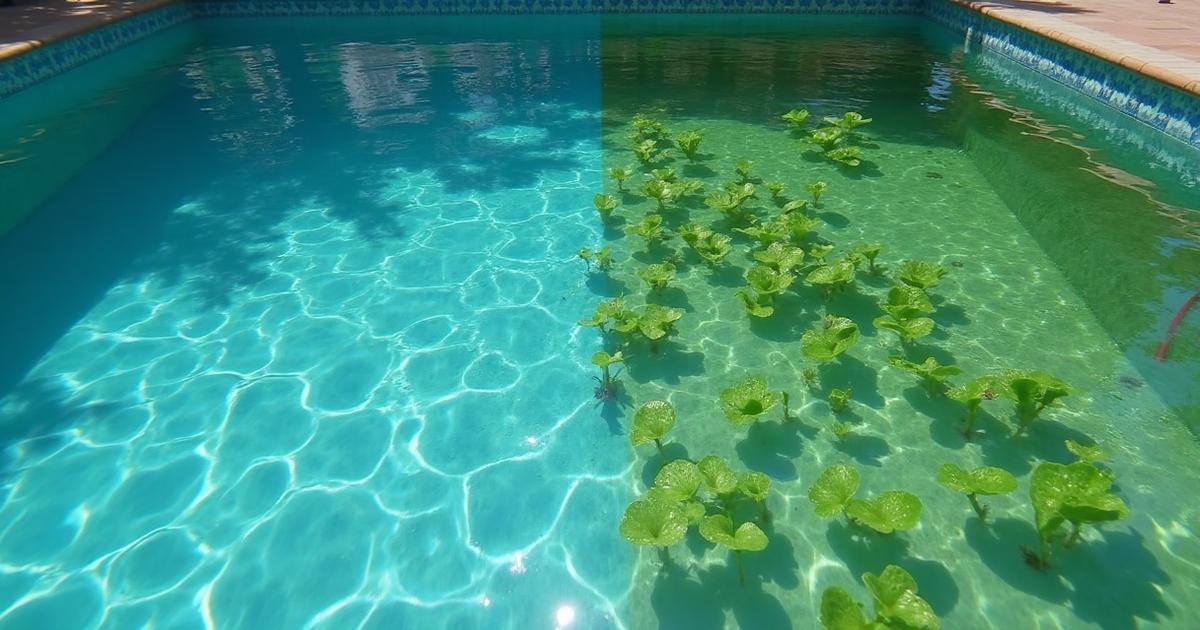
- Water hyacinth (tender, remove before frost)
- Water lettuce (tender)
- Hornwort (hardy, excellent)
- Watercress (edible bonus!)
- Water mint
Moderate Feeders:
- Flag iris
- Marsh marigold
- Purple loosestrife
- Arrowhead
The Strategy: Plant a mix of fast-growing heavy feeders for rapid phosphate uptake, plus slower-growing plants for year-round stability.
Maximising Plant Uptake
- Adequate coverage: Follow regeneration zone sizing guidelines
- Healthy plants: Stressed plants absorb less
- Regular trimming: Remove biomass to export nutrients
- Replace failing plants: Don't let gaps develop
Emergency Phosphate Reduction
When phosphate levels spike:
Immediate Actions
1. Identify the source: Test tap water, check for fertiliser runoff
2. Remove organic debris: Clear all leaves, dead material
3. Increase plant mass: Add floating plants (water lettuce, water hyacinth)
4. Boost circulation: Ensure regeneration zone is fully active
Short-Term Interventions
Barley Straw:
- Releases compounds that inhibit algae
- Doesn't reduce phosphate but limits algae response
- Takes 4-6 weeks to become effective
- Replace every 6 months
Phosphate-Binding Media:
- Iron-based or lanthanum-based products
- Remove phosphate from water column
- Use in filter systems
- Requires replacement when exhausted
Partial Water Changes:
- Only if replacement water is lower in phosphate
- Maximum 10-15% at a time
- Use rainwater if available
What NOT to Do
❌ Algaecides: Kill bacteria essential for nitrogen cycle
❌ Chlorine/bleach: Destroys entire ecosystem
❌ Draining: Wastes water, resets cycle
❌ Flocculants: Create sediment problems
Long-Term Prevention Strategies
Design Solutions
Buffer Zones:
- Plant unfertilised ground between garden and pool
- Use grasses, ground cover, or gravel
- Minimum 2-3 metre buffer for lawns
Rainwater Harvesting:
- Collect roof water for top-ups
- Significantly lower phosphate than tap water
- Reduces water bills too
Edge Design:
- Raised pool edges prevent runoff entry
- Gravel borders capture sediment
- Planted margins filter water
Management Practices
Fertiliser Calendar:
- Apply lawn fertiliser in autumn (after swimming season)
- Choose phosphate-free products
- Apply during dry weather only
- Follow application rates exactly
Debris Protocol:
- Daily surface skimming in autumn
- Leaf netting September-November
- Remove fallen material same day if possible
Maintenance Schedule:
- Monthly phosphate testing
- Regular plant trimming (export nutrients)
- Annual sediment removal if needed
Monitoring Program
Track these metrics over time:
- Monthly phosphate readings
- Algae observations (type, location, severity)
- Top-up water sources and volumes
- Fertiliser applications in garden
- Weather events (heavy rain, storms)
Patterns will emerge showing your pool's specific vulnerabilities.
Phosphate vs. Nitrate: Understanding the Difference
| Factor | Phosphate | Nitrate |
|---|---|---|
| Source | Fertilisers, tap water, debris | Swimmers, wildlife, decay |
| Removal | Plants, binding media | Plants, bacteria |
| Limiting factor | Usually YES | Usually NO |
| Algae connection | Directly controls growth | Contributes but rarely limits |
| Testing frequency | Monthly | Monthly (if curious) |
Key Point: Controlling phosphate is often more effective than worrying about nitrogen. The nitrogen cycle handles nitrogen automatically; phosphate requires active management.
The Phosphate-Free Pool
With proper design and management, natural pools can maintain phosphate levels below 0.03 mg/L indefinitely. At these levels:
- Algae growth is physically limited
- Plants easily outcompete any algae
- Water remains crystal clear
- Minimal intervention required
The goal isn't zero phosphate (impossible), but keeping levels low enough that algae can't gain a foothold.
Your Action Plan
1. Test your tap water for phosphate baseline
2. Test your pool water to establish current levels
3. Identify sources in your specific situation
4. Address the biggest source first
5. Monitor monthly and adjust as needed
6. Maintain healthy plants for ongoing removal
Follow regular maintenance practices to stay on top of potential phosphate sources. Phosphate control isn't glamorous, but it's often the difference between pools that stay clear effortlessly and pools that constantly battle algae. This cost-effective approach to water quality management is one of the reasons natural pools are so economical to run. Master this invisible element, and your natural swimming pool will reward you with trouble-free, crystal-clear water.
Frequently Asked Questions
What is a safe phosphate level for a natural swimming pool?
Aim for below 0.03 mg/L for excellent water quality with minimal algae risk. Levels of 0.03-0.1 mg/L are acceptable. Above 0.1 mg/L, algae blooms become increasingly likely. UK tap water often contains 0.5-2.0 mg/L, so source water may need consideration.
Why does my natural pool get algae despite having lots of plants?
High phosphate levels from external sources (fertilisers, tap water, debris) can overwhelm even healthy plant populations. Test your phosphate level—if it's above 0.1 mg/L, address the source. Plants handle nitrogen well but may struggle with excessive phosphate input.
Can I use lawn fertiliser near my natural swimming pool?
Use phosphate-free fertilisers within 5 metres of your pool. Apply during dry weather to prevent runoff. Better still, maintain a 2-3 metre unfertilised buffer zone. Fertiliser runoff is the most common source of pool phosphate problems.
How does rainwater help control phosphate in natural pools?
Rainwater typically contains almost zero phosphate, unlike tap water which often contains 0.5-2.0 mg/L. Using rainwater for top-ups prevents adding phosphate with every refill. A rainwater harvesting system can significantly reduce long-term phosphate accumulation.
Should I use phosphate-removing chemicals in my natural pool?
Iron-based or lanthanum-based phosphate binders can be used in filter systems as a last resort. However, it's better to address the source. Never use algaecides or other chemicals that could harm the beneficial bacteria essential for your pool's nitrogen cycle.
See a Natural Pool in Your Garden
Upload a photo of your garden and our AI will render a natural swimming pool into your space. Free, instant, and no obligation.
Related Articles
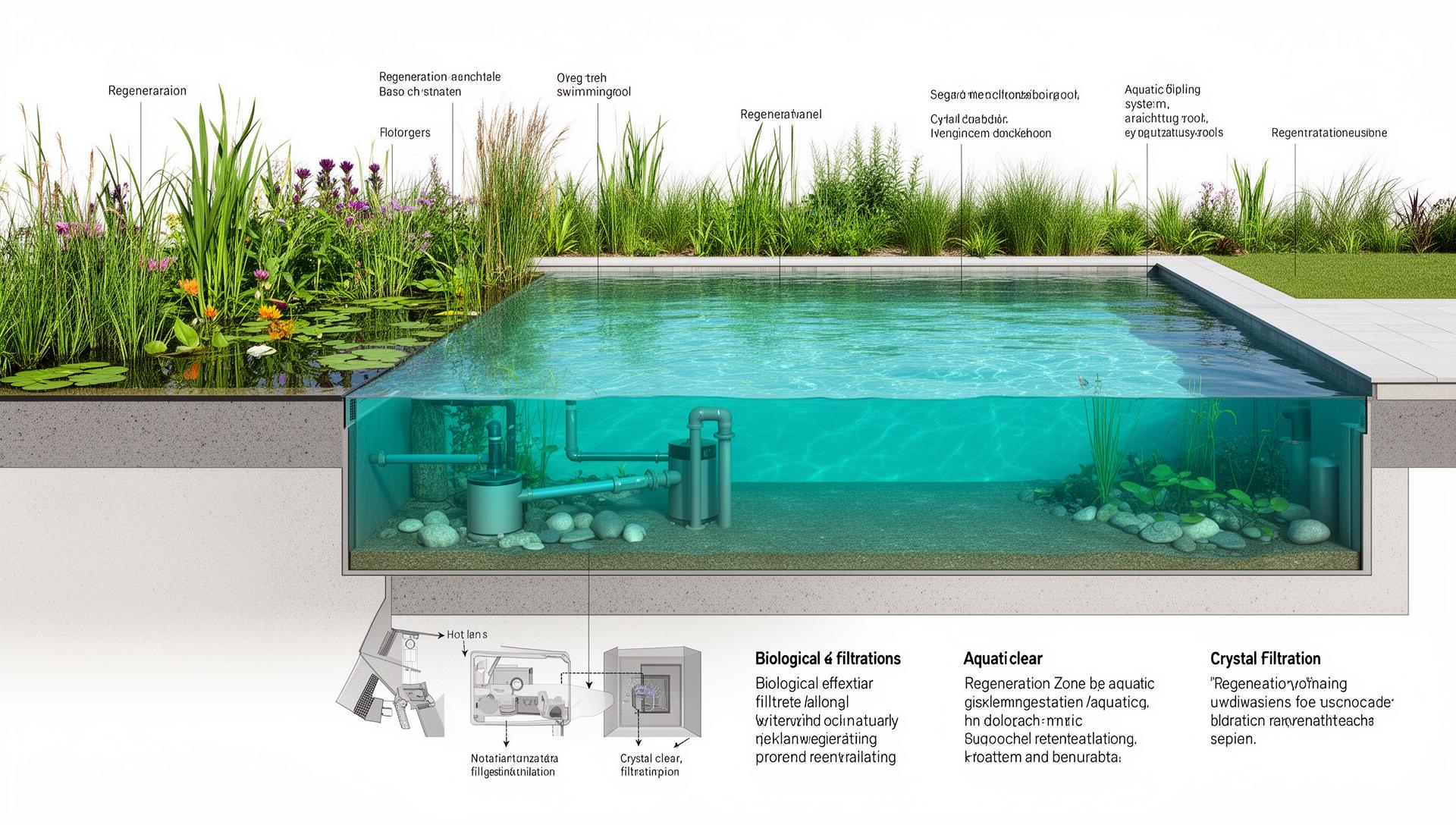
How Natural Swimming Pools Stay Clean Without Chemicals
Learn the science behind natural swimming pools and swimming ponds. Discover how aquatic plants and beneficial bacteria keep your water crystal clear—no chlorine needed.
Natural Swimming Pool Maintenance: Complete UK Year-Round Guide
Everything you need to know about maintaining a natural swimming pool or swimming pond through all four UK seasons. Simple tasks for lasting beauty.
Best Plants for Natural Swimming Pools and Swimming Ponds UK
Discover the essential plants that keep natural swimming pools and swimming ponds clean and beautiful. Our complete guide to UK-native species for every pool zone.