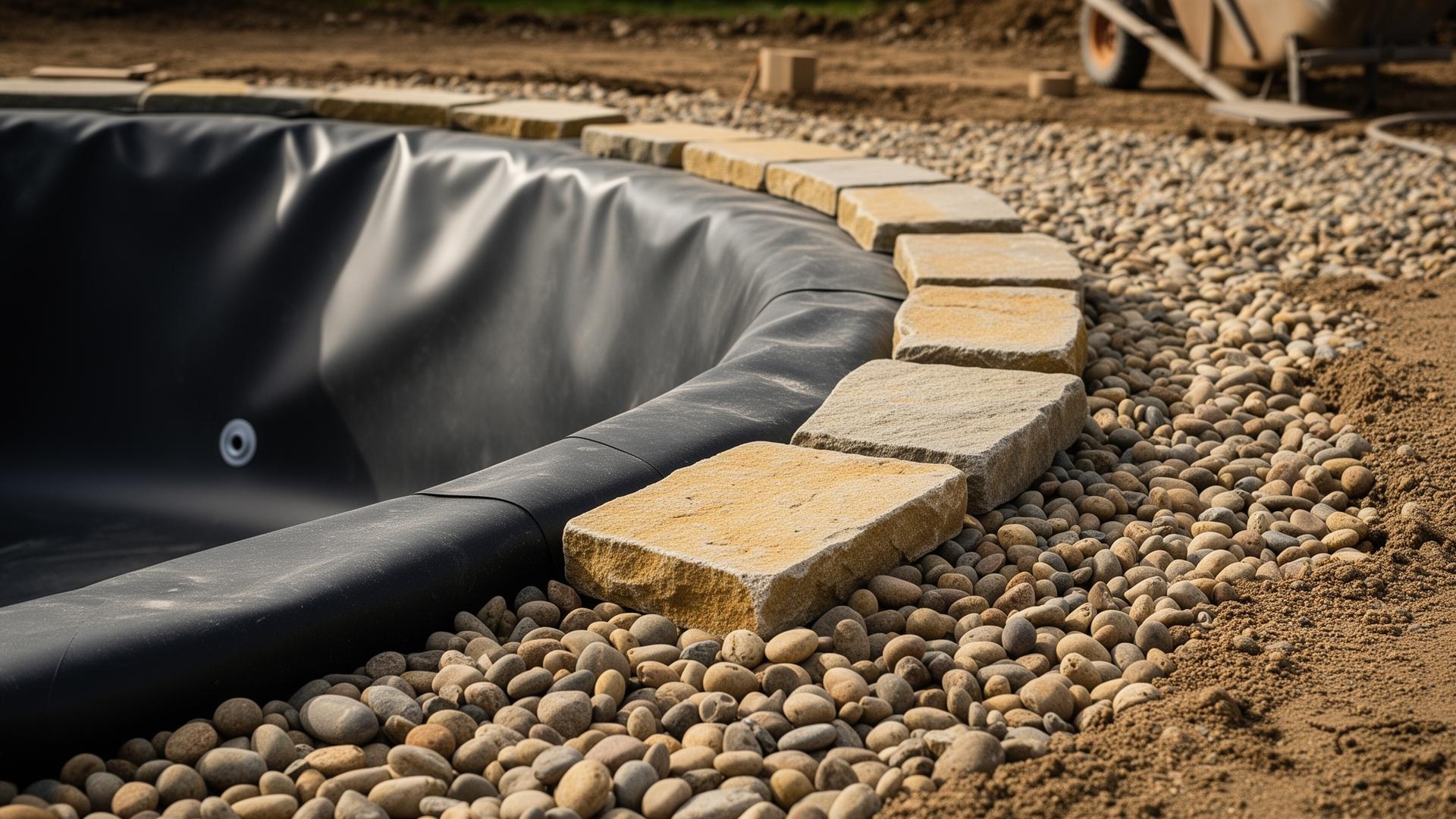
Natural Pool Construction Materials: What You Need to Know
A detailed guide to the materials used in natural swimming pool construction, from liners and substrates to stone edging and filtration media.

Jon Edwards
Natural Pool Specialist
- EPDM rubber liners are the industry standard for natural pools, lasting 30+ years.
- Gravel substrate in the regeneration zone is critical for biological filtration.
- Material choices affect both cost and long-term performance of your pool.
Why Materials Matter in Natural Pool Construction
The materials you choose for your natural swimming pool determine its longevity, performance, and appearance. Unlike traditional chlorinated pools that rely on chemicals, natural pools depend on biological processes—so the right substrate, liner, and edging materials are essential for creating a healthy, self-sustaining ecosystem.
Understanding materials also helps you make sense of cost estimates and have informed conversations with your chosen designer.
Pool Liners
EPDM Rubber Liner
The most popular choice for natural pools in the UK:
- Lifespan: 30-50 years with proper installation
- Thickness: 1.0mm or 1.14mm for pools (thicker = more puncture resistant)
- Flexibility: Moulds to complex shapes and contours
- Fish and plant safe: No toxic leaching
- Cost: £8-£15 per m² for material alone
- Colour: Black (best for natural appearance and heat absorption)
EPDM is our recommended liner for most projects. It handles the UK's freeze-thaw cycles without cracking and is easily repaired if damaged.
Butyl Rubber Liner
An alternative to EPDM with similar properties:
- Slightly more expensive than EPDM
- Excellent longevity (40+ years)
- Very flexible and puncture-resistant
- Historically the UK standard before EPDM became widely available
Reinforced PVC
Less common for natural pools but occasionally used:
- Lower cost than rubber liners
- Shorter lifespan (15-20 years)
- Less flexible in cold temperatures
- Can be welded on-site for complex shapes
- Not recommended for premium installations
Concrete and Rendered Pools
Some high-end natural pools use:
- Sprayed concrete (gunite/shotcrete) shells
- Rendered blockwork with tanking systems
- Significantly more expensive (add £20,000-£40,000)
- Excellent for formal, architectural designs
- Requires waterproof coating (epoxy or specialist render)
Substrate and Filtration Media
The regeneration zone relies on the right substrate for biological filtration:
Washed Gravel (8-16mm)
The primary substrate in most natural pool regeneration zones:
- Provides enormous surface area for beneficial bacteria
- Supports aquatic plant root systems
- Allows water to flow through for filtration
- Must be washed to remove fines that cause cloudy water
- Typically 200-300mm deep
Lava Rock / Volcanic Granulate
Premium filtration media with superior performance:
- Extremely porous (more surface area per volume than gravel)
- Lightweight and easy to handle
- Excellent at supporting the nitrogen cycle
- Higher cost but worth it for smaller regeneration zones
- Often used in combination with gravel
Sand
Used in specific applications:
- Fine sand layers beneath liners for protection
- Sand filters as part of pump-based filtration
- Not suitable as a primary planting substrate (too compact)
Planting Substrate
For aquatic plants in the regeneration zone:
- Specialist aquatic compost (low-nutrient) for planting baskets
- Hessian-wrapped root balls for bare-root plants
- Avoid garden compost—excess nutrients feed algae and disrupt phosphate balance
Edging and Coping Materials
The visible edge of your pool makes the biggest aesthetic impact:
Natural Stone
The premium choice for natural pools:
- Yorkstone: Classic English look, warm tones, £80-£150/m²
- Sandstone: Wide colour range, good grip, £50-£100/m²
- Limestone: Elegant, light tones, £60-£120/m²
- Granite: Extremely durable, modern look, £70-£130/m²
Timber Decking
Popular for contemporary designs:
- Hardwood: (iroko, ipe): 25+ year lifespan, premium look
- Softwood: (treated pine): Budget option, 10-15 year lifespan
- Composite: Low maintenance, consistent appearance, 25+ years
Artificial or Reconstituted Stone
A budget-friendly alternative:
- Consistent colour and sizing
- Lower cost than natural stone (£30-£60/m²)
- Can look less authentic close up
- Good for areas not in direct sight lines
Structural Materials
Retaining Walls
For pools built on slopes or with raised sections:
- Concrete block retaining walls (rendered or clad)
- Gabion baskets (wire cages filled with stone)
- Railway sleepers (for informal designs)
- Structural engineering is essential for raised pools
Pipework and Fittings
All below-ground pipework should be:
- Pressure-rated PVC or PE (polyethylene)
- UV-stabilised for any exposed sections
- Sized appropriately for flow rates (typically 50-110mm diameter)
- Fitted with isolating valves for maintenance access
Material Costs Summary
| Material | Typical Cost | Lifespan |
|---|---|---|
| EPDM liner (1.14mm) | £8-£15/m² | 30-50 years |
| Washed gravel substrate | £40-£60/tonne | Permanent |
| Lava rock | £80-£120/tonne | Permanent |
| Natural stone edging | £50-£150/m² | 50+ years |
| Hardwood decking | £80-£150/m² | 25+ years |
| Composite decking | £60-£120/m² | 25+ years |
Choosing Materials for Your Project
The best material choices depend on your design style, budget, and site conditions. Consider:
- Budget: EPDM + gravel + sandstone edging offers the best value
- Longevity: Invest in quality liner and natural stone—they outlast everything else
- Aesthetics: Match materials to your house and garden style
- Maintenance: Composite decking and natural stone require less upkeep than timber
- Sustainability: Natural and locally-sourced materials reduce environmental impact
A professional pool builder will advise on the best material combination for your specific site, soil conditions, and planning requirements.
Frequently Asked Questions
What is the best liner for a natural swimming pool?
EPDM rubber liner (1.0mm or 1.14mm thickness) is the industry standard for natural pools in the UK. It lasts 30-50 years, handles freeze-thaw cycles, is safe for plants and wildlife, and is easily repairable. Butyl rubber is a quality alternative.
What gravel do you use in a natural pool?
Washed gravel (8-16mm) is used in the regeneration zone at 200-300mm depth. It must be thoroughly washed to remove fine particles that cause cloudy water. Lava rock is a premium alternative with superior filtration capacity due to its porous structure.
How long do natural pool materials last?
EPDM liners last 30-50 years, natural stone edging 50+ years, and gravel substrate is essentially permanent. Hardwood decking lasts 25+ years. Quality materials in a natural pool can outlast conventional pool finishes that need resurfacing every 10-15 years.
Book a Free Consultation
Speak directly with our design team about your project. We'll assess your site, discuss timelines, and provide realistic budget guidance — completely free.
Ready to start your project?
Book a free consultation with our design team to discuss your garden and budget.
Related Articles
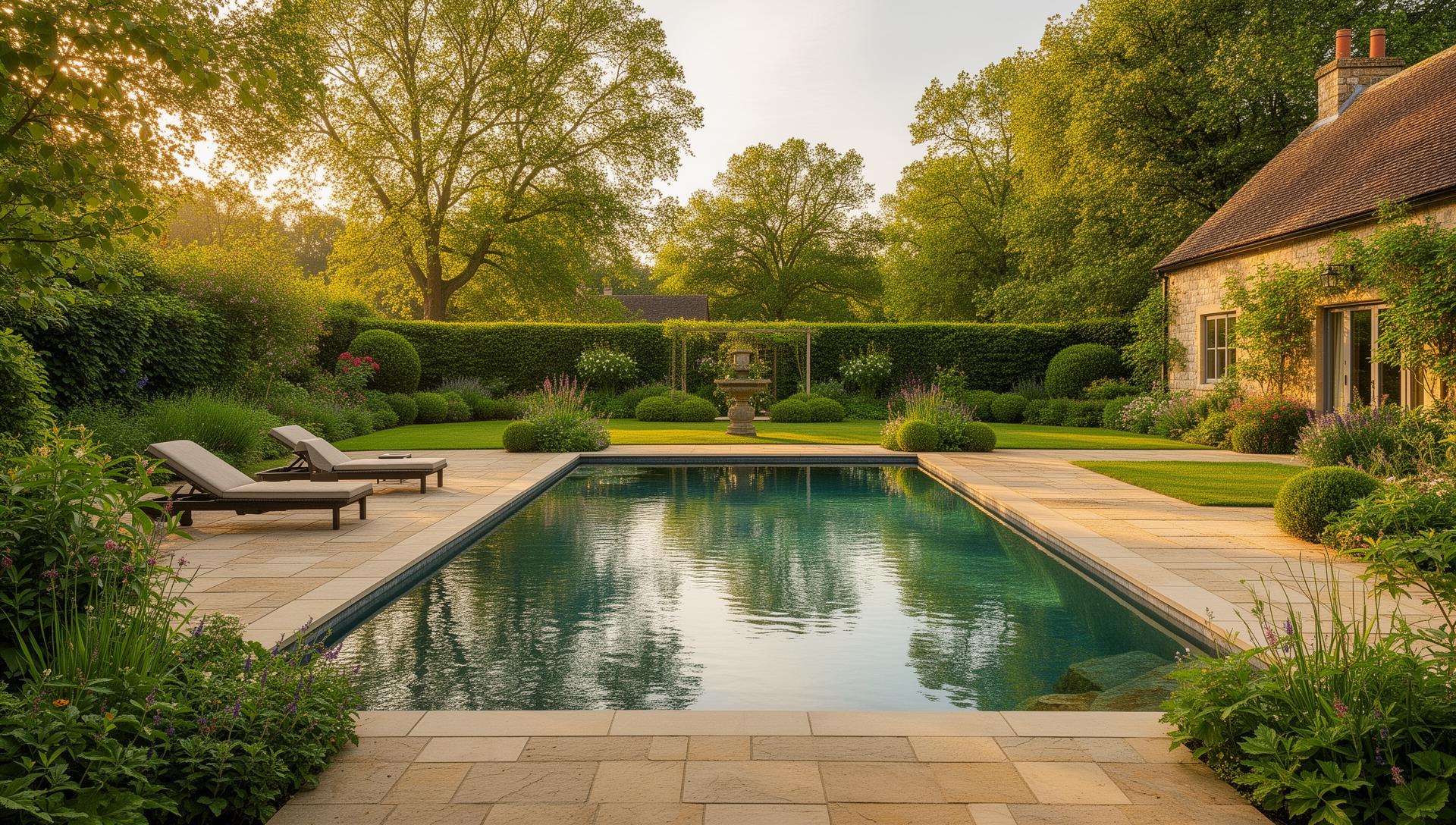
Natural Swimming Pool Cost UK: Complete 2026 Guide
Discover the true cost of a natural swimming pool in the UK. From swimming pond cost factors to installation, we break down every expense for your project.
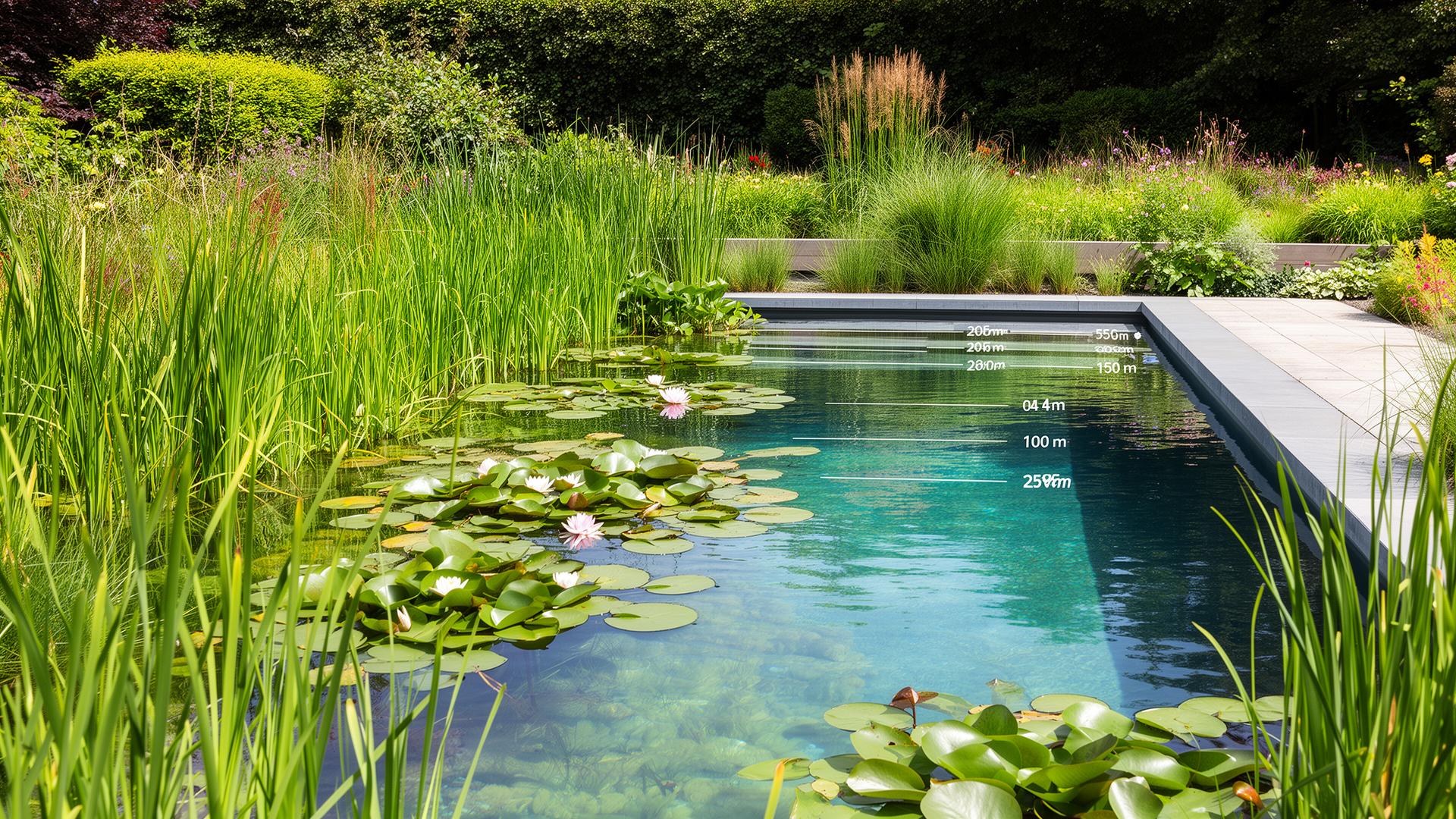
How Big Should Your Natural Pool Regeneration Zone Be? UK Guide
Calculate the perfect regeneration zone size for your natural swimming pool. Learn the ratios, factors, and UK-specific considerations for optimal water quality.
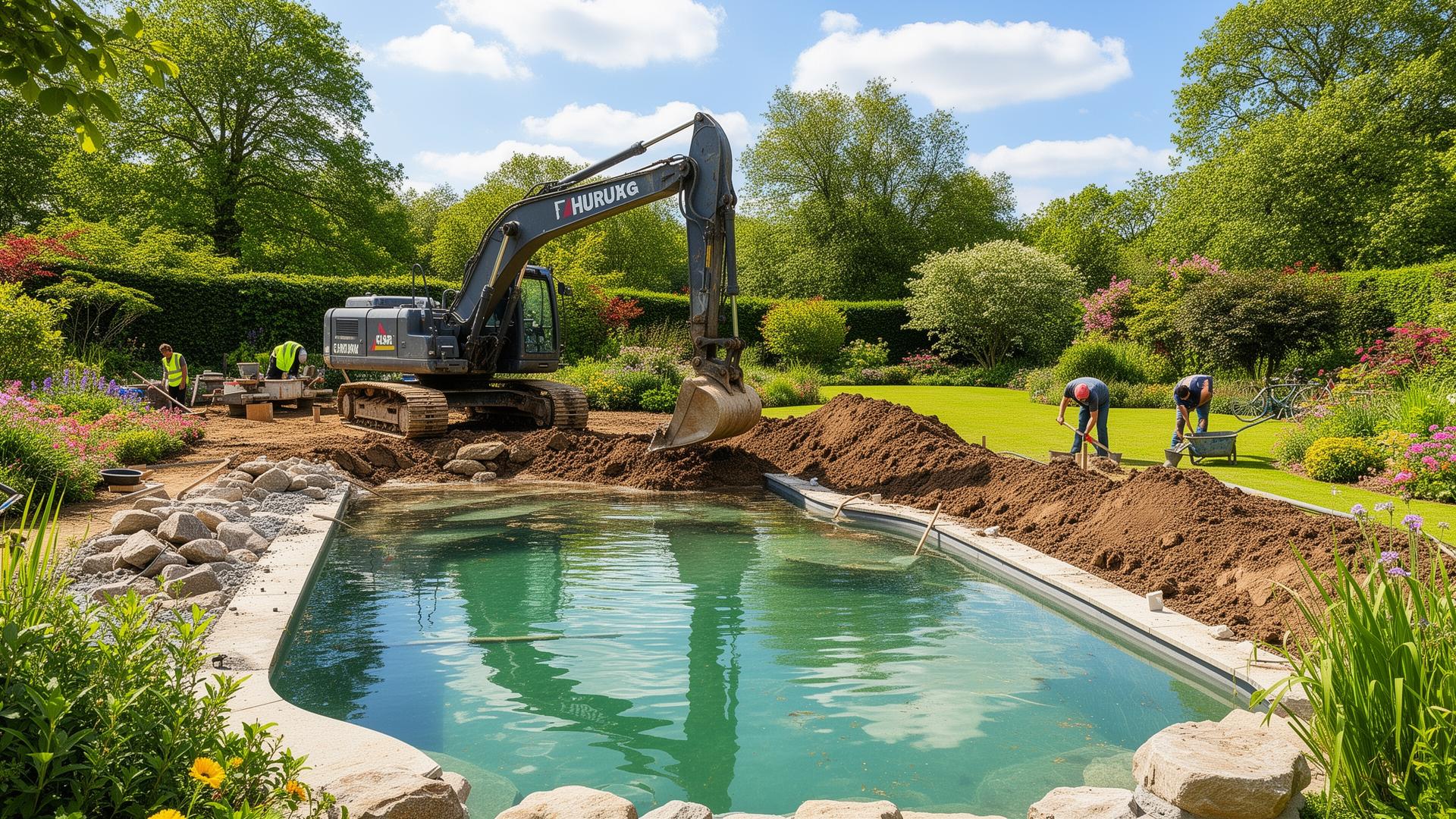
Natural Swimming Pool Construction Timeline: What to Expect in 2026
A complete guide to natural pool construction phases from planning to first swim. Understand realistic timelines and what happens at each stage of your build.