Natural Swimming Pool Construction Timeline: What to Expect in 2026
A complete guide to natural pool construction phases from planning to first swim. Understand realistic timelines and what happens at each stage of your build.

Jon Edwards
Founder & Lead Designer
- Construction typically moves from design to excavation, lining, and planting.
- Timelines depend on size, weather, access, and planting seasons.
- Expect a maturation period before water reaches peak clarity.
Understanding Your Build Timeline
Building a natural swimming pool is a journey that typically spans 12-16 weeks from groundbreaking to first swim. Understanding each phase helps you plan effectively and set realistic expectations. This guide walks you through every stage of the construction process.
Overview: The Complete Timeline
| Phase | Duration | When |
|---|---|---|
| Design & Planning | 2-4 weeks | Before construction |
| Excavation | 2-3 weeks | Weeks 1-3 |
| Structural Work | 2-3 weeks | Weeks 3-6 |
| Regeneration Zone | 1-2 weeks | Weeks 6-8 |
| Planting & Filling | 1-2 weeks | Weeks 8-10 |
| Maturation | 4-8 weeks | Weeks 10-18 |
Phase 1: Design & Planning (2-4 Weeks)
Before any diggers arrive, the design phase lays the foundation for success.
What Happens
- Site survey and soil analysis
- Detailed design drawings
- Planning permission check (if required)
- Contractor selection
- Material ordering
Key Decisions
- Pool size and shape
- Regeneration zone configuration
- Heating options
- Edge treatments and landscaping
- Access routes for machinery
Why This Phase Matters
Rushing the design phase is one of the most common mistakes homeowners make. Proper planning prevents costly changes during construction.
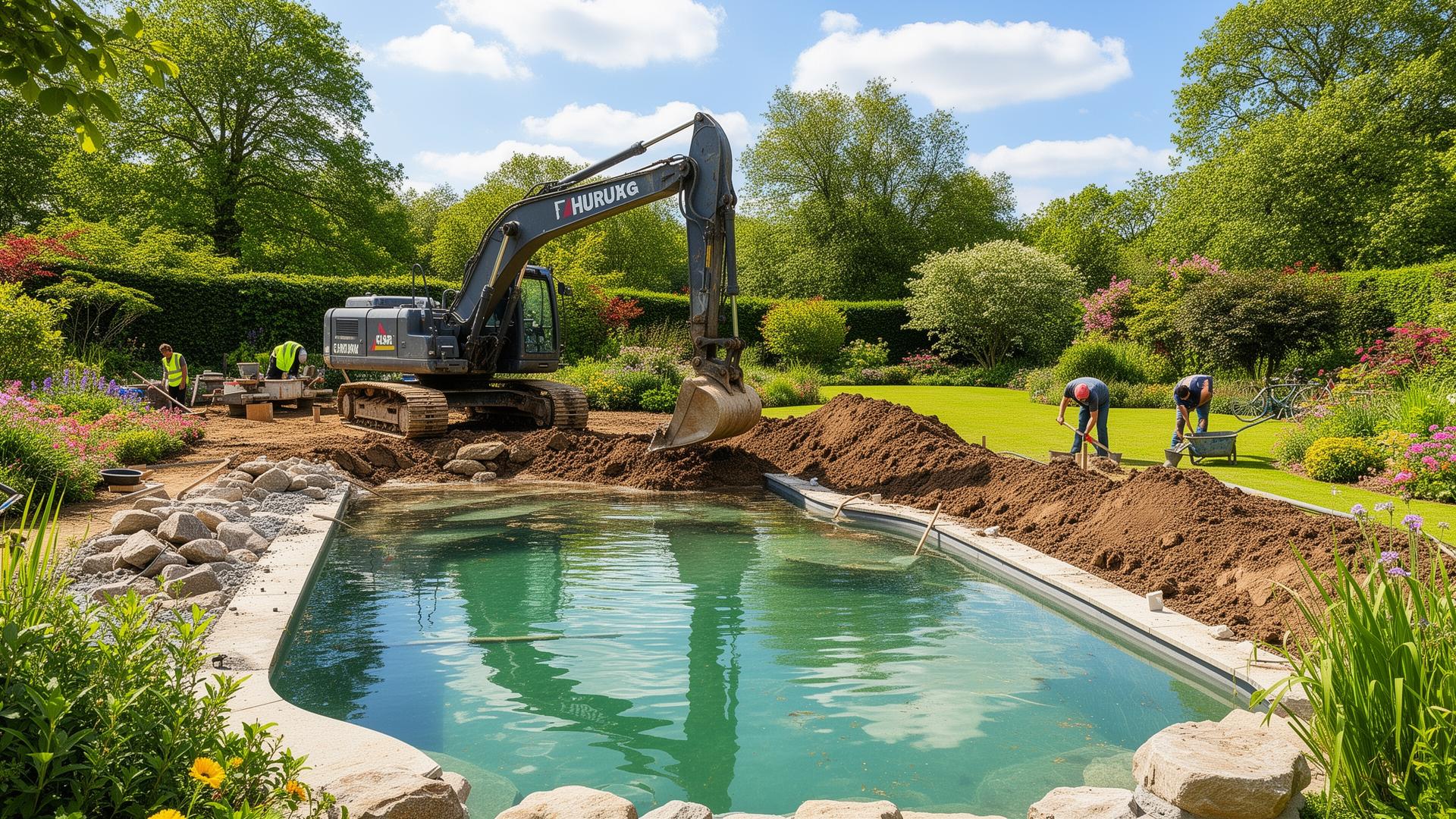
Phase 2: Excavation (2-3 Weeks)
This is when your garden transforms dramatically.
What Happens
- Site clearance and preparation
- Excavation of swimming zone (typically 1.8-2.5m deep)
- Excavation of regeneration zone (0.3-0.6m deep)
- Soil removal or redistribution
- Basic shaping of contours
Equipment Used
- 8-tonne excavator (minimum)
- Dumper trucks for soil removal
- Compaction equipment
Factors Affecting Duration
- Garden access: Narrow side access can slow work significantly
- Soil conditions: Rocky ground or high water tables require specialist techniques
- Size: Larger pools need more excavation time
- Weather: Wet weather can cause delays
Cost Impact
Excavation typically represents 15-20% of total project costs. Difficult access or poor soil can add £5,000-£15,000.
Phase 3: Structural Work (2-3 Weeks)
The pool takes shape with permanent structures.
What Happens
- Subsoil compaction
- Protective fleece installation
- Liner installation (EPDM or butyl)—see our construction materials guide for options
- Edge beam construction
- Coping stone placement
- Basic plumbing installation
- Lighting conduit installation
Critical Quality Points
- Liner protection from sharp objects
- Proper overlap at seams
- Correct fall for drainage
- Secure edge fixing
Material Choices
Different pool designs require different structural approaches. Understanding biological processes helps you choose substrates that support beneficial bacteria. For the complete design guide, explore material options in context:
- Informal swimming pond: Simple liner with gravel edges
- Contemporary natural pool: Concrete edge beam with stone coping
- Premium installation: Reinforced walls with integrated features
Phase 4: Regeneration Zone Setup (1-2 Weeks)
The biological heart of your natural pool.
What Happens
- Gravel substrate installation
- Planting pocket creation
- Water distribution system
- Pump and filter installation
- Biological filter media placement
Technical Requirements
The regeneration zone needs careful attention. See our complete sizing guide for calculations:
- Gravel depths: 200-400mm
- Water flow rates: 1-2 pool volumes per 24 hours
- Planted area: Minimum 30% of total surface
Phase 5: Planting & Filling (1-2 Weeks)
Your pool becomes a living ecosystem.
What Happens
- Aquatic plant installation
- Initial water filling (usually rainwater or treated mains)
- Pump commissioning
- Flow rate adjustment
- Initial water testing
Planting Timing
The best time to plant is:
- Optimal: April-June (spring growth)
- Acceptable: September-October (autumn establishment)
- Avoid: July-August (stress from heat) and November-February (dormancy)
Water Source Considerations
Rainwater is ideal for filling natural pools. Mains water contains chlorine and phosphates that can cause initial algae blooms. If using mains water:
- Let it stand for 48 hours
- Add dechlorinator if filling quickly
- Expect 2-4 weeks additional maturation time
Phase 6: Maturation (4-8 Weeks)
The ecosystem establishes itself.
What Happens
- Beneficial bacteria colonise surfaces
- Plants establish root systems
- Water chemistry stabilises
- Initial algae bloom (normal) subsides
- Ecosystem balances
What to Expect
Don't panic if water appears cloudy initially. This is completely normal. See our cloudy water troubleshooting guide for reassurance. The maturation process:
Week 1-2: Water may be murky, pumps running 24/7
Week 3-4: Clarity begins improving, plants showing new growth
Week 5-6: Significant clearing, beneficial bacteria active
Week 7-8: Water approaching swimming clarity
Can You Swim During Maturation?
Light swimming (1-2 people, occasional use) is fine after week 4. Full use should wait until water clarity is consistent.
Factors That Extend Your Timeline
Weather Delays
UK weather can add 2-4 weeks to projects:
- Heavy rain halts excavation
- Frost delays liner work
- Extreme heat stresses new plants
Access Challenges
Difficult garden access can add 1-2 weeks:
- Narrow side passages require smaller equipment
- Multiple trips for material delivery
- Hand digging in tight areas
Design Changes
Mid-project changes are costly and time-consuming:
- Adding features: 1-2 weeks extra
- Size changes: 2-4 weeks delay
- Material substitutions: 1-3 weeks waiting
Supply Chain Issues
Material availability varies:
- Liners: Usually 1-2 weeks lead time
- Specialist plants: Seasonal availability
- Stone and coping: 2-4 weeks for premium materials
The Best Time to Start
The ideal construction window depends on when you want to swim:
| Start Month | First Swim | Notes |
|---|---|---|
| September | Following June | Ideal - full maturation over winter |
| October | Following July | Good - plants establish in spring |
| March | August | Tight - compressed timeline |
| November-February | Following summer | Planning phase only |
Working With Your Schedule
Holiday Considerations
Plan construction around:
- School holidays (increased family use of garden)
- Important outdoor events
- Landscaping deadlines
Phased Approaches
Some homeowners split the project:
- Year 1: Excavation and structural work
- Year 2: Planting and finishing
This spreads costs but extends total timeline.
Questions to Ask Your Contractor
Before committing, clarify:
1. What's your realistic timeline for our site?
2. How do you handle weather delays?
3. What causes most delays in your experience?
4. Can I see a week-by-week schedule?
5. How will you communicate progress?
The Lume Approach
At Lume, we provide:
- Detailed timeline during design phase
- Weekly progress updates
- Buffer time for UK weather
- Coordination with specialist contractors
- Clear communication throughout
To choose your designer carefully and ensure proper maintenance after construction, work with experienced professionals from the start.
Start your journey with our free AI visualisation tool to see how a natural pool would transform your garden.
Frequently Asked Questions
How long does it take to build a natural swimming pool?
A typical natural swimming pool takes 12-16 weeks from groundbreaking to first swim, plus 4-8 weeks maturation. The exact timeline depends on pool size, garden access, soil conditions, and weather. Planning and design adds 2-4 weeks before construction begins.
Can natural pools be built in winter?
Excavation and structural work can continue through mild winters, but planting should wait until spring (April-June) when plants establish best. Many homeowners use winter for planning and design, with construction starting in early spring for summer swimming.
How long before I can swim in my new natural pool?
Light swimming is usually possible 4 weeks after filling, with full use from 6-8 weeks once the ecosystem has matured. Water may appear cloudy initially but clears as beneficial bacteria establish and plants begin filtering effectively.
What causes delays in natural pool construction?
Common delays include: wet weather halting excavation (2-4 weeks), difficult garden access requiring smaller equipment (1-2 weeks), design changes mid-project (1-4 weeks), and material supply issues (1-3 weeks). Building in a buffer of 2-3 weeks is sensible for UK projects.
Book a Free Consultation
Speak directly with our design team about your project. We'll assess your site, discuss timelines, and provide realistic budget guidance — completely free.
Ready to start your project?
Book a free consultation with our design team to discuss your garden and budget.
Related Articles
Natural Swimming Pool Cost UK: Complete 2026 Guide
Discover the true cost of a natural swimming pool in the UK. From swimming pond cost factors to installation, we break down every expense for your project.
Natural Swimming Pool Planning Permission UK: Complete Guide
Navigate UK planning regulations for natural swimming pools and swimming ponds. Learn when permission is required and how to ensure smooth approval.
How Big Should Your Natural Pool Regeneration Zone Be? UK Guide
Calculate the perfect regeneration zone size for your natural swimming pool. Learn the ratios, factors, and UK-specific considerations for optimal water quality.