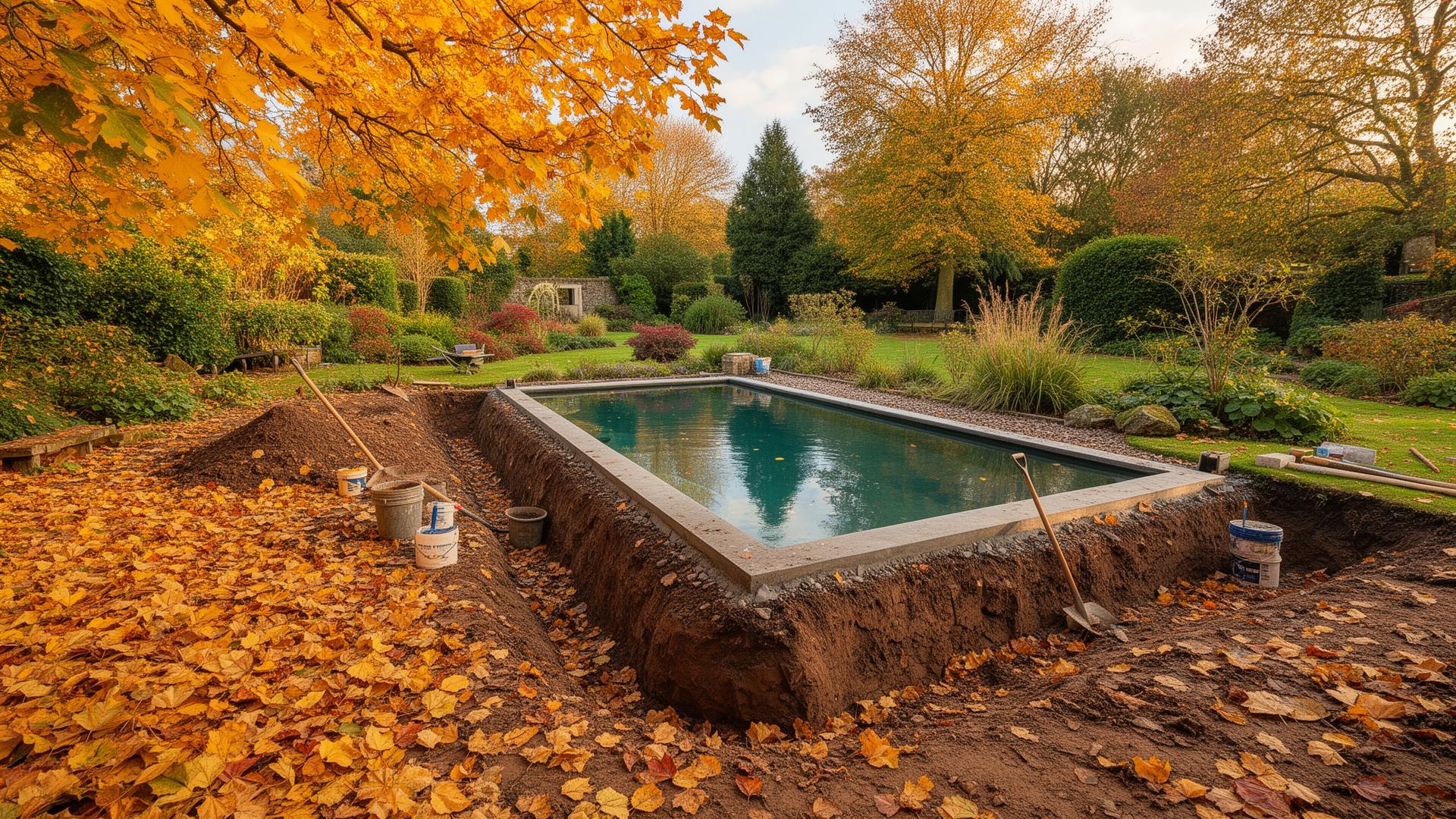
Best Time of Year to Build a Natural Swimming Pool UK
Discover the optimal season to start your natural pool project in the UK. Learn how timing affects construction, planting, and when you'll be swimming.

Jon Edwards
Founder & Lead Designer
- Spring and early autumn are ideal for excavation and planting.
- Weather, contractor availability, and plant stock affect timing.
- Early planning avoids delays and protects growing seasons.
Timing Your Natural Pool Project
When you build your natural swimming pool matters significantly. The UK's seasons affect every phase—from excavation to planting to that first swim. Here's how to time your project for the best results.
The Short Answer
Start in autumn (September-November) for the best outcome. You'll swim by the following summer with a fully matured ecosystem.
But other start times work too—here's the complete breakdown.
Season-by-Season Guide
Autumn Build (September-November) ★ IDEAL
Why It's Best:
- Ground conditions are usually good (not frozen, not waterlogged)
- Plants establish over winter
- Full maturation time before summer
- Contractors often have availability
- Less disruption to garden use
Timeline:
| Month | Activity |
|---|---|
| September | Design finalisation, excavation starts |
| October | Excavation complete, structural work |
| November | Liner, planting begins |
| December-February | Maturation over winter |
| March-April | Ecosystem awakens, final touches |
| May-June | First swims in mature, clear water |
Considerations:
- Heavy autumn rain can delay excavation
- November planting needs cold-tolerant approach
- Some plants available as dormant specimens only
Best For: Homeowners wanting a mature pool for next summer without rushing.
Winter (December-February) — Planning Phase
What's Possible:
- Design and planning
- Planning permission applications
- Contractor selection
- Material ordering
What's Not Advisable:
- Excavation (frozen or waterlogged ground)
- Planting (plants dormant, won't establish)
- Liner work in frost (material brittle)
Timeline:
| Month | Activity |
|---|---|
| December-February | Design, planning, preparation |
| March | Excavation begins |
| April-May | Structural work, planting |
| June-July | Maturation |
| August | First swims |
Best For: Using winter productively while waiting for spring construction.
Spring Build (March-May) — Good But Tight
Why It Works:
- Excellent planting conditions
- Rising temperatures aid establishment
- Ground workable after winter
Challenges:
- Compressed construction timeline
- May not swim same summer (or only late season)
- Contractors busy with backlog
Timeline:
| Month | Activity |
|---|---|
| March | Excavation starts |
| April | Structural work |
| May | Planting (optimal time) |
| June-July | Maturation |
| August-September | First swims |
Best For: Those who missed autumn but want same-year swimming.
Summer Build (June-August) — Possible But Challenging
Why It's Difficult:
- Hot weather stresses new plants
- You miss peak swimming season during construction
- Algae risk highest when establishing
- Garden heavily used for other activities
When It Makes Sense:
- Major garden renovation anyway
- Project delayed from spring
- Building for next year from the start
Timeline:
| Month | Activity |
|---|---|
| June-July | Excavation, structural work |
| August | Planting (challenging, needs shade/water) |
| September-October | Maturation |
| Following May-June | First proper swimming season |
Best For: Those accepting they'll swim the following year.
Month-by-Month Breakdown
| Start Month | First Swim | Ecosystem Maturity | Overall Rating |
|---|---|---|---|
| September | June (9 months) | Excellent | ★★★★★ |
| October | June (8 months) | Excellent | ★★★★★ |
| November | July (8 months) | Very Good | ★★★★☆ |
| March | August (5 months) | Good | ★★★★☆ |
| April | August (4 months) | Fair | ★★★☆☆ |
| May | September (4 months) | Fair | ★★★☆☆ |
| June | Following June (12 months) | Excellent | ★★★☆☆ |
Lead Time Considerations
When to Start Conversations
Start planning 6-12 months before your desired build date:
| Desired Start | Initial Contact |
|---|---|
| September build | January-March |
| March build | September-November |
| June build | December-February |
Why Lead Time Matters
- Quality contractors book months ahead
- Custom liners have 4-6 week lead times
- Specialist plants need ordering in advance
- Design refinement takes time
- Planning permission (if needed) adds 8-12 weeks
Weather Contingencies in the UK
UK weather is unpredictable. Build in buffers:
Rain
- Heavy rain halts excavation
- Waterlogged soil damages structure
- Allow 2-4 extra weeks in wet seasons
Frost
- Frozen ground impossible to excavate
- Liner installation risky below 5°C
- Plants won't establish in frozen soil
Heat
- Extreme heat stresses new plants
- Water evaporation high during filling
- Algae risk increased
Our Approach
At Lume, we build 3-4 weeks contingency into every project schedule to account for UK weather.
Planting Season Alignment
The best time to plant aquatic species:
| Plant Type | Optimal Planting | Acceptable |
|---|---|---|
| Oxygenators | April-June | Sept-Oct |
| Marginals | April-July | Sept-Oct |
| Water lilies | May-June | Sept |
| Floating plants | May-July | None |
Aligning construction to hit optimal planting windows maximises establishment success.
Booking Patterns
Contractor availability follows predictable patterns:
Busiest: March-June (spring rush)
Moderate: July-August, September-October
Quietest: November-February
Booking in the quiet period often means:
- Better availability
- Potentially better pricing
- More attention to your project
Cost Implications
Timing can affect costs:
| Timing | Cost Impact |
|---|---|
| Autumn start | Standard pricing, good availability |
| Winter planning | Time for multiple quotes |
| Spring rush | Premium pricing, limited choices |
| Summer build | Standard pricing but inefficient |
Read our complete cost guide for detailed pricing information.
Special Considerations
Schools/Family Schedules
If children are home during summer holidays, spring completion means they enjoy the pool when available most.
Major Events
Planning a garden party? Wedding at home? Build backward from your event date with generous buffers.
Landscaping Integration
Natural pools work best as part of overall garden design. Coordinating with landscapers affects timing.
Making Your Decision
Use our swimming season calculator to see typical water temperatures for your region, then ask yourself:
1. When do I want to first swim? Work backward from there
2. What's my budget timing? Use our cost calculator for an instant estimate. Deposits typically due at design, balance staged through build
3. What's my garden use pattern? Avoid disruption during peak use
4. How flexible am I? Tight deadlines increase stress and cost
Popular builders book 6-12 months ahead—see our guide to top UK natural pool contractors and their availability.
Our Recommendation
For most UK homeowners, contact us in spring for an autumn build. This gives time for:
- Thorough design process
- Multiple contractor quotes
- Optimal planting window
- Full maturation before summer
- Relaxed, unhurried project
Ready to start planning? Upload a photo to our free AI visualisation tool and see your natural pool before committing to dates. Or book a free consultation to discuss your timeline with our design team.
Frequently Asked Questions
What is the best month to start building a natural pool in the UK?
September is ideal. Autumn construction allows excavation and structural work before winter, planting in late autumn, and full ecosystem maturation over the cooler months. You'll have a mature, clear pool ready for swimming by the following June.
Can you build a natural pool in winter?
Limited construction is possible in mild winters, but frozen or waterlogged ground halts excavation. Winter is best used for design, planning permission applications, and contractor selection. Most construction waits until spring or resumes the following autumn.
How far in advance should I plan my natural pool project?
Start conversations 6-12 months before your desired build date. Quality contractors book months ahead, custom materials need ordering, and thorough design takes time. For an autumn build, contact designers in the preceding spring.
Will building in autumn mean I can swim the following summer?
Yes. An autumn build (September-November) allows 6-8 months for ecosystem maturation over winter. By May-June, you'll have a fully balanced, crystal-clear pool. This is the most common and successful timing for UK natural pools.
Book a Free Consultation
Speak directly with our design team about your project. We'll assess your site, discuss timelines, and provide realistic budget guidance — completely free.
Ready to start your project?
Book a free consultation with our design team to discuss your garden and budget.
Related Articles
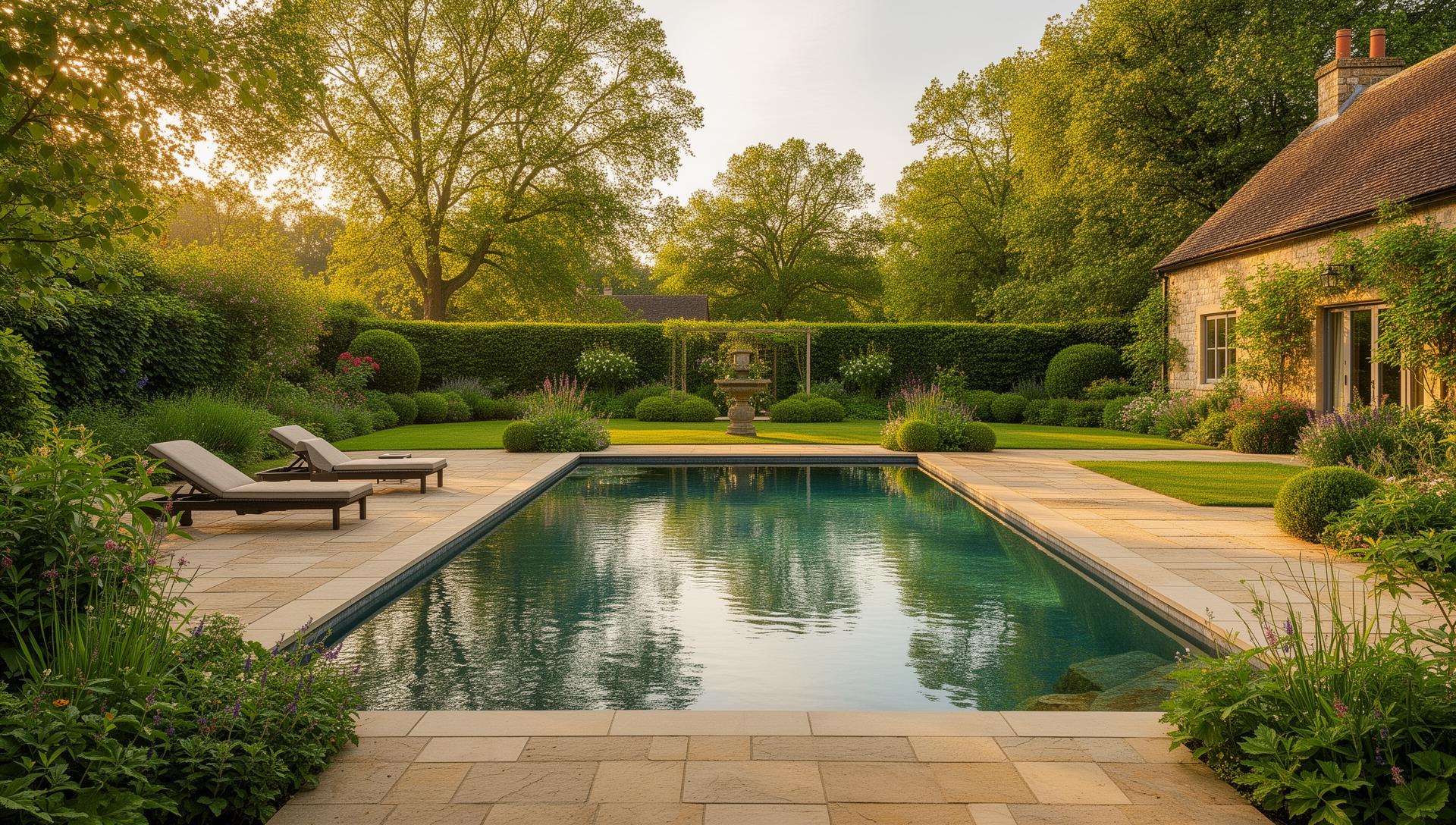
Natural Swimming Pool Cost UK: Complete 2026 Guide
Discover the true cost of a natural swimming pool in the UK. From swimming pond cost factors to installation, we break down every expense for your project.
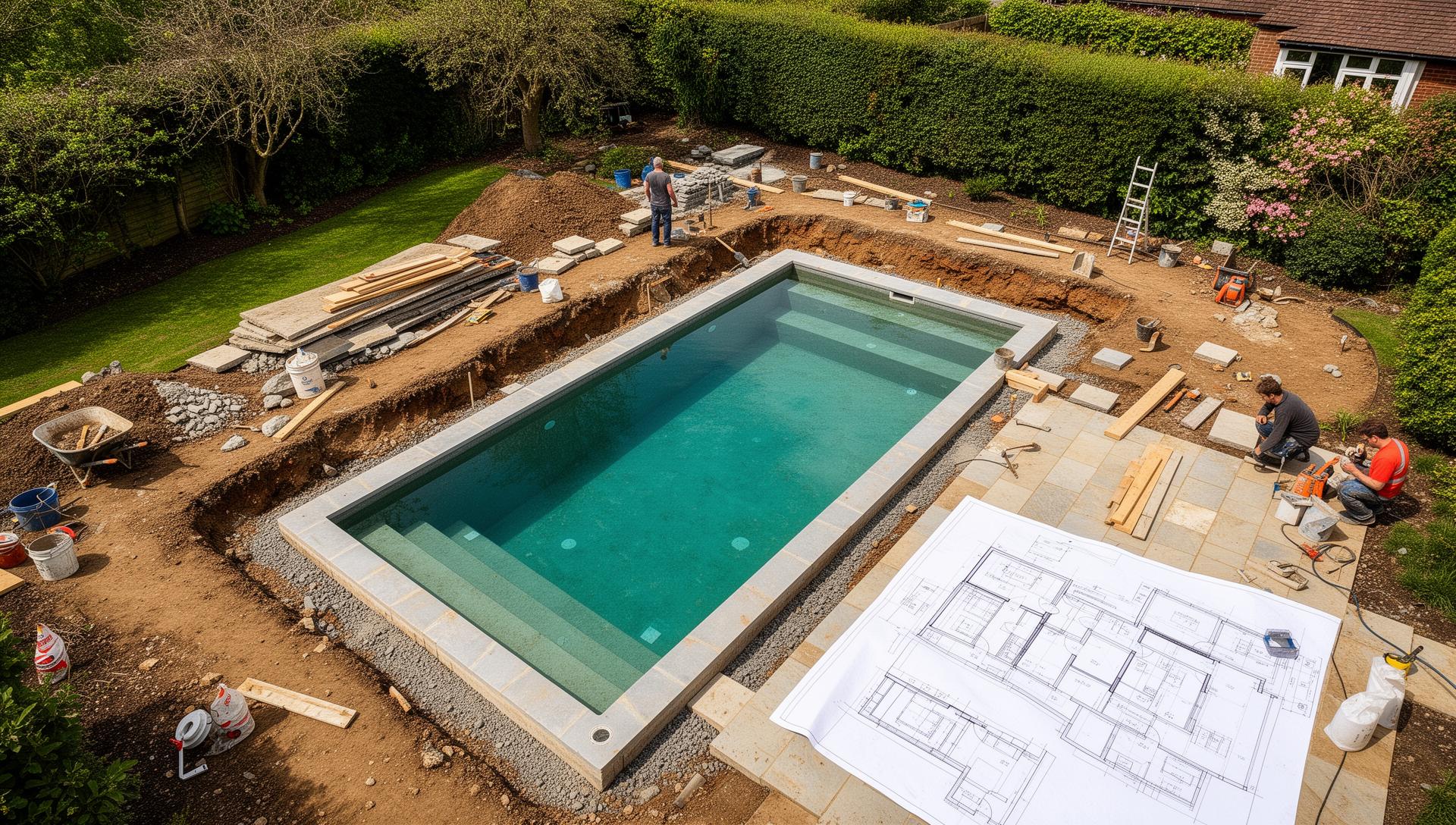
Natural Swimming Pool Planning Permission UK: Complete Guide
Navigate UK planning regulations for natural swimming pools and swimming ponds. Learn when permission is required and how to ensure smooth approval.
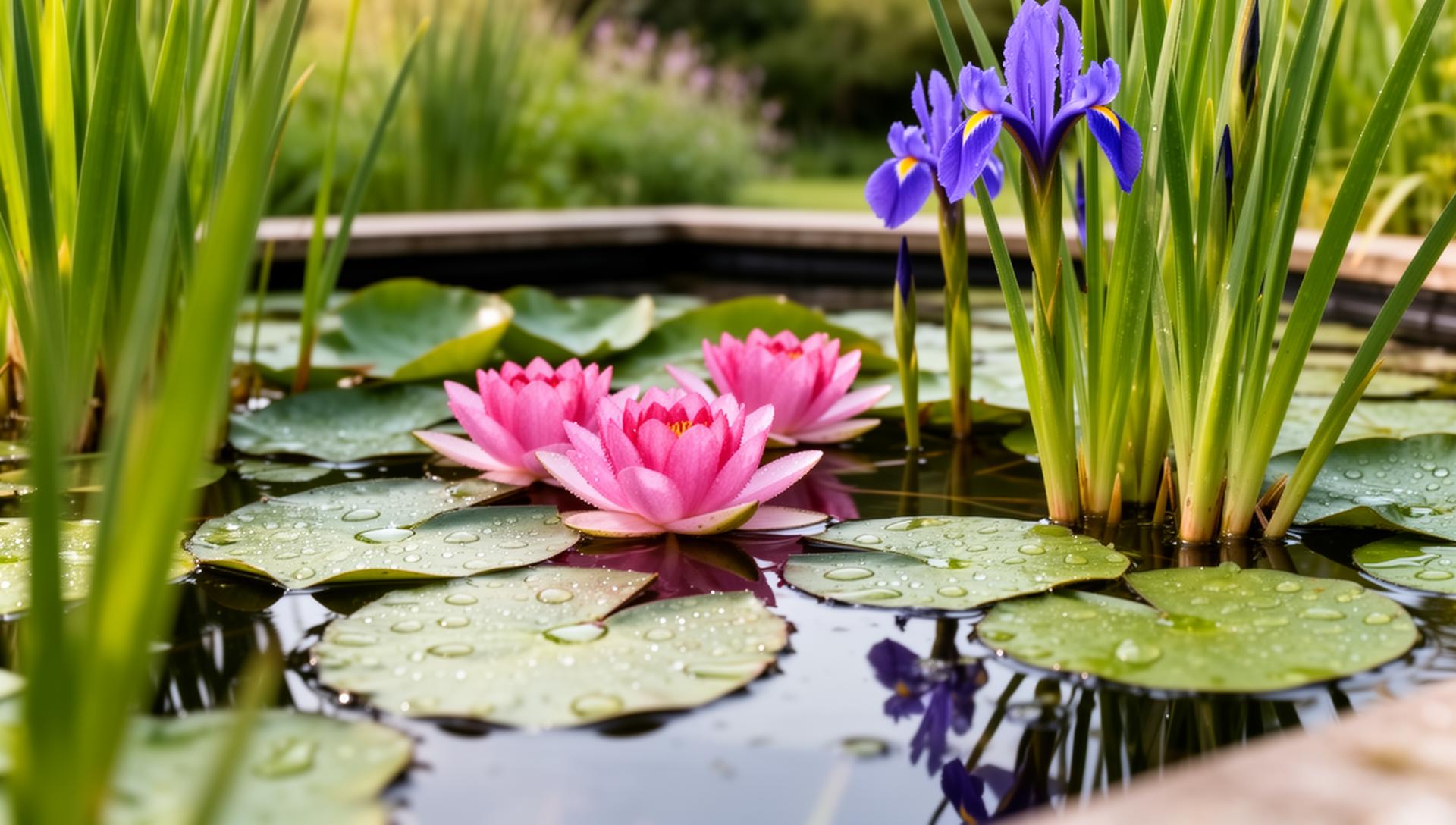
Best Plants for Natural Swimming Pools and Swimming Ponds UK
Discover the essential plants that keep natural swimming pools and swimming ponds clean and beautiful. Our complete guide to UK-native species for every pool zone.