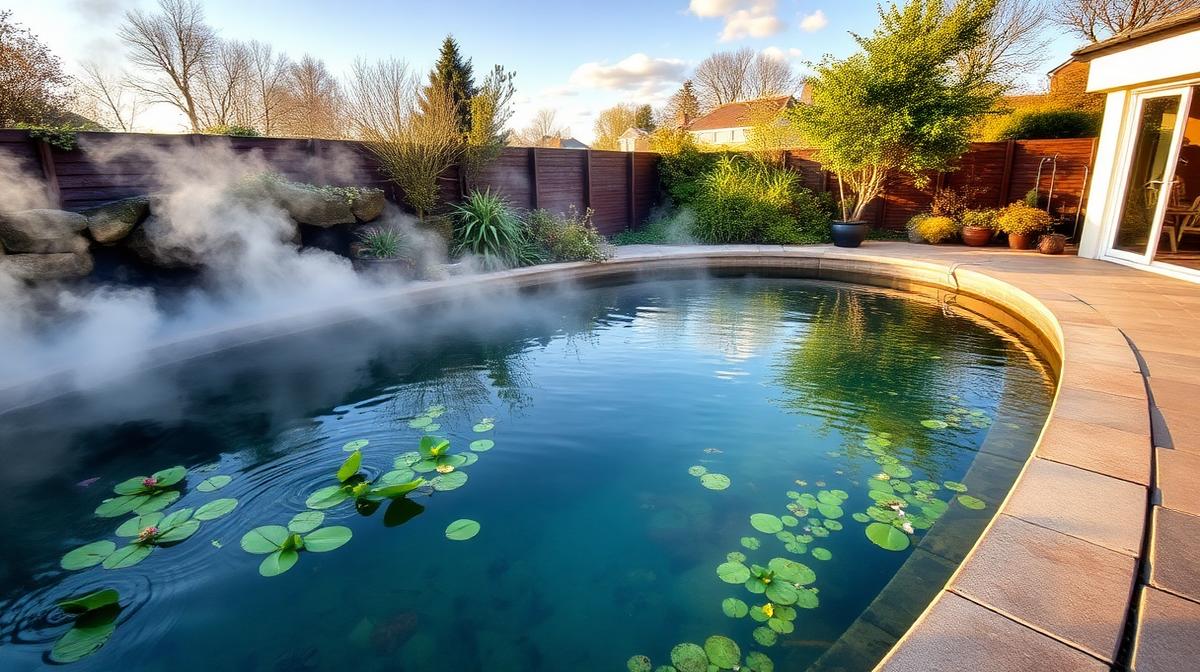
Can You Heat a Natural Swimming Pool in the UK? Costs & Options
Discover whether you can heat a natural swimming pool in the UK. Compare heating options, costs, and efficiency to extend your swimming season by months.

Jon Edwards
Founder & Lead Designer
- Heat pumps and solar options can extend the UK swimming season.
- Running costs depend on pool size, cover use, and insulation.
- Design details like covers and sheltered siting improve heat retention.
Heating a Natural Swimming Pool: Is It Possible?
Yes, you can absolutely heat a natural swimming pool in the UK. This is an important consideration when calculating total costs. Use our swimming season calculator to see how heating affects your swimmable days. While natural pools are designed to work with ambient temperatures, adding heating extends your swimming season from typically May-September to March-November—or even year-round with the right approach.
Why Heat a Natural Swimming Pool?
The UK climate means unheated natural pools typically reach comfortable swimming temperatures (above 18°C) only during summer months. Heating offers:
- Extended season: Swim from March to November
- Consistent comfort: Maintain 22-26°C regardless of weather
- Morning swims: Enjoy early morning swims without the chill
- Greater ROI: More use from your investment
Best Heating Options for Natural Pools
1. Air Source Heat Pumps (Most Popular)
Air source heat pumps are the most efficient and popular choice for natural swimming pools in the UK.
How they work: Extract heat from ambient air and transfer it to pool water. Even at 5°C outside, they extract usable heat.
Costs:
- Installation: £8,000-£15,000
- Running costs: £400-800/year
- Efficiency: 400-600% (COP of 4-6)
Pros:
- Very efficient in UK climate
- Low running costs
- Eligible for RHI scheme
- Quiet modern units
Cons:
- Higher upfront cost
- Less efficient below 0°C
- Requires electricity
2. Ground Source Heat Pumps
The most efficient option but requires significant garden space for ground loops.
Costs:
- Installation: £15,000-£25,000
- Running costs: £300-600/year
- Efficiency: 400-500% year-round
Pros:
- Consistent efficiency regardless of air temperature
- Very low running costs
- RHI eligible
- 20+ year lifespan
Cons:
- High installation cost
- Requires extensive groundwork
- Not suitable for all gardens
3. Solar Thermal Panels
Harness free energy from the sun. Works well as a supplementary system in the UK.
Costs:
- Installation: £4,000-£8,000
- Running costs: Minimal (pump only)
- Efficiency: Depends on sunshine
Pros:
- Zero fuel costs
- Environmentally friendly
- Low maintenance
- Good supplementary system
Cons:
- Inconsistent in UK weather
- Roof space required
- Limited heating in winter
- Usually needs backup system
4. Biomass Boilers
Use wood pellets or chips to heat water. Popular in rural areas with storage space.
Costs:
- Installation: £10,000-£20,000
- Running costs: £500-1,000/year
- Efficiency: 90%+
Pros:
- Carbon neutral
- RHI eligible
- Works in any weather
- Independent of electricity prices
Cons:
- Fuel storage needed
- Regular fuel deliveries
- More maintenance than heat pumps
Temperature Considerations for Natural Pools
Safe Temperature Range
Natural swimming pools function differently than chlorinated pools when heated:
- Optimal range: 20-26°C
- Maximum recommended: 28°C
- Why the limit: Higher temperatures can stress aquatic plants and reduce their filtration efficiency
Impact on the Ecosystem
Moderate heating (up to 26°C) has minimal impact on a well-designed natural pool:
- Plants adapt to slightly warmer conditions
- Bacterial activity may increase (often beneficial)
- Regeneration zone should be sized generously
Important: Discuss heating plans with your designer—regeneration zones may need to be 10-20% larger for heated pools. Higher temperatures can also stress aquatic plants.
Annual Heating Costs Comparison
| Heating Method | Installation | Annual Cost | CO2 Emissions |
|---|---|---|---|
| Air Source Heat Pump | £8,000-15,000 | £400-800 | Low |
| Ground Source Heat Pump | £15,000-25,000 | £300-600 | Very Low |
| Solar Thermal | £4,000-8,000 | £50-100 | Zero |
| Biomass | £10,000-20,000 | £500-1,000 | Carbon Neutral |
| Gas Boiler | £3,000-6,000 | £800-1,500 | High |
Combining Systems for Efficiency
Many UK natural pool owners combine systems for optimal results:
Solar + Heat Pump (Most Popular)
- Solar provides free heating in summer
- Heat pump tops up on cloudy days and extends season
- Combined running costs: £300-500/year
Ground Source + Solar
- Ground source provides baseline heating
- Solar reduces electricity use further
- Lowest possible running costs
Pool Covers: Essential for Heated Pools
A quality pool cover reduces heating costs by 50-70%:
- Thermal covers: £2,000-5,000 for automatic systems
- Solar covers: £500-1,500 for manual options
- Heat retention: Prevents 80% of heat loss overnight
Planning Your Heated Natural Pool
Key Considerations
1. Pool size: Larger pools need bigger heating systems
2. Target temperature: Higher temps = higher costs
3. Season length: Year-round swimming requires more capacity
4. Budget: Balance upfront and running costs
5. Garden constraints: Space for equipment and any ground loops
Recommended Approach
For most UK natural pools, we recommend:
- Air source heat pump as primary system (see our 10-year cost comparison for running cost analysis)
- Solar thermal panels if roof space available
- Automatic thermal cover
- Generous regeneration zone (30-40% of total area)
This combination provides reliable, efficient heating with running costs of £400-600/year for a typical 50m² pool. Heat pump installation requires expertise—ensure your chosen builder has heating experience. Heating also extends the entertaining season, allowing poolside gatherings from April through October. If you're retrofitting heating to an existing pool, consider whether converting a chlorinated pool might make sense.
Government Incentives
The Boiler Upgrade Scheme offers grants for heat pumps:
- Up to £7,500 for air source heat pumps
- Up to £7,500 for ground source heat pumps
- Significantly reduces installation costs
Getting Started
The best approach is to plan heating from the start. Retrofitting is possible but more expensive. Discuss your heating preferences during the design phase to ensure:
- Adequate regeneration zone sizing
- Correct equipment specification
- Optimal placement of heating equipment
- Integration with pool circulation system
Frequently Asked Questions
Can you heat a natural swimming pool?
Yes, natural swimming pools can be heated using air source heat pumps, ground source heat pumps, solar thermal panels, or biomass boilers. Most UK owners use air source heat pumps, which cost £400-800/year to run and can extend the swimming season from May-September to March-November.
What temperature can you heat a natural pool to?
Natural pools can be safely heated to 26-28°C. However, 22-26°C is the optimal range as higher temperatures can stress aquatic plants and reduce their filtration efficiency. Discuss heating plans with your designer to ensure the regeneration zone is appropriately sized.
How much does it cost to heat a natural swimming pool?
Air source heat pumps cost £400-800/year to heat a typical 50m² natural pool to 24°C during the extended season. Ground source heat pumps cost £300-600/year. Adding solar thermal panels and a thermal cover can reduce costs to £300-500/year.
Does heating affect the natural pool ecosystem?
Moderate heating up to 26°C has minimal impact on a well-designed natural pool. Plants adapt to slightly warmer conditions, and bacterial activity may increase (often beneficially). Regeneration zones should be sized 10-20% larger for heated pools.
See a Natural Pool in Your Garden
Upload a photo of your garden and our AI will render a natural swimming pool into your space. Free, instant, and no obligation.
Related Articles
Natural Swimming Pool Cost UK: Complete 2026 Guide
Discover the true cost of a natural swimming pool in the UK. From swimming pond cost factors to installation, we break down every expense for your project.
Natural Swimming Pool Maintenance: Complete UK Year-Round Guide
Everything you need to know about maintaining a natural swimming pool or swimming pond through all four UK seasons. Simple tasks for lasting beauty.
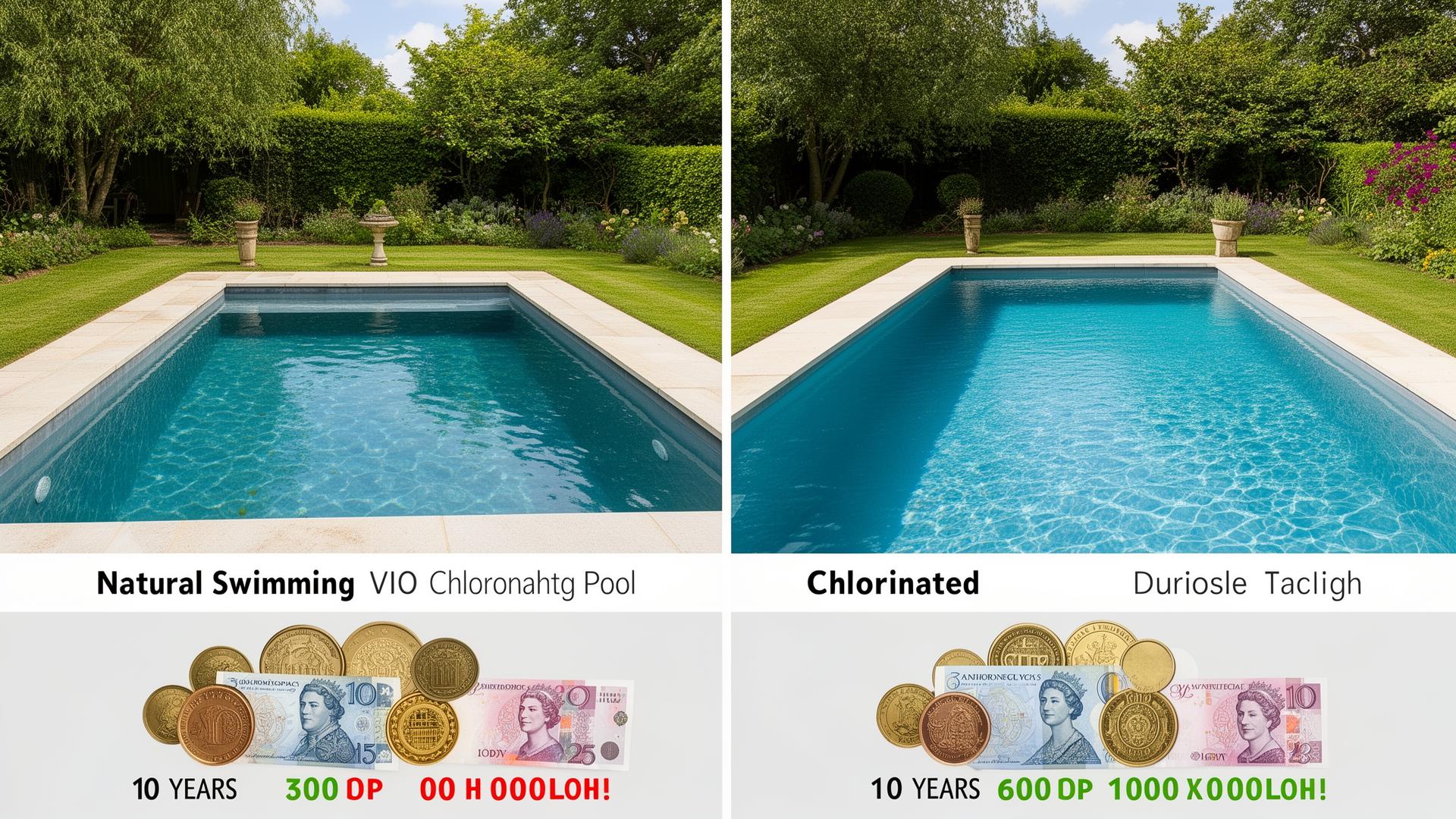
Natural Pool vs Chlorine Pool: True 10-Year Cost Comparison UK
Compare the real 10-year costs of natural swimming pools versus chlorinated pools in the UK. See the full financial picture including running costs, maintenance, and repairs.