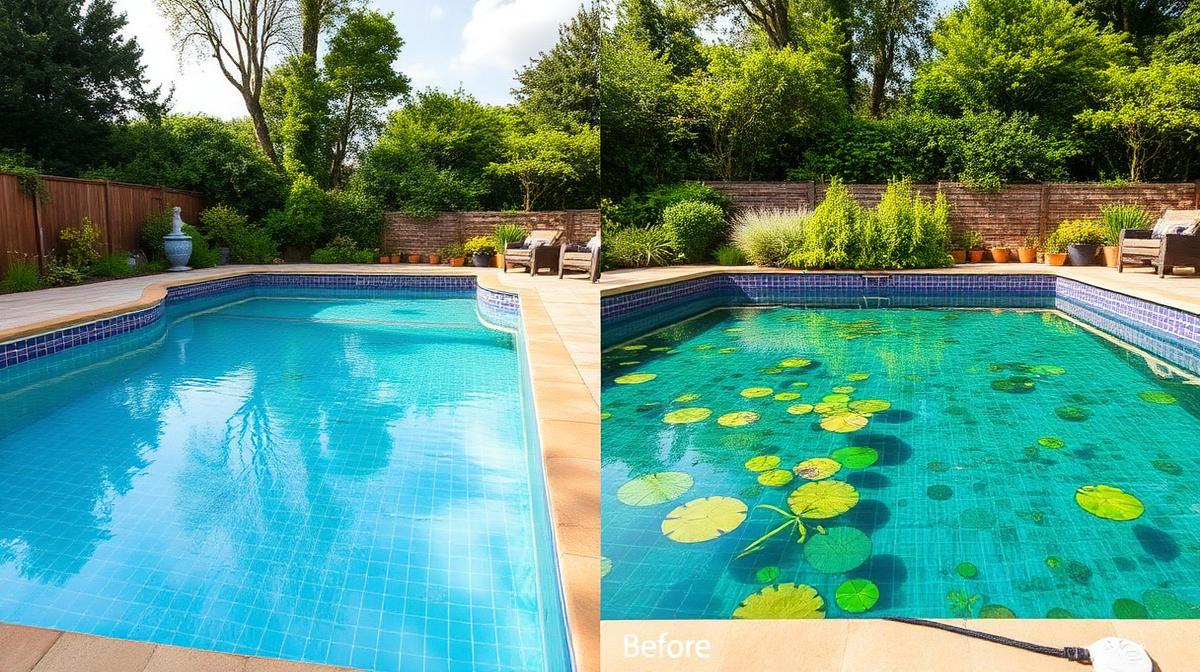
Converting a Chlorine Pool to Natural: Complete UK Guide
Is converting your existing chlorine pool to a natural swimming pool worth it? Explore the process, costs, and considerations for pool conversion in the UK.

Jon Edwards
Founder & Lead Designer
- Most conversions require adding a regeneration zone and biological filtration.
- Existing structure condition determines feasibility and costs.
- Expect a staged transition as water chemistry shifts naturally.
Converting to Natural: Is It Worth It?
If you're tired of red eyes, chemical smells, and the ongoing cost of pool chemicals, converting your existing chlorinated pool to a natural swimming pool is an appealing option. Learn more about how natural pools work to understand what you're getting. But is it feasible, and does it make financial sense?
Why Consider Conversion?
Reasons Owners Convert
Health and wellbeing:
- Eliminate chlorine exposure for skin, respiratory, and overall health
- No more red eyes and skin irritation
- Safe if water is accidentally swallowed
- Better for children and those with sensitivities
Environmental concerns:
- No chemical runoff
- Create wildlife habitat
- Reduced environmental impact
- Lower carbon footprint
Aesthetic appeal:
- Transform stark pool into garden feature
- Year-round beauty
- Attract wildlife
- Unique property feature
Long-term savings:
- No chemical purchases (£500+/year saved)
- Lower running costs
- Reduced equipment replacement
- Less intensive maintenance
Is Your Pool Suitable for Conversion?
Ideal Candidates
Pools most suitable for conversion:
- Larger pools: 50m²+ with space for regeneration zone
- Concrete/gunite pools: Easily modified
- Pools needing refurbishment: Combine repairs with conversion
- Pools with surrounding garden space: Room for plant zones
Challenging Candidates
Conversion may be difficult or impractical for:
- Fibreglass/GRP pools: Limited modification options
- Very small pools: Insufficient space for regeneration zone
- Indoor pools: Require special considerations
- Pools with no surrounding space: Nowhere to add plant zones
Essential Space Requirements
For successful conversion, you need:
- Existing pool volume of 40m³+ (approx. 25m² at 1.6m depth)
- Additional space equal to 30-50% of pool area for regeneration zone
- OR willingness to sacrifice part of swimming area for plants
Conversion Options
Option 1: Full Natural Conversion
What's involved:
- Add separate regeneration zone
- Install biological filtration system
- Remove chemical treatment equipment
- Introduce aquatic plants
- Modify existing circulation
Space needed: Additional 30-50% of pool area
Typical cost: £35,000-£65,000
Result: True natural swimming pool with separate swim and planted zones
Option 2: Hybrid Bio-Pool Conversion
What's involved:
- Upgrade filtration to biological system
- May retain some technology assistance
- UV or minimal phosphate treatment
- Less space required than full natural
Space needed: 15-25% of pool area
Typical cost: £25,000-£45,000
Result: Significantly reduced chemicals with smaller regeneration zone
Option 3: Within-Pool Conversion
What's involved:
- Sacrifice portion of existing pool for regeneration zone
- Divide pool with submerged wall
- No additional excavation needed
- Best for large pools
Space needed: None additional
Typical cost: £30,000-£50,000
Result: Natural pool within existing footprint (but smaller swim area)
The Conversion Process
Phase 1: Assessment and Design (2-4 weeks)
1. Pool survey: Condition of shell, liner, equipment
2. Site survey: Space for regeneration zone
3. Water testing: Baseline readings
4. Design development: Regeneration zone sizing and position
5. Quotation: Detailed breakdown of works
Phase 2: Preparation (1-2 weeks)
1. Drain existing pool: Proper disposal of chlorinated water
2. Remove chemical equipment: Chlorine dosers, salt cells
3. Repair any damage: Cracks, liner issues
4. Prepare for new construction: Access, materials
Phase 3: Construction (4-8 weeks)
For separate regeneration zone:
1. Excavation for new zone
2. Liner installation
3. Aggregate substrate placement
4. Water circulation system
5. Connection to existing pool
6. Initial filling
For within-pool conversion:
1. Construct dividing wall
2. Create substrate areas
3. Modify circulation
4. Prepare planting zones
Phase 4: Biological Establishment (8-12 weeks)
1. Dechlorinate thoroughly: Multiple water changes if needed
2. Plant regeneration zone: Diverse aquatic plants
3. Introduce beneficial bacteria: Seed the system
4. Balance the system: Monitor and adjust
5. Wait for establishment: Patience is essential
Phase 5: Ready for Swimming
Once water tests confirm:
- No chlorine residue
- Stable biology
- Clear water
- Healthy plant growth
Typically 10-16 weeks from project start.
Cost Breakdown
What You'll Pay For
| Component | Typical Cost |
|---|---|
| Assessment and design | £2,000-£4,000 |
| Excavation (if needed) | £5,000-£15,000 |
| Regeneration zone construction | £15,000-£25,000 |
| Biological filtration system | £5,000-£12,000 |
| Planting and substrate | £3,000-£8,000 |
| Circulation modifications | £2,000-£5,000 |
| Electrical work | £1,000-£3,000 |
| Commissioning and balancing | £1,500-£3,000 |
| **Total range** | **£35,000-£75,000** |
Factors Affecting Cost
Higher costs:
- Poor pool condition requiring repairs
- Limited access
- Rock or difficult soil
- Large pool size
- Premium finishes for regeneration zone
Lower costs:
- Good pool condition
- Easy access
- Suitable soil
- Within-pool conversion option
- Owner handling some landscaping
Comparing Conversion vs New Build
For new build costs, see our complete costs guide.
Conversion Advantages
- Lower total cost (typically 40-60% of new build)
- Faster completion
- Retain existing pool infrastructure
- Less disruption
- Maintain pool location
Conversion Limitations
- Constrained by existing pool shape/size
- May not achieve optimal proportions
- Some existing issues may persist
- Less flexibility in design—see our design ideas for inspiration
When New Build Makes Sense
- Existing pool in poor condition
- Pool very small or wrong location
- Want significantly different design
- Major garden redesign planned
Rule of thumb: If your pool needs £30,000+ in repairs anyway, consider whether new build offers better value. See our 10-year cost comparison for financial context. Not all natural pool companies handle conversions—check our guide to UK builders who specialise in pool conversion.
Maintaining Your Converted Pool
First Year
The transition period requires extra attention:
- Weekly water testing
- Monitor plant health
- Watch for algae (normal initially—see our maintenance guide for tips)
- Adjust circulation as needed
- Be patient with the system
Ongoing Maintenance
Once established, maintenance is similar to any natural pool:
- Weekly: Skim surface, check plants
- Monthly: Test water quality
- Seasonal: Plant care, prepare for winter
- Annual: Professional assessment
Annual Running Costs (After Conversion)
| Expense | Before (Chlorine) | After (Natural) |
|---|---|---|
| Chemicals | £500-£800 | £0 |
| Electricity | £400-£600 | £200-£400 |
| Water | £200-£400 | £100-£200 |
| Maintenance | £600-£1,200 | £300-£500 |
| **Total** | **£1,700-£3,000** | **£600-£1,100** |
Common Conversion Challenges
Dechlorination
Chlorine must be completely eliminated before plants can thrive:
- Allow to dissipate naturally (2-4 weeks)
- May need partial water changes
- Test before planting
- Residual chloramines can persist
Algae Blooms
Common during establishment:
- System is finding balance
- Usually resolves in 4-8 weeks
- Avoid temptation to add chemicals
- Improve circulation if persistent
Plant Establishment
Plants need time to establish:
- May look sparse initially
- Growth accelerates after first season
- Some losses normal (10-20%)
- Replace as needed
Mindset Shift
Owners must adjust expectations:
- Water may not be chemically "sterile"
- Some organic matter is normal
- Occasional wildlife visitors
- Different kind of beauty
Case Study: Essex Pool Conversion
Original pool: 8m x 4m chlorinated pool (12 years old)
Issues: Liner needed replacing, heating costs high, maintenance tedious
Conversion scope:
- New regeneration zone (18m²) added to side
- Original pool retained as swim zone
- New biological filtration system
- Existing heating retained
Cost: £48,000
Timeline: 14 weeks to completion
Owner verdict: "We swim more than ever. No more red eyes, the garden is beautiful year-round, and we're saving over £1,500 a year in chemicals and running costs."
Getting Started with Conversion
Step 1: Initial Consultation
Contact us for a free assessment:
- Evaluate your existing pool
- Assess available space
- Discuss your goals
- Provide initial budget guidance
Step 2: Site Survey
Detailed evaluation including:
- Pool condition report
- Space measurement
- Soil assessment
- Design recommendations
Step 3: Design and Quote
Receive:
- Conversion design drawings
- Detailed specification
- Fixed-price quotation
- Timeline
Upload a photo of your existing pool and garden to start the conversation, or book a free consultation to discuss your conversion project directly with our team.
Frequently Asked Questions
Can you convert a chlorine pool to a natural pool?
Yes, most concrete/gunite chlorinated pools can be converted to natural swimming pools. The conversion involves adding a regeneration zone (either separately or within the existing pool), installing biological filtration, and introducing aquatic plants. Fibreglass pools are more challenging to convert.
How much does it cost to convert a pool to natural?
Pool conversion typically costs £35,000-£75,000 depending on the approach. Full natural conversion with a separate regeneration zone costs £35,000-£65,000. Hybrid bio-pool conversion costs £25,000-£45,000. Within-pool conversion (sacrificing some swim area) costs £30,000-£50,000.
How long does pool conversion take?
The conversion process takes 10-16 weeks from start to swimming. This includes assessment and design (2-4 weeks), preparation (1-2 weeks), construction (4-8 weeks), and biological establishment (8-12 weeks). The establishment phase cannot be rushed.
Is it better to convert or build new?
Conversion typically costs 40-60% of a new build and is faster with less disruption. However, new builds offer more design flexibility and may make more sense if your existing pool needs £30,000+ in repairs or is poorly located.
Get Your Free Pool Estimate
Upload a photo of your garden and receive a personalised AI render with a detailed cost estimate within 48 hours. No obligation, completely free.
Ready to start your project?
Book a free consultation with our design team to discuss your garden and budget.
Related Articles
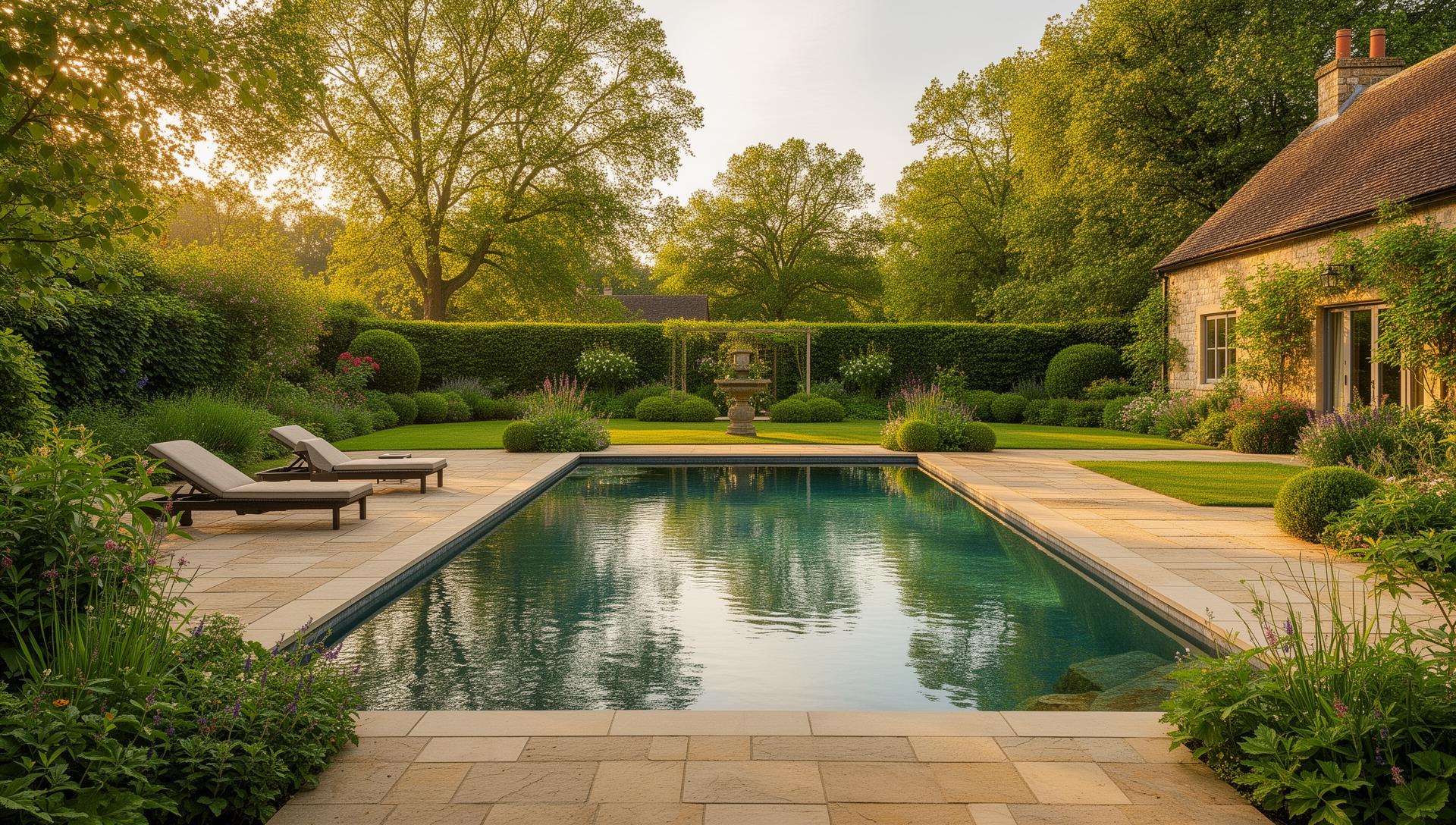
Natural Swimming Pool Cost UK: Complete 2026 Guide
Discover the true cost of a natural swimming pool in the UK. From swimming pond cost factors to installation, we break down every expense for your project.
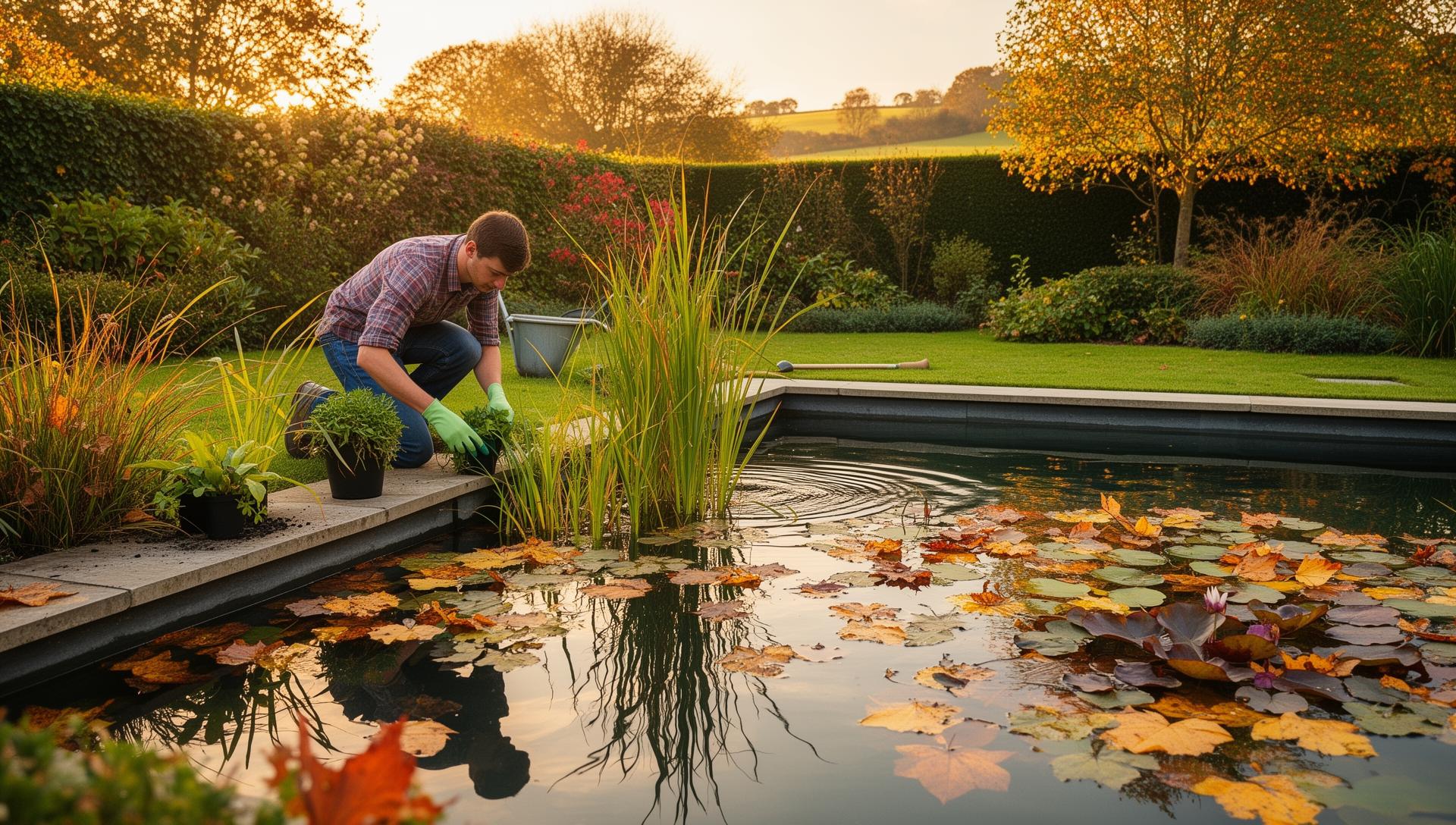
Natural Swimming Pool Maintenance: Complete UK Year-Round Guide
Everything you need to know about maintaining a natural swimming pool or swimming pond through all four UK seasons. Simple tasks for lasting beauty.
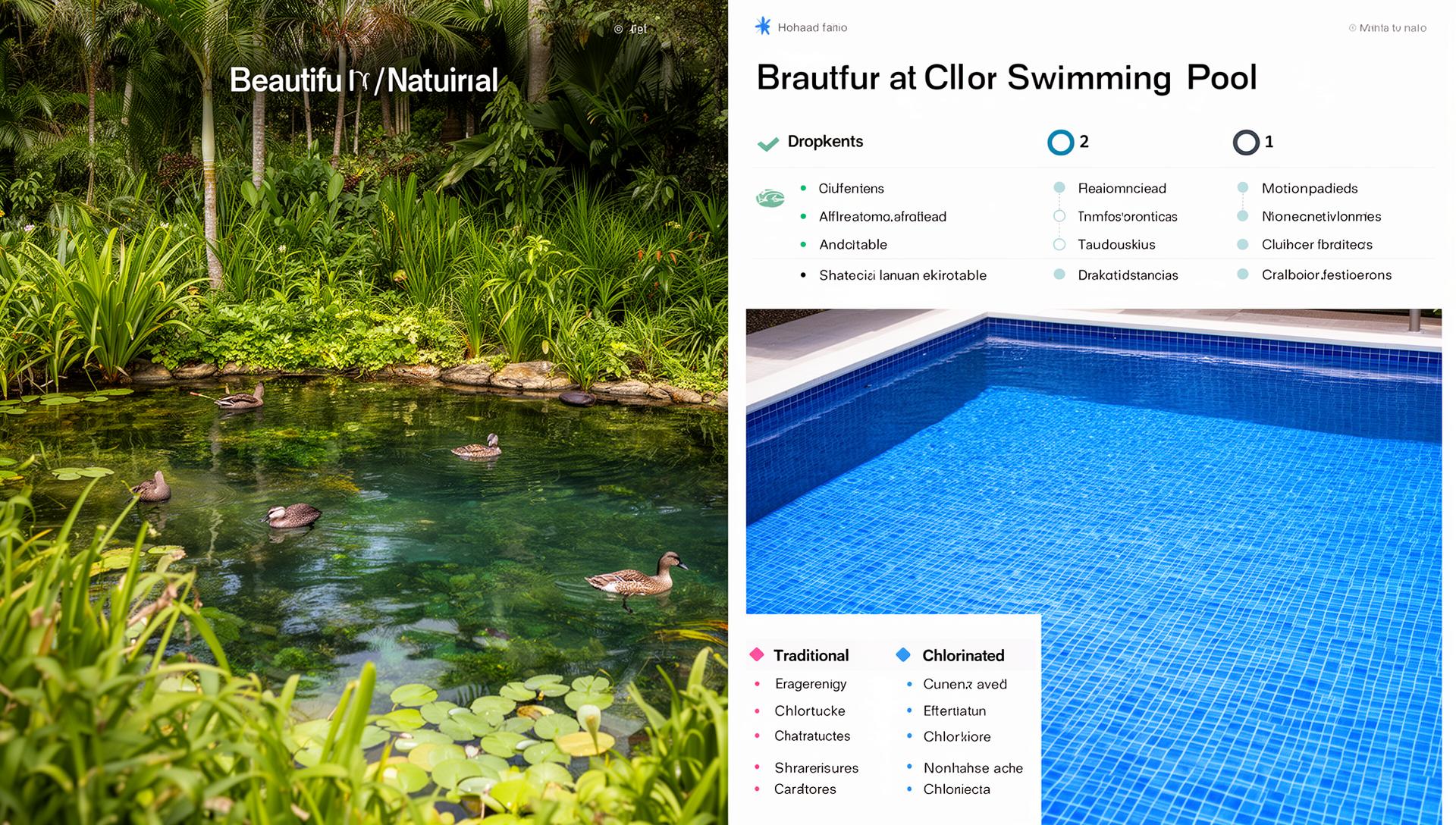
Natural Pool vs Traditional Pool: Complete Comparison Guide UK
Compare natural swimming pools and swimming ponds with chlorinated pools across health, aesthetics, maintenance, and lifestyle. Make the right choice for your UK home.