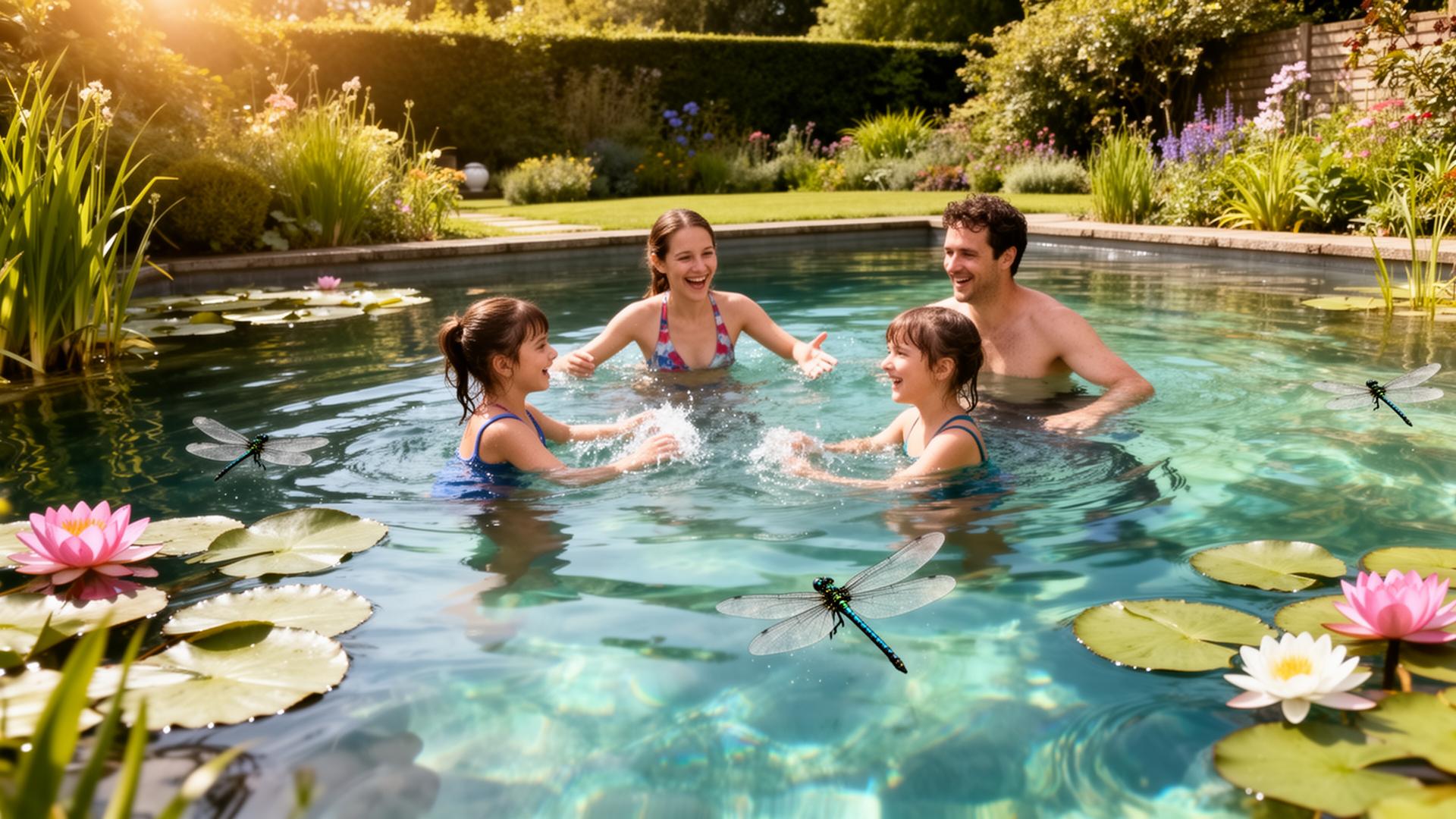
Is Swimming in a Natural Pool Safe? Water Quality and Safety Guide
Everything you need to know about natural swimming pool safety and water quality. Understand bacteria, testing, and why chemical-free pools are safe for your family.

Jon Edwards
Founder & Lead Designer
- Safe natural pools rely on balanced biology and consistent water testing.
- Good design includes safety features for children and confident swimmers.
- Ongoing maintenance keeps water quality stable and safe.
The Safety Question Answered
"Is it safe to swim without chlorine?" It's the first question most people ask. The answer is yes—when properly designed. Understanding how natural pools stay clean explains why they're safe. Here's the science behind natural pool safety.
How Natural Pools Keep Water Safe
The Biological Approach
Natural swimming pools use the same purification processes as healthy lakes and rivers:
1. Beneficial bacteria colonise surfaces and break down organic matter
2. Aquatic plants absorb nutrients that would feed harmful organisms
3. UV sunlight naturally kills many pathogens
4. Continuous circulation prevents stagnation
5. Diverse biology outcompetes problem organisms
Why This Works
Harmful bacteria thrive in nutrient-rich, stagnant water. Natural pools create the opposite conditions: nutrient-poor, well-circulated water with diverse biology that leaves no ecological space for pathogens.
Bacteria: Good vs Bad
Beneficial Bacteria in Natural Pools
- Nitrosomonas: Convert ammonia to nitrites
- Nitrobacter: Convert nitrites to nitrates (plant food)
- Heterotrophic bacteria: Break down organic debris
- Biofilm communities: Colonise surfaces and filter water
These are the same bacteria that make healthy soil and clean rivers work.
Potentially Harmful Bacteria
- E. coli: From faecal contamination
- Pseudomonas: Can cause ear infections
- Legionella: Requires warm, stagnant water
Properly designed natural pools maintain conditions hostile to all three.
Water Quality Standards
EU Bathing Water Standards
Natural swimming pools should meet or exceed EU bathing water standards:
| Parameter | Excellent Quality |
|---|---|
| E. coli | ≤250 CFU/100ml |
| Intestinal enterococci | ≤100 CFU/100ml |
Well-maintained natural pools consistently achieve these levels.
Regular Testing
We recommend regular water testing:
- Monthly: during swimming season: Basic bacteria test
- Quarterly: Comprehensive water analysis
- Annually: Professional assessment
Test kits cost £20-40 per test, or use a local water testing laboratory. Proper testing helps you identify issues before they become problems and ensures your family's safety. Don't forget to review your insurance coverage annually.
What About Algae?
Not All Algae is Bad
Some algae is normal and healthy:
- Beneficial algae: Provides oxygen, part of ecosystem
- Blanket weed: Unsightly but harmless, indicates excess nutrients
- Blue-green algae (cyanobacteria): Can be toxic—avoid swimming
Preventing Problem Algae
- Maintain proper regeneration zone ratio
- Ensure good circulation
- Control nutrient inputs
- Regular plant maintenance
- Adequate shade in swimming zone
Blue-green algae is extremely rare in well-designed natural pools due to low nutrient levels.
Safety Compared to Chlorinated Pools
Chlorine Concerns
Chlorinated pools aren't without risks:
- Chloramines: Form when chlorine reacts with organic matter (sweat, urine)
- Respiratory issues: Linked to asthma, especially in indoor pools
- Skin and eye irritation: Common complaints
- Disinfection by-products: Some linked to health concerns
Natural Pool Advantages
- No chemical exposure
- No respiratory irritants
- Gentle on skin and eyes
- No swimwear degradation
- No green hair
Children and Natural Pools
Perfectly Safe for Families
Natural pools are ideal for children—see our comprehensive guide to health benefits of chemical-free swimming:
- No chemical burns or irritation
- Gentle on developing respiratory systems
- Educational wildlife exposure
- No worries about chemical levels
- Safe if water is accidentally swallowed
Supervision Still Essential
As with any pool:
- Children should always be supervised
- Consider fencing for unsupervised access
- Teach water safety
- Establish clear boundaries between zones
Wildlife: Benefit or Concern?
Wildlife in Natural Pools
You'll attract:
- Dragonflies and damselflies
- Frogs and newts (usually in regeneration zone)
- Water beetles
- Birds drinking and bathing
Wildlife Safety
- Wildlife presence indicates healthy water
- Amphibians avoid chlorine-free swimming zones
- No more "germy" than any outdoor environment
- Ecosystem self-regulates
Managing Wildlife
If preferred, design choices can minimise wildlife in swimming zones:
- Steeper swimming zone edges
- Clear separation from regeneration area
- Minimal vegetation in swimming area
Common Concerns Addressed
"What about duck and bird mess?"
Birds rarely foul swimming zones—they prefer shallows. If concerned, floating deterrents work well. Any contamination is quickly processed by the biological system.
"My neighbour's natural pool went green"
This indicates design or maintenance failure, not inherent problems with natural pools. Common causes: undersized regeneration zone, poor circulation, nutrient contamination.
"Can you get parasites?"
No more than any natural water body—which is to say, extremely rarely. The diverse biology in natural pools actively suppresses parasitic organisms.
"What about standing water and mosquitoes?"
Natural pools have constant circulation—no standing water. Fish and dragonfly larvae (common in natural pools) eat mosquito larvae.
Ensuring Safety in Your Pool
Safety starts with proper design—experienced natural pool builders understand the critical details.
Design Right
- Adequate regeneration zone (30-50%)
- Proper circulation rates
- Correct plant selection
- Good sun/shade balance
Maintain Properly
- Regular skimming and cleaning
- Annual professional check
- Plant care and division
- Prompt issue response
Test Regularly
Understanding the nitrogen cycle helps interpret test results. Key monitoring:
- Monthly bacteria tests in season
- Watch for unusual algae
- Monitor water clarity
- Know when to seek help
Our Safety Commitment
Every Lume natural swimming pool is designed to exceed bathing water standards. We provide:
- First-year water testing support
- Maintenance guidelines
- Troubleshooting assistance
- Annual check-up option
See If Your Garden Is Suitable
Upload a photo for a free feasibility assessment. We'll evaluate your site's potential for a safe, beautiful natural swimming pool.
Frequently Asked Questions
Are natural swimming pools safe to swim in?
Yes, properly designed natural pools are safe for swimming. They use biological filtration to maintain water quality that meets or exceeds EU bathing water standards. The diverse ecosystem actively suppresses harmful organisms.
Is there harmful bacteria in natural pools?
Well-designed natural pools maintain conditions hostile to harmful bacteria like E. coli and Legionella. Beneficial bacteria dominate the ecosystem, outcompeting potential pathogens. Regular testing confirms water quality meets safety standards.
Are natural pools safe for children?
Yes, natural pools are ideal for children. There's no chemical exposure, they're gentle on developing respiratory systems, and accidental water swallowing is safe. As with any pool, children should always be supervised.
How often should you test natural pool water?
Test monthly during swimming season for basic bacteria levels (£20-40 per test). Quarterly comprehensive water analysis is recommended. Annual professional assessment ensures long-term water quality.
Try Our Free AI Design Tool
Upload a photo of your garden and receive a personalised AI render showing how a natural pool could look in your space. Free and instant.
Related Articles
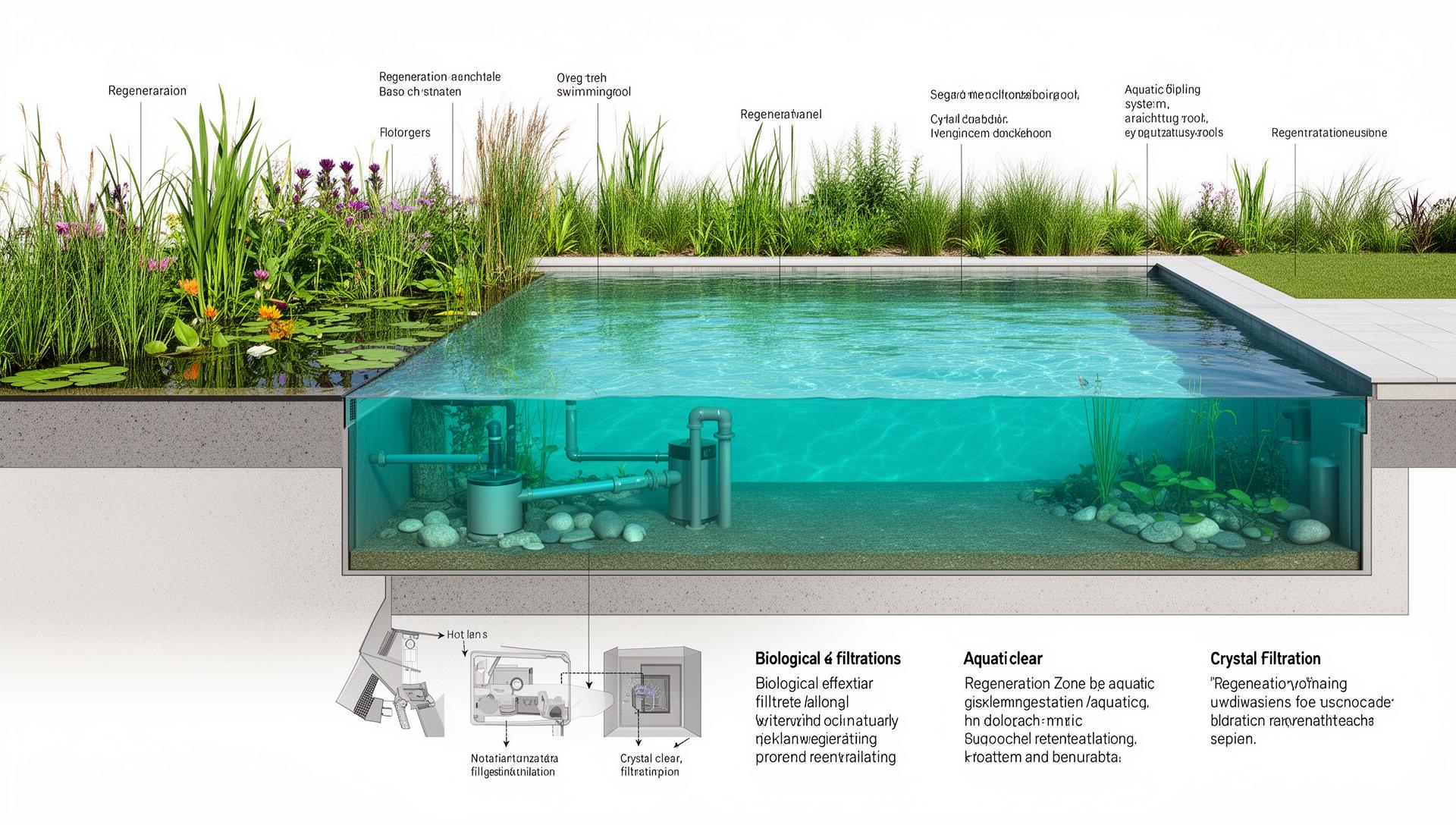
How Natural Swimming Pools Stay Clean Without Chemicals
Learn the science behind natural swimming pools and swimming ponds. Discover how aquatic plants and beneficial bacteria keep your water crystal clear—no chlorine needed.
Natural Swimming Pool Maintenance: Complete UK Year-Round Guide
Everything you need to know about maintaining a natural swimming pool or swimming pond through all four UK seasons. Simple tasks for lasting beauty.
Can You Heat a Natural Swimming Pool in the UK? Costs & Options
Discover whether you can heat a natural swimming pool in the UK. Compare heating options, costs, and efficiency to extend your swimming season by months.