Small Natural Swimming Pools: Complete Design & Cost Guide
Everything you need to know about small natural swimming pools for compact UK gardens. Design tips, costs, and how to maximise your space for chemical-free swimming.

Jon Edwards
Founder & Lead Designer
- Compact pools can work with smart layouts and efficient regeneration zones.
- Costs scale with size, but filtration ratios still matter.
- Design choices prioritise swim comfort while maintaining clarity.
Small Natural Pools: Big Possibilities
Don't let a modest garden stop you from enjoying chemical-free swimming. Small natural swimming pools deliver all the benefits of larger pools—crystal-clear water, no chemicals, beautiful ecosystems—in a compact footprint. Not sure if your garden is suitable? Try our free garden suitability checker for an instant assessment. For cost expectations, see our complete pricing guide.
What Counts as a Small Natural Pool?
Size Categories
Plunge pools: 8-15m² swimming area
- Quick cooling dips
- Hydrotherapy and relaxation
- Total footprint: 15-25m²
Compact swim pools: 15-25m² swimming area
- Comfortable swimming for 2-3 people
- Gentle exercise
- Total footprint: 30-45m²
Small family pools: 25-35m² swimming area
- Swimming for the whole family
- Exercise swimming possible
- Total footprint: 45-60m²
Can Your Garden Accommodate a Natural Pool?
Minimum Requirements
For the smallest viable natural pool:
- Garden size: From 60m² total
- Pool footprint: 25-30m² minimum
- Swimming zone: 12-15m²
- Regeneration zone: 12-15m²
Space Assessment
Measure your garden and consider:
- Access for construction equipment
- Distance from boundaries (typically 1m minimum)
- Relationship to house and other features
- Underground services and trees
- Drainage and sun exposure
Take our 2-minute garden suitability quiz to get an instant assessment of your garden's potential.
Design Strategies for Small Spaces
1. Integrated Regeneration Zones
For full details on sizing, see our regeneration zone guide. Rather than separating the regeneration zone, integrate it around the swimming area perimeter:
- Plants frame the swimming zone
- No wasted space on dividing walls
- Creates intimate, enclosed feel
- Most space-efficient approach
2. Vertical Planting
Use walls and fences for additional planting:
- Green wall systems
- Climbing plants
- Raised planters at pool edge
- Maximises biological filtration without using floor space
3. Multi-Level Design
Build upwards rather than outwards:
- Raised pool edge as seating
- Elevated regeneration zone
- Tiered planting beds
- Creates visual interest and functional space
4. Dual-Purpose Features
Every element should work double duty—perfect for entertaining guests:
- Pool edge as seating bench
- Regeneration zone as garden feature
- Deck as dining area
- Storage built into structure
Small Pool Shapes
Rectangular
Pros:
- Maximum swimming length
- Clean, contemporary look
- Easy to cover
- Efficient use of narrow gardens
Ideal for: Side gardens, modern homes
Square
Pros:
- Works in square plots
- Equal swimming in all directions
- Symmetrical design options
- Good for corner positions
Ideal for: Courtyard gardens, formal designs
L-Shape
Pros:
- Wraps around corners
- Creates distinct zones
- Interesting visual
- Good for irregular spaces
Ideal for: Awkward plots, houses with extensions
Organic/Curved
Pros:
- Softens small spaces
- Natural appearance
- Follows garden contours
- Creates movement
Ideal for: Cottage gardens, informal spaces
Depth Considerations
Shallow Plunge (1.0-1.2m)
- Sitting and standing depth
- Cooling off and relaxation
- Easiest construction
- Suitable for all ages
Standard (1.2-1.5m)
- Swimming possible
- Good for most users
- Manageable excavation
- Best balance for small pools
Deeper End (1.5-1.8m)
- Proper swimming depth
- Comfortable treading water
- Adds to excavation cost
- Consider safety implications
Cost Guide for Small Natural Pools
Budget Breakdown
Plunge pool (8-15m² swim area): £45,000-£65,000
- Basic excavation and liner
- Essential filtration
- Simple planting scheme
- Basic edging
Compact pool (15-25m² swim area): £60,000-£85,000
- Full excavation
- Quality filtration system
- Comprehensive planting
- Stone or timber edging
Small family pool (25-35m² swim area): £75,000-£100,000
- Larger excavation
- Premium filtration
- Extensive planting
- Quality materials throughout
Cost Per Square Metre
Small pools typically cost more per square metre than larger pools:
- Small pools: £2,000-£3,000/m²
- Medium pools: £1,500-£2,000/m²
- Large pools: £1,200-£1,800/m²
This is because fixed costs (design, equipment, access) are spread over less area.
Maximising Your Small Pool
[Heating for Extended Use](/blog/heating-natural-swimming-pool-uk)
Given the investment, maximising use makes sense:
- Air source heat pump: £5,000-£8,000
- Running costs: £300-£500/year
- Extends season by 3-4 months
Exercise Options
Even small pools allow fitness swimming:
- Swim jets/tethers: £1,500-£4,000
- Creates endless pool effect
- Install in plunge pools too
Therapeutic Features
Small pools are perfect for wellness:
- Massage jets
- Air loungers
- Underwater seating
- Warmer temperatures (up to 28°C for small plunge pools)
Planting for Small Pools
Space-Efficient Plants
Choose plants that deliver maximum filtration with minimal spread. Our complete aquatic plants guide has detailed recommendations:
Marginal plants (shallow water):
- Water mint (Mentha aquatica)
- Brooklime (Veronica beccabunga)
- Lesser spearwort (Ranunculus flammula)
Submerged oxygenators:
- Hornwort (Ceratophyllum demersum)
- Spiked water milfoil (Myriophyllum spicatum)
Floating plants:
- Frogbit (Hydrocharis morsus-ranae)
- Water soldiers (Stratiotes aloides)
Compact Water Lilies
Choose miniature varieties for small pools:
- Nymphaea 'Pygmaea Helvola' (yellow, spreads 30-45cm)
- Nymphaea 'Pygmaea Alba' (white, spreads 30-45cm)
- Nymphaea 'Aurora' (colour-changing, spreads 45-60cm)
Construction in Tight Spaces
Tight access requires specialist contractors with compact pool experience—not all builders have the equipment or skills for small gardens.
Access Challenges
Limited access is common with small garden pools:
- Mini-excavators can access 90cm+ gaps
- Some excavation may be manual
- Material transport via conveyor or manually
- Add 10-20% to budget for access issues
Minimising Disruption
- Short construction time: 4-8 weeks
- Contained work area
- Careful neighbour management
- Phased material deliveries
[Maintenance of Small Pools](/blog/natural-pool-maintenance-guide)
Advantages
Small pools can be easier to maintain:
- Less surface area to skim
- Smaller volume to balance
- Quicker plant care
- Easier to cover
Considerations
- Less buffer for issues (address problems quickly)
- Planting balance more critical
- May need more frequent attention initially
Annual Costs
For a small natural pool (20m² swim area)—see our 10-year cost comparison for detailed analysis:
- Electricity: £100-£200
- Plant maintenance: £100-£200
- Professional service (optional): £200-£400
- Total: £400-£800/year
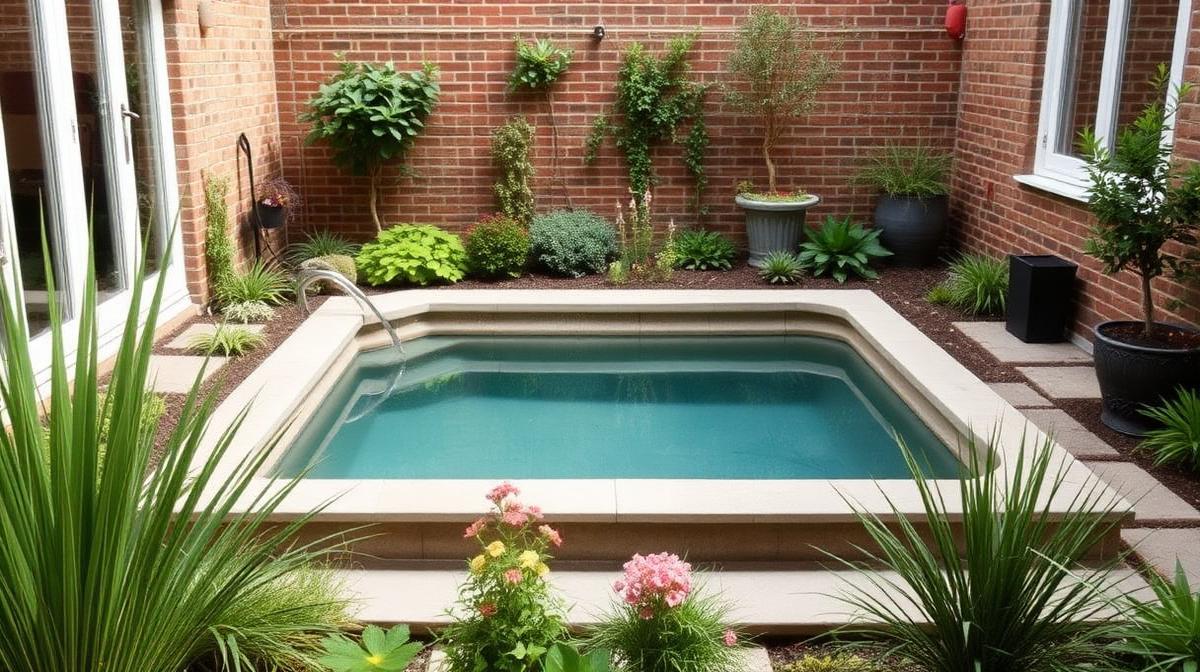
Case Study: Courtyard Pool
Garden size: 80m² enclosed courtyard
Pool specification:
- 18m² swimming zone
- Integrated 12m² regeneration zone
- 1.4m depth
- Limestone edging
- Contemporary planted walls
Result: A stunning focal point that transforms an enclosed space. Crystal-clear water, year-round garden interest, and regular swimming from April to October.
Investment: £78,000 including landscaping
Is a Small Natural Pool Right for You?
Perfect for:
- Townhouse and terrace gardens
- Courtyard spaces
- Side gardens
- Budget-conscious buyers who won't compromise on quality
- Those prioritising quality over quantity
Consider alternatives if:
- You want competitive lap swimming
- You need pool parties for large groups
- You prefer very warm water (easier with larger volume)
Getting Started
The design process for small pools requires extra creativity:
1. Accurate survey: Every centimetre counts
2. 3D visualisation: See the pool in context
3. Consider all angles: How does it look from inside?
4. Plan for construction: Confirm access is viable
5. Long-term vision: How will the garden mature?
Upload a photo of your garden for a free assessment of what's possible in your space.
Frequently Asked Questions
What is the minimum size for a natural swimming pool?
The minimum viable natural pool needs about 25-30m² total footprint, with a 12-15m² swimming zone and 12-15m² regeneration zone. This fits in gardens from 60m² total. Plunge pools as small as 8m² swimming area are possible with careful design.
How much does a small natural swimming pool cost?
Small natural pools range from £45,000-£65,000 for plunge pools (8-15m² swim area), £60,000-£85,000 for compact pools (15-25m²), and £75,000-£100,000 for small family pools (25-35m²). Per square metre costs are higher than larger pools as fixed costs are spread over less area.
Can you swim properly in a small natural pool?
Yes, pools from 15m² upward allow comfortable swimming. For exercise swimming in smaller pools, swim jets or tethers (£1,500-£4,000) create an endless pool effect. Even plunge pools of 8-10m² offer therapeutic benefits and cooling dips.
Are small natural pools harder to maintain?
Small natural pools can actually be easier to maintain due to less surface area and smaller water volume. However, they have less buffer for issues, so problems should be addressed quickly. Annual maintenance costs are typically £400-£800 for a 20m² swimming area.
See a Natural Pool in Your Garden
Upload a photo of your garden and our AI will render a natural swimming pool into your space. Free, instant, and no obligation.
Related Articles
Natural Swimming Pool Cost UK: Complete 2026 Guide
Discover the true cost of a natural swimming pool in the UK. From swimming pond cost factors to installation, we break down every expense for your project.
How Big Should Your Natural Pool Regeneration Zone Be? UK Guide
Calculate the perfect regeneration zone size for your natural swimming pool. Learn the ratios, factors, and UK-specific considerations for optimal water quality.
Natural Swimming Pool Design Ideas: Stunning Layouts for UK Gardens
Explore inspiring natural swimming pool design ideas for UK gardens. From contemporary minimalist to rustic cottage styles, find the perfect design for your outdoor space.